Chapter 08: Clarifying Quantitative Research Designs Grove: Understanding Nursing Research, 6th Edition
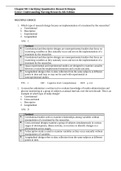
1. Which type of research design focuses on implementation of a treatment by the researcher? a. Correlational b. Descriptive c. Experimental d. Longitudinal ANS: C Feedback A Correlational and descriptive designs are nonexperimental studies that focus on examining variables as they naturally occur and not on the implementation of a treatment by the researcher. B Correlational and descriptive designs are nonexperimental studies that focus on examining variables as they naturally occur and not on the implementation of a treatment by the researcher. C Quasi-experimental and experimental studies are designed to examine causality between a researcher-implemented treatment and a study outcome. D Longitudinal design refers to data collection from the same subjects at different points in time and may or may not be used with experimental or nonexperimental studies. PTS: 1 DIF: Cognitive level: Comprehension REF: p. 212 2. A researcher administers a written test to evaluate knowledge of insulin administration and glucose monitoring to a group of subjects at annual intervals over the next decade. This is an example of which type of study design? a. Correlational b. Cross-sectional c. Descriptive d. Longitudinal ANS: D Feedback A Correlational studies seek to examine relationships among variables without manipulation of a treatment by the researcher. B Cross-sectional designs examine a group of subjects simultaneously in various stages of development, illness severity, or recovery to identify changes in a phenomenon across stages. C A descriptive study is used to examine variables as they occur naturally without manipulation of variables. D Longitudinal design refers to data collection from the same subjects at different points in time. PTS: 1 DIF: Cognitive level: Application REF: p. 212 3. A nurse researcher wishes to identify rates of pertussis infection in children less than one year of age and then again at 6 years of age to examine the relationship of immunization status on infection rates in this population. This is an example of which type of study design? a. Correlational, longitudinal b. Correlational, cross-sectional c. Descriptive, longitudinal d. Descriptive, cross-sectional ANS: A Feedback A A correlational study design looks at predictive relationships between variables. A longitudinal study design refers to data collection from the same subjects at different points in time. B Cross-sectional designs examine a group of subjects simultaneously in various stages of development, illness severity, or recovery to identify changes in a phenomenon across stages. C A descriptive study is used to examine variables as they occur naturally without manipulation. D Cross-sectional designs examine a group of subjects simultaneously in various stages of development, illness severity, or recovery to identify changes in a phenomenon across stages. A descriptive study is used to examine variables as they occur naturally without manipulation. PTS: 1 DIF: Cognitive level: Applying REF: p. 212 4. Which statement is true about a descriptive study design? a. It is not possible to operationally define variables in this type of study. b. Sample selection and size cannot be controlled in descriptive studies. c. This type of design is used to identify problems occurring in practice. d. Variables may be manipulated to avoid bias in this type of study. ANS: C Feedback A Descriptive designs may involve operational definitions of variables, but variables are not manipulated in descriptive studies. B Protection against bias in a descriptive design is achieved through conceptual and operational definition of variables, sample selection and size, valid and reliable instruments, and data collection procedures that partially control the environment. C Descriptive designs may be used to develop theories and identify problems with current practice. D Protection against bias in a descriptive design is achieved through conceptual and operational definition of variables, sample selection and size, valid and reliable instruments, and data collection procedures that partially control the environment. PTS: 1 DIF: Cognitive level: Understanding REF: pp. 212-213 5. A nurse conducts a study to see whether there are differences in the number of books Latino parents and the number of books African-American parents read to their toddlers each week. Which type of study will this researcher utilize? a. Comparative descriptive b. Correlational c. Cross-sectional d. Longitudinal ANS: A Feedback A A comparative descriptive design is used to describe variables and to examine differences in variables in two or more groups that occur naturally in a setting that may have been formed using gender, age, or socioeconomic status. B A correlational study design looks at predictive relationships between variables. C Cross-sectional designs examine a group of subjects simultaneously in various stages of development, illness severity, or recovery to identify changes in a phenomenon across stages. D Longitudinal design refers to data collection from the same subjects at different points in time. PTS: 1 DIF: Cognitive level: Applying REF: p. 216 6. A researcher wishes to conduct a correlational study to determine whether there is a relationship between stress levels and relapse rates among patients who have chronic conditions. In order to determine the existence of a relationship between these two variables, the researcher will attempt to: a. manipulate the level of stress in study subjects. b. obtain a large range of possible scores. c. provide lengthy descriptions of subjects’ behaviors. d. randomly assign subjects to study groups. ANS: B Feedback A Correlational studies do not involve manipulation of a variable. B In correlational designs, a large range in the variable scores is necessary to determine the existence of a relationship. C Providing lengthy descriptions of subjects’ behaviors is a necessary part of the discussion of the results, but it does not determine the existence of a relationship. D Subjects in correlational studies are not randomly assigned to study groups. PTS: 1 DIF: Cognitive level: Applying REF: p. 217 7. If a researcher wishes to describe variables and to examine many relationships in a study, which type of study design will the researcher employ? a. Correlational b. Descriptive c. Descriptive correlational d. Descriptive cross-sectional ANS: C Feedback A Correlational studies seek to examine relationships among variables without manipulation of a treatment by the researcher. B A descriptive study is used to examine variables as they occur naturally without manipulation of variables. C A descriptive correlational design is used to describe variables and examine relationships among these variables. Using this design facilitates the identification of many interrelationships in a situation. D Cross-sectional designs examine a group of subjects simultaneously in various stages of development, illness severity, or recovery to identify changes in a phenomenon across stages. PTS: 1 DIF: Cognitive level: Applying REF: pp. 218-220 8. A nurse researcher conducts a study to determine whether women who breastfeed their infants experience better sleep in the first two postpartum months. This study will employ which type of research design? a. Correlational b. Descriptive c. Descriptive correlational d. Predictive correlational ANS: D Feedback A Correlational studies seek to examine relationships among variables without manipulation of a treatment by the researcher. B A descriptive study is used to examine variables as they occur naturally without manipulation of variables. C A descriptive correlational design is used to describe variables and examine relationships among
Written for
- Institution
-
Wagner College
- Course
-
NR 400
Document information
- Uploaded on
- January 15, 2023
- Number of pages
- 15
- Written in
- 2022/2023
- Type
- Exam (elaborations)
- Contains
- Unknown
Subjects
- nr 400
-
chapter 08 clarifying quantitative research designs

Also available in package deal