

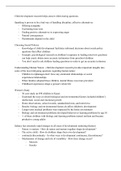
Child development research helps answer child-rearing questions.
Spanking is proven to be a bad way of handling discipline, effective alternatives:
-Offering sympathy
-Facilitating time-outs
-Finding positive alternatives to expressing anger
-Natural consequences
-Punishments depend on the child
Choosing Social Policies
-Knowledge of child development facilitates informed decisions about social-policy questions that affect children
-Example: psychological research on children's responses to leading interview questions can help courts obtain more accurate testimonies from preschool children
-You don’t need to ask children leading questions in order to get an accurate testimony
Understanding Human Nature - child development research provides important insights into some of the most intriguing questions regarding human nature
-Children in orphanages don’t have any emotional relationships or social experiences/relationships
-When families adopted these children, mental illness was more prevalent
-Childhood experiences shape a person's whole life
Werner's Study
-30 year study on 698 children in Kauai
-Examined the ways in which biological and environmental factors included children’s intellectual, social and emotional growth
-Home observations, school records, standardized tests, and interviews
-Results: biology and environmental factors do affect children's development
-Longer term medical problems were impacted by the home environment
-Biology and environment problems developed behavior or learning problems by age 10
-⅓ of these children with biology and learning problems turned resilient and became productive young adults
Infancy has extremely rapid changes in all areas of development (enduring themes)
-Nature vs nurture - How do nature and nurture together shape development?
-The active child - How do children shape their own development?
-continuity/discontinuity - In what ways is development continuous, discontinuous?
-Mechanisms of change and role of variability - How does change occur?
-Interests
-Gender
Spanking is proven to be a bad way of handling discipline, effective alternatives:
-Offering sympathy
-Facilitating time-outs
-Finding positive alternatives to expressing anger
-Natural consequences
-Punishments depend on the child
Choosing Social Policies
-Knowledge of child development facilitates informed decisions about social-policy questions that affect children
-Example: psychological research on children's responses to leading interview questions can help courts obtain more accurate testimonies from preschool children
-You don’t need to ask children leading questions in order to get an accurate testimony
Understanding Human Nature - child development research provides important insights into some of the most intriguing questions regarding human nature
-Children in orphanages don’t have any emotional relationships or social experiences/relationships
-When families adopted these children, mental illness was more prevalent
-Childhood experiences shape a person's whole life
Werner's Study
-30 year study on 698 children in Kauai
-Examined the ways in which biological and environmental factors included children’s intellectual, social and emotional growth
-Home observations, school records, standardized tests, and interviews
-Results: biology and environmental factors do affect children's development
-Longer term medical problems were impacted by the home environment
-Biology and environment problems developed behavior or learning problems by age 10
-⅓ of these children with biology and learning problems turned resilient and became productive young adults
Infancy has extremely rapid changes in all areas of development (enduring themes)
-Nature vs nurture - How do nature and nurture together shape development?
-The active child - How do children shape their own development?
-continuity/discontinuity - In what ways is development continuous, discontinuous?
-Mechanisms of change and role of variability - How does change occur?
-Interests
-Gender


