PHARMACOLO NURS 251 MODULU 5
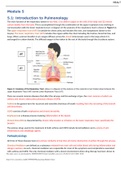
Module 5 5.1: Introduction to Pulmonology The main function of the respiratory system is two-fold: (1) to deliver oxygen to the cells of the body and (2) remove carbon dioxide from the body. This is accomplished through the combination of the upper respiratory tract working in communication with the lower respiratory tract. A diagram of the anatomy of the respiratory tract is shown in Figure 5.1. The upper respiratory tract (URT) is outside the chest cavity and includes the nose, and nasopharynx (down to the larynx). The lower respiratory tract (LRT) includes the organs within the chest including the trachea, bronchial tree, and lungs. When a person breathes in air, oxygen diffuses across the alveoli (microscopic sacs) in the lungs where it is exchanged for carbon dioxide. The diffused oxygen is then taken to the rest of the body through the circulatory system. Figure 5.1 Anatomy of the Respiratory Tract. Above is a diagram of the anatomy of the respiratory tract broken down between the Upper Respiratory Tract (URT) and the Lower Respiratory Tract (LRT). There are several common diseases that affect the airways and this exchange of gas, the most common of which are asthma and chronic obstructive pulmonary disease (COPD). Asthma is the general term for recurrent and reversible shortness of breath resulting from the narrowing of the bronchi and bronchioles. COPD consists of both emphysema and chronic bronchitis. Emphysema is a disease process involving inflammation of the alveoli. Chronic Bronchitis is characterized by chronic inflammation or irritation on the lower respiratory tract, specifically the bronchi. The primary drugs used in the treatment of both asthma and COPD include bronchodilators and a variety of antiinflammatory and antiallergic agents. Pathophysiology All three of these diseases have one primary similarity in that they all involve obstruction of airflow through the airways. Chemical Mediators are defined as a substance released from mast cells and white blood cells during inflammation and allergic reactions. As such, chemical mediators are responsible for most of the symptoms and complications associated with asthma and COPD. The only chemical mediator with a known involvement where drug therapy has been shown to This study source was downloaded by from CourseH on :48:13 GMT -06:00 HEALTH help patient symptoms is leukotrienes. Leukotrienes are potent bronchoconstrictors with a long duration of action. They stimulate receptors responsible for bronchoconstriction, edema and other inflammatory actions. There is a class of drugs called leukotriene inhibitors that inhibit these actions and have an important role in treating asthma specifically. Asthma The narrowing of the bronchioles can be caused by bronchospasm, inflammation, edema and the production of mucus. This ultimately obstructs airflow meaning that the carbon dioxide cannot get out and the oxygen cannot get in. There are different types of asthma. Some asthma is caused by outside factors such as allergens; this is often referred to as allergic asthma. Conversely, intrinsic asthma is caused by unknown factors. In some cases, certain factors have precipitated the asthma attack such as respiratory infections, stress, or cold weather. It is not fully understood why some people seem to be predisposed to asthma attacks. Emphysema Emphysema occurs when the air spaces within the bronchioles enlarge as a result of the destruction of the alveolar walls. As the alveolar walls are destroyed, there is less surface area available for oxygen and carbon dioxide exchange. The cause of this appears to be enzymes that are released in response to inflammation. These enzymes are increased by air pollution, tobacco smoke, and other irritants to the respiratory tract. Hyperinflation is the result of the air spaces being enlarged. These patients have difficulty expelling air from the lungs. This results in a reduction in gas exchange and the feeling of shortness of breath. Emphysema causes irreversible lung damage over time. Chronic Bronchitis Chronic irritation, usually from cigarette smoke or other environmental pollutants, can lead to chronic bronchitis. The irritants cause mucus secretions to increase and thicken which can then begin to interfere with gas exchange within the lungs. These patients often present with a chronic cough, difficulty breathing, and increased respiratory infections. Drug therapy can provide relief, but it cannot reverse the damage. Drug Therapy Historically, the treatment of both asthma and COPD has centered around bronchodilation. Recently, there has been a shift in focus to the anti-inflammatory component of treatment. Treatment still includes bronchodilators, so we will cover both types of treatment since they are often used in combination. Table 5.1 provides a summary of the most common treatment options used in asthma and COPD management.
Written for
- Institution
- PHARMACOLO NURS 251
- Course
- PHARMACOLO NURS 251
Document information
- Uploaded on
- December 30, 2022
- Number of pages
- 8
- Written in
- 2022/2023
- Type
- Exam (elaborations)
- Contains
- Questions & answers
Subjects
-
pharmacolo nurs 251 modulu 5

Also available in package deal