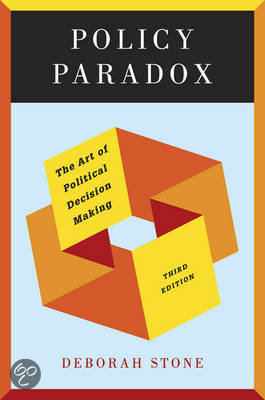
Chapter 12 - Incentives
Incentives and deterrence → getting others to choose actions we desire.
In most areas, policy relies on a combination of rewards and penalties
The Theory of Incentives
The purpose of incentives is to bring individual motives into line with community
goals
Incentives as three parts: the incentive giver, the incentive achiever, and the
incentive itself.
Incentives work by getting people to change their minds. → people should be
adaptable. → the receiver has to have some orientation to the future.
Designing Incentives: Social Dynamics
Designing effective incentives requires understanding the complex causes of
behavior you seek to change. → You have to take into account the expectations
of the people.
Positive incentives carry a spirit of goodwill. Negative incentives create a climate
of conflict.
Implementing Incentives in the Polis
In the polis, incentives are usually designed by one set of people (legislators),
applied by another (bureaucrats) and received by a third (individuals).
Incentives can be paradoxical → a single, seemingly clear incentive can reward
and penalize at the same time and thus have ambigious effects on the behavior
it meant to change.
Incentives and Democracy
Incentives are noncoercive policy instruments, they leave people a choice rather
than imposing a rule.
Chapter 12 - Incentives 1
Incentives and deterrence → getting others to choose actions we desire.
In most areas, policy relies on a combination of rewards and penalties
The Theory of Incentives
The purpose of incentives is to bring individual motives into line with community
goals
Incentives as three parts: the incentive giver, the incentive achiever, and the
incentive itself.
Incentives work by getting people to change their minds. → people should be
adaptable. → the receiver has to have some orientation to the future.
Designing Incentives: Social Dynamics
Designing effective incentives requires understanding the complex causes of
behavior you seek to change. → You have to take into account the expectations
of the people.
Positive incentives carry a spirit of goodwill. Negative incentives create a climate
of conflict.
Implementing Incentives in the Polis
In the polis, incentives are usually designed by one set of people (legislators),
applied by another (bureaucrats) and received by a third (individuals).
Incentives can be paradoxical → a single, seemingly clear incentive can reward
and penalize at the same time and thus have ambigious effects on the behavior
it meant to change.
Incentives and Democracy
Incentives are noncoercive policy instruments, they leave people a choice rather
than imposing a rule.
Chapter 12 - Incentives 1