

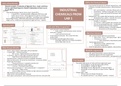
Lactic acid production LAB for the Chemical Industry
• Great potential→production of industrial chemicals (e.g., lactic
• Purification of valuable industirla product = difficult because th
growth
Overview
• Lactic acid fermentation→batch culture using E. faecalis RKY1
INDUSTRIAL • BUT, carb metabolism = extremely efficient with only
• Fermentation = inefficient energy gains, BUT covered
• ↑amount of sugars→fermented end-products with l
•
•
E. faecalis RKY1 = homofermentative LAB(produce ONLY lactic acid)
Carbon source: Sucrose ; mixed sugars(sucrose, glucose, fructose)
CHEMICALS FROM •
production
Small genomes = less complex high-level genetic controls syste
• Obtain optically pure lactic acid(>95%) – most being L-lactic acid(>98%)
•
•
50 and 100g/L sucrose → MAX lactic acid productivity (5.2g/L/h lactic acid)
150g/L sucrose → MAX lactic acid production (144g/L lactic acid – 3.0g/L/h)
LAB 1 •
• Manipulating these systems = easier(for the most pa
Advantages of LAB for industrial chemical production
• Flexibility in e-acceptors
• E.g., fructose = used for growth and e-acceptor→pro
• Can uses non-growing(resting cells) = metabolically a
How they did it bioconversions(one form of energy→another)
Lactic acid: What is it good for? • Metabolic pathway = controlled independe
• Lactic acid used in several industries • NO electrons lost for biosynthesis
• Food; cosmetic; pharmaceutical; textile; chemical
• Lactic acid = 2 isomers High stress tolerance
• L-lactic acid and D-lactic acid
• Can be produced chemically – BUT, results→DL-lactic • LAB = evolved→handle high stress environments
acid(not ideal) • Most of time – stress = self imposed (acid) - LAB→co
• Fermentation→provide single stereo-isomer • ↑resistance to alcohol
• Advantages: Mild temp, low energy consumption, • Main contaminant in beer/ethanol produc
fast and high yields, low cost • Tolerate high temperatures
• NB! Because cooling = additional costs
• ↓chance of contamination
• Screen for appropriate production organism – due to niche sp
What they got (Results)
• Kinetics similar between mixed sugars and sucrose(alone) Metabolic engineering
• E. faecalis RKY1 - ↑affinity for glucose
• LAB = good characteristics →natural cell factories
• BUT, sucrose = hight productivity and reduced cost
• Engineering improve this→new end-products
• μ, qS and qP = lower in mixed sugars (compared to glucose)
• Some LAB = difficult to transform(GM) – new approaches will
• Need time for invertase(enzyme) to use sucrose
• Invertase enzyme = induced by sucrose (no catabolite repression)
• MAX invertase activity = 9h (↓sucrose concentration = ↓invertase activity) Final thoughts
• Mixed sugar fermentation
• Glucose and fructose = completely used after 12h • Can produce high amount of L-lactic acid from single/mixed sugars
• Use of sucrose NOT influences by other sugars • Glucose(100g/L) = 97.3g/L @ 6.5g/L/h (high affinity)
• ↓sucrose = ↑invertase enzyme activity • Sucrose(150g/L) = 144.2g/L @ 3.0g/L/h
• Initial sucrose concentration ↑ = lactic acid produced↑ = cell growth↑ • Mixed(70g/L sucrose; 30g/L glucose) = 97.2g/L @ 5.3g/L/h
• Best results – 150g/L sucrose • Mixed(70g/l sucrose; 15g/L glucose; 15g/L fructose) = 88g/L @
• Drops at 200g/L sucrose→ inhibition by high substrate concentration 4.2g/L/h
• High conversion rate to L-lactic acid • Cheaper sugars = ideal
• Lower sucrose = best productivity of enzymes • Sucrose is pure and cheaper than glucose
• Most organic acid produced = lactic acid (small amount of formic- and acetic acid) • No catabolite repression → use cheaper substrates = molasses
• Great potential→production of industrial chemicals (e.g., lactic
• Purification of valuable industirla product = difficult because th
growth
Overview
• Lactic acid fermentation→batch culture using E. faecalis RKY1
INDUSTRIAL • BUT, carb metabolism = extremely efficient with only
• Fermentation = inefficient energy gains, BUT covered
• ↑amount of sugars→fermented end-products with l
•
•
E. faecalis RKY1 = homofermentative LAB(produce ONLY lactic acid)
Carbon source: Sucrose ; mixed sugars(sucrose, glucose, fructose)
CHEMICALS FROM •
production
Small genomes = less complex high-level genetic controls syste
• Obtain optically pure lactic acid(>95%) – most being L-lactic acid(>98%)
•
•
50 and 100g/L sucrose → MAX lactic acid productivity (5.2g/L/h lactic acid)
150g/L sucrose → MAX lactic acid production (144g/L lactic acid – 3.0g/L/h)
LAB 1 •
• Manipulating these systems = easier(for the most pa
Advantages of LAB for industrial chemical production
• Flexibility in e-acceptors
• E.g., fructose = used for growth and e-acceptor→pro
• Can uses non-growing(resting cells) = metabolically a
How they did it bioconversions(one form of energy→another)
Lactic acid: What is it good for? • Metabolic pathway = controlled independe
• Lactic acid used in several industries • NO electrons lost for biosynthesis
• Food; cosmetic; pharmaceutical; textile; chemical
• Lactic acid = 2 isomers High stress tolerance
• L-lactic acid and D-lactic acid
• Can be produced chemically – BUT, results→DL-lactic • LAB = evolved→handle high stress environments
acid(not ideal) • Most of time – stress = self imposed (acid) - LAB→co
• Fermentation→provide single stereo-isomer • ↑resistance to alcohol
• Advantages: Mild temp, low energy consumption, • Main contaminant in beer/ethanol produc
fast and high yields, low cost • Tolerate high temperatures
• NB! Because cooling = additional costs
• ↓chance of contamination
• Screen for appropriate production organism – due to niche sp
What they got (Results)
• Kinetics similar between mixed sugars and sucrose(alone) Metabolic engineering
• E. faecalis RKY1 - ↑affinity for glucose
• LAB = good characteristics →natural cell factories
• BUT, sucrose = hight productivity and reduced cost
• Engineering improve this→new end-products
• μ, qS and qP = lower in mixed sugars (compared to glucose)
• Some LAB = difficult to transform(GM) – new approaches will
• Need time for invertase(enzyme) to use sucrose
• Invertase enzyme = induced by sucrose (no catabolite repression)
• MAX invertase activity = 9h (↓sucrose concentration = ↓invertase activity) Final thoughts
• Mixed sugar fermentation
• Glucose and fructose = completely used after 12h • Can produce high amount of L-lactic acid from single/mixed sugars
• Use of sucrose NOT influences by other sugars • Glucose(100g/L) = 97.3g/L @ 6.5g/L/h (high affinity)
• ↓sucrose = ↑invertase enzyme activity • Sucrose(150g/L) = 144.2g/L @ 3.0g/L/h
• Initial sucrose concentration ↑ = lactic acid produced↑ = cell growth↑ • Mixed(70g/L sucrose; 30g/L glucose) = 97.2g/L @ 5.3g/L/h
• Best results – 150g/L sucrose • Mixed(70g/l sucrose; 15g/L glucose; 15g/L fructose) = 88g/L @
• Drops at 200g/L sucrose→ inhibition by high substrate concentration 4.2g/L/h
• High conversion rate to L-lactic acid • Cheaper sugars = ideal
• Lower sucrose = best productivity of enzymes • Sucrose is pure and cheaper than glucose
• Most organic acid produced = lactic acid (small amount of formic- and acetic acid) • No catabolite repression → use cheaper substrates = molasses


