

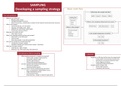
SAMPLING
Developing a sampling strategy
First ask questions
• What are you looking for?
• Bacteria, yeast, viruses
• Pathogen/spoilage/commensal
• Reason for test (e.g., contamination, isolation of new industrial strain/community structure)
• Where is the sample?
• Environmental (e.g., air, soil, water)
• Food (e.g., beverages, meat , dairy)
• Medical (e.g., stool, blood, cavity swabs)
• Process (e.g., factory surfaces)
• What does the sample look like?
• Solid, liquid, viscous
• What is the sampling method and how many sample?
• Destructive vs non-destructive
• Sterile sample
• How many samples → accurate presentation
• How must the samples be stored/transported?
• Temperature sensitive samples
• Hazardous samples (can mostly assume sample = hazardous)
• What type of analysis needed?
• Culturing (e.g., plates of agar)
• Molecular (e.g., DNA sequencing, electrophoresis)
Considerations before sampling
SUMMARY
• What sampling equipment or reagents are required?
• Sterile swabs, sponges, biopsy punches • Sampling is an NB step (and first step of an experiment):
• Specialized collection tubes • Proper quality control during manufacturing
• Specific buffer/inhibitors • Identification of potential industrial strains
• Commercial testing/sampling kits • Proper diagnosis of disease
• Are there standard operating procedures(SOPs)? • Answering fundamental question
• ISO/national standards • Suitable sample strategy is NB:
• Laboratory/facility specific • Ask the right questions
• When and where should sampling/testing take place? • Consistency and accuracy
• Area = contamination is MOST likely to occur
• Stage of production process
• Environmental factors
• Bioprospecting = shotgun vs objective approaches
, DETECTION Culture dependent me
What happens after sampling? Selective media examples
Antibiotic media
• Contain specific antibiotic→prevent growth of non-resistant organisms
What detection method is required? • Used to select antibiotic strains (e.g., during cloning/transformation)
Mannitol salt agar
• Culture-dependent methods • media→selection of pathogenic and non-pathogenic Staphylococci
• Growth of organism in/on specific growth media • ↑salt concentration (7.5% NaCl) = inhibit most other bacteria
• Determine viable cells • Can differentiate between organisms that ferments mannitol
• Labour intensive and time consuming Violet red bile agar
• Microbes must be able to grow (culturable) • media→selection of coliform(gram-) bacteria
• Culture-independent methods • Bile salts and crystal violet = inhibit most gram+ bacteria
• Does not require culturing (may require some sort of enrichment) • Neutral red pH indicator
• Less time consuming, BUT may require special skills
• Can be used to detect toxins
• Inhibitors may be problematic Differential media examples
• May require complex extraction methods
Columbia Blood Agar
• ↑nutrients
Culture dependent methods • media→isolation and cultivation of non-fastidious and fastidious(“fussy”) microorganisms
• Contain 5% sheep blood → detect haemolytic reaction
What goes into the growth media?
Bismuth Sulphite Glucose Glycine Yeast agar (antimicrobial)
• Growth media = contain components that will support microbial growth
• Selective AND differential media→detection, isolation and presumptive ID of Candida species
• Complex media = exact chemical composition NOT known (e.g., LB – yeast extract
• Contain bismuth sulfite = inhibits bacteria
and tryptone(enzyme from casein))
• Bismuth sulfite = reduced by Candida species → pigmentation of colonies (result of ID)
• Synthetic media = chemically defined media (chemical composition known)
MacConkey Sorbitol Agar
• Selective vs Differential growth media
• Selective AND differential media→detect sorbitol-nonfermenting E. coli serotype O157:H7
• Selective = selects growth of desired organism and exclude all others (e.g.,
• Most other gut microbes ferment sorbitol = PINK
antibiotic resistant bacteria)
• E. coli O157:H7 ferments sorbitol slowly = easily differentiated(ID) = NOT pink(at first…)
• Differential = supports growth of several types of organisms, BUT contain
EC media with MUG
compounds→allow different microbial genera/species to be identified visually
• Selective AND differential media→contain bile salts = inhibit gram+ bacteria AND contain MUG
(e.g., blood agar = identify haemolytic bacteria)
• E. coli produce glucoronidase→hydrolyse MUG to fluorogenic product
MI agar
Detection vs colony counts
• Chromogenic/fluorogenic media →detect and enumerate E. coli and total coliforms in drinking water
• Detection
• 2 enzyme substrates = fluorogen (MUGal) and IBDG
• Use selective/differential media→detect is organism is present (i.e. growth = yes/no)
• E. coli = produce B-D-glucoronidase→cleave IBDG→blue sompound
• Evaluate if contamination is present
• B-galactisidase produced by coliforms→cleaves MUGal→fluorescent compound
• Qualitative (for goof results)
Kligler Iron agar
• Enumeration of microbes
• Differential = differentiate between members of Enterobacteriacea→ability to ferment dextrose and lactose;
• Dilution series and plating = determine CFUs/ml by counting
• Contain phenol red = pH indicator →responds to acid production(fermentation of sugars)
• Filter sample via gridded membrane filter(microbes stay on filter)→determine
• Mix of ferric ammonium citrate + sodium thiosulfate→detection of hydrogen sulfide production = BLACK
CFUs/L
• Dilution series (10-fold) and determine most probable number(MPN)
• →used for estimation of bacteria numbers in dilute samples(e.g., coliforms
in water)
• →use colour change and/or turbidity = evaluate growth
Developing a sampling strategy
First ask questions
• What are you looking for?
• Bacteria, yeast, viruses
• Pathogen/spoilage/commensal
• Reason for test (e.g., contamination, isolation of new industrial strain/community structure)
• Where is the sample?
• Environmental (e.g., air, soil, water)
• Food (e.g., beverages, meat , dairy)
• Medical (e.g., stool, blood, cavity swabs)
• Process (e.g., factory surfaces)
• What does the sample look like?
• Solid, liquid, viscous
• What is the sampling method and how many sample?
• Destructive vs non-destructive
• Sterile sample
• How many samples → accurate presentation
• How must the samples be stored/transported?
• Temperature sensitive samples
• Hazardous samples (can mostly assume sample = hazardous)
• What type of analysis needed?
• Culturing (e.g., plates of agar)
• Molecular (e.g., DNA sequencing, electrophoresis)
Considerations before sampling
SUMMARY
• What sampling equipment or reagents are required?
• Sterile swabs, sponges, biopsy punches • Sampling is an NB step (and first step of an experiment):
• Specialized collection tubes • Proper quality control during manufacturing
• Specific buffer/inhibitors • Identification of potential industrial strains
• Commercial testing/sampling kits • Proper diagnosis of disease
• Are there standard operating procedures(SOPs)? • Answering fundamental question
• ISO/national standards • Suitable sample strategy is NB:
• Laboratory/facility specific • Ask the right questions
• When and where should sampling/testing take place? • Consistency and accuracy
• Area = contamination is MOST likely to occur
• Stage of production process
• Environmental factors
• Bioprospecting = shotgun vs objective approaches
, DETECTION Culture dependent me
What happens after sampling? Selective media examples
Antibiotic media
• Contain specific antibiotic→prevent growth of non-resistant organisms
What detection method is required? • Used to select antibiotic strains (e.g., during cloning/transformation)
Mannitol salt agar
• Culture-dependent methods • media→selection of pathogenic and non-pathogenic Staphylococci
• Growth of organism in/on specific growth media • ↑salt concentration (7.5% NaCl) = inhibit most other bacteria
• Determine viable cells • Can differentiate between organisms that ferments mannitol
• Labour intensive and time consuming Violet red bile agar
• Microbes must be able to grow (culturable) • media→selection of coliform(gram-) bacteria
• Culture-independent methods • Bile salts and crystal violet = inhibit most gram+ bacteria
• Does not require culturing (may require some sort of enrichment) • Neutral red pH indicator
• Less time consuming, BUT may require special skills
• Can be used to detect toxins
• Inhibitors may be problematic Differential media examples
• May require complex extraction methods
Columbia Blood Agar
• ↑nutrients
Culture dependent methods • media→isolation and cultivation of non-fastidious and fastidious(“fussy”) microorganisms
• Contain 5% sheep blood → detect haemolytic reaction
What goes into the growth media?
Bismuth Sulphite Glucose Glycine Yeast agar (antimicrobial)
• Growth media = contain components that will support microbial growth
• Selective AND differential media→detection, isolation and presumptive ID of Candida species
• Complex media = exact chemical composition NOT known (e.g., LB – yeast extract
• Contain bismuth sulfite = inhibits bacteria
and tryptone(enzyme from casein))
• Bismuth sulfite = reduced by Candida species → pigmentation of colonies (result of ID)
• Synthetic media = chemically defined media (chemical composition known)
MacConkey Sorbitol Agar
• Selective vs Differential growth media
• Selective AND differential media→detect sorbitol-nonfermenting E. coli serotype O157:H7
• Selective = selects growth of desired organism and exclude all others (e.g.,
• Most other gut microbes ferment sorbitol = PINK
antibiotic resistant bacteria)
• E. coli O157:H7 ferments sorbitol slowly = easily differentiated(ID) = NOT pink(at first…)
• Differential = supports growth of several types of organisms, BUT contain
EC media with MUG
compounds→allow different microbial genera/species to be identified visually
• Selective AND differential media→contain bile salts = inhibit gram+ bacteria AND contain MUG
(e.g., blood agar = identify haemolytic bacteria)
• E. coli produce glucoronidase→hydrolyse MUG to fluorogenic product
MI agar
Detection vs colony counts
• Chromogenic/fluorogenic media →detect and enumerate E. coli and total coliforms in drinking water
• Detection
• 2 enzyme substrates = fluorogen (MUGal) and IBDG
• Use selective/differential media→detect is organism is present (i.e. growth = yes/no)
• E. coli = produce B-D-glucoronidase→cleave IBDG→blue sompound
• Evaluate if contamination is present
• B-galactisidase produced by coliforms→cleaves MUGal→fluorescent compound
• Qualitative (for goof results)
Kligler Iron agar
• Enumeration of microbes
• Differential = differentiate between members of Enterobacteriacea→ability to ferment dextrose and lactose;
• Dilution series and plating = determine CFUs/ml by counting
• Contain phenol red = pH indicator →responds to acid production(fermentation of sugars)
• Filter sample via gridded membrane filter(microbes stay on filter)→determine
• Mix of ferric ammonium citrate + sodium thiosulfate→detection of hydrogen sulfide production = BLACK
CFUs/L
• Dilution series (10-fold) and determine most probable number(MPN)
• →used for estimation of bacteria numbers in dilute samples(e.g., coliforms
in water)
• →use colour change and/or turbidity = evaluate growth


