

NR 509-PHYSICAL ASSESSMENT
NR 509 Immersion – Physical Assessment Steps STEPS
1) Greet patient
2) Inspect face – no discoloration or lesions present
3) Inspect head – midline, symmetrical
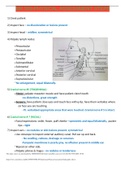
4) Palpate lymph nodes:
Preauricular
Postauricular
Occipital
Tonsillar
Submandibular
Submental
Anterior cervical
Posterior cervical
Supraclavicular
*No enlargement, equal bilaterally.
5) Cranial nerve #5 (TRIGEMINAL)
Motor: palpate masseter muscle and have patient clench teeth
-no distortions, great strength
Sensory: have patient close eyes and touch face with q-tip, have them verbalize where
on face you are touching
- Pt. verbalized appropriate areas that were touched. Cranial nerve # 5 is intact.
6) Cranial nerve # 7 (FACIAL)
Facial expressions: smile, frown, puff cheeks—symmetric and equal bilaterally, pucker
lips—tight
7) Inspect ears—no nodules or skin lesions present, symmetrical
Use otoscope to inspect external auditory canal. Pull ear up and back.
- No swelling, redness, drainage or cerumen.
-Tympanic membrane is pearly gray, no effusion present in middle ear.
*Repeat on other side.
Palpate pinnae & tragus - no nodules or tenderness
This study source was downloaded by 100000849838140 from CourseHero.com on 10-23-2022 06:39:56 GMT -05:00
https://www.coursehero.com/file/47096953/NR-509-Immersion-Physical-Assessment-Study-guide-1docx/
, 8) Cranial nerve # 8 (ACOUSTIC)
Whisper test
- Have patient cover one ear
- Whisper 3 words
- Repeat on other side
*Hearing intact bilaterally.
9) Inspect eyes—conjunctiva clear and pink, no drainage or lesions present; sclera white and
clear.
10) Cranial nerve #2 (OPTIC)
Snellen eye chart—tests central vision
-Stand 6 feet away from patient.
-Have patient cover 1 eye and read smallest line.
-Repeat with other eye.
-Repeat with both eyes.
*Report as 20/20 vision in R eye, L eye, and both eyes.
Continuing assessment of cranial nerve # 2—test peripheral vision.
- Stand at eye level with patient and have patient look straight ahead.
- Test peripheral vision from behind shoulders, above head, and from below at
waist.
Continuing assessment of cranial nerve # 2—test pupillary response.
- Use light on ophthalmoscope and ask patient to stare at your nose.
- Come from side of eye to front.
Both pupils constrict, 2 to 3 cm in diameter, respond to light.
11) Cranial nerves #3 (OCULOMOTOR), #4 (TROCHLEAR), & #6 (ABDUCENS)
Star or “H” pattern—checking extraocular muscles of the eye
All extraocular movements are intact equally.
12) Inspect nose—midline, no obstructions, swelling or visible fractures
- Use otoscope— tip nose up with thumb.
Inspect left turbinate—pink & moist
Angle inward to inspect septum—midline, no swelling or bogginess
Repeat on other side.
13) Palpate frontal and maxillary sinuses—assess for tenderness
This study source was downloaded by 100000849838140 from CourseHero.com on 10-23-2022 06:39:56 GMT -05:00
https://www.coursehero.com/file/47096953/NR-509-Immersion-Physical-Assessment-Study-guide-1docx/
NR 509 Immersion – Physical Assessment Steps STEPS
1) Greet patient
2) Inspect face – no discoloration or lesions present
3) Inspect head – midline, symmetrical
4) Palpate lymph nodes:
Preauricular
Postauricular
Occipital
Tonsillar
Submandibular
Submental
Anterior cervical
Posterior cervical
Supraclavicular
*No enlargement, equal bilaterally.
5) Cranial nerve #5 (TRIGEMINAL)
Motor: palpate masseter muscle and have patient clench teeth
-no distortions, great strength
Sensory: have patient close eyes and touch face with q-tip, have them verbalize where
on face you are touching
- Pt. verbalized appropriate areas that were touched. Cranial nerve # 5 is intact.
6) Cranial nerve # 7 (FACIAL)
Facial expressions: smile, frown, puff cheeks—symmetric and equal bilaterally, pucker
lips—tight
7) Inspect ears—no nodules or skin lesions present, symmetrical
Use otoscope to inspect external auditory canal. Pull ear up and back.
- No swelling, redness, drainage or cerumen.
-Tympanic membrane is pearly gray, no effusion present in middle ear.
*Repeat on other side.
Palpate pinnae & tragus - no nodules or tenderness
This study source was downloaded by 100000849838140 from CourseHero.com on 10-23-2022 06:39:56 GMT -05:00
https://www.coursehero.com/file/47096953/NR-509-Immersion-Physical-Assessment-Study-guide-1docx/
, 8) Cranial nerve # 8 (ACOUSTIC)
Whisper test
- Have patient cover one ear
- Whisper 3 words
- Repeat on other side
*Hearing intact bilaterally.
9) Inspect eyes—conjunctiva clear and pink, no drainage or lesions present; sclera white and
clear.
10) Cranial nerve #2 (OPTIC)
Snellen eye chart—tests central vision
-Stand 6 feet away from patient.
-Have patient cover 1 eye and read smallest line.
-Repeat with other eye.
-Repeat with both eyes.
*Report as 20/20 vision in R eye, L eye, and both eyes.
Continuing assessment of cranial nerve # 2—test peripheral vision.
- Stand at eye level with patient and have patient look straight ahead.
- Test peripheral vision from behind shoulders, above head, and from below at
waist.
Continuing assessment of cranial nerve # 2—test pupillary response.
- Use light on ophthalmoscope and ask patient to stare at your nose.
- Come from side of eye to front.
Both pupils constrict, 2 to 3 cm in diameter, respond to light.
11) Cranial nerves #3 (OCULOMOTOR), #4 (TROCHLEAR), & #6 (ABDUCENS)
Star or “H” pattern—checking extraocular muscles of the eye
All extraocular movements are intact equally.
12) Inspect nose—midline, no obstructions, swelling or visible fractures
- Use otoscope— tip nose up with thumb.
Inspect left turbinate—pink & moist
Angle inward to inspect septum—midline, no swelling or bogginess
Repeat on other side.
13) Palpate frontal and maxillary sinuses—assess for tenderness
This study source was downloaded by 100000849838140 from CourseHero.com on 10-23-2022 06:39:56 GMT -05:00
https://www.coursehero.com/file/47096953/NR-509-Immersion-Physical-Assessment-Study-guide-1docx/


