

Lean
Samenvatting ‘Learning to evolve; A review of contemporary lean
thinking’
The lean approach has been criticised on many accounts, such as the lack of human
integration or its limited applicability outside high-volume repetitive manufacturing
environments. The objective of this paper is to provide a framework for understanding the
evolution of lean not only as a concept, but also its implementation within an organisation,
and point out areas for future research.
Lean thinking includes: just-in-time (JIT) production system, the kanban method of pull
production, respect for employees and high levels of employee problem-solving/automated
mistake proofing.
The relationship between value and cost
A critical point in the lean thinking is the focus on value. Often however, value creation is
seen as equal to cost reduction. This represents a common yet critical shortcoming of the
understanding of lean. Therefore, let us examine the relationship between customer value
and cost in detail.
Value needs to be linked to customer requirements, and cannot simply be defined through
its opposite, waste, on the shop-floor.
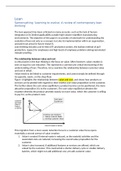
Figure 1 highlights the relationship between value and cost, and shows how products or
services can be plotted with regards to their relative cost-value proposition to the customer.
The further above the cost-value equilibrium a product/service can be positioned, the more
attractive proposition it is to the customers. The cost-value equilibrium denotes the
situation whereby the product provides exactly as much value, which the customer is willing
to pay for, as the product costs
This migration from a mere waste reduction focus to a customer value focus opens
essentially a second avenue of value creation:
1. Value is created if internal waste is reduced, as the wasteful activities and the
associated costs are reduced, increasing the overall value proposition for the
customer.
2. Value is also increased, if additional features or services are offered, which are
valued by the customer. This could entail a shorter delivery cycle or smaller delivery
batches, which might not add additional cost, yet add customer value.
Samenvatting ‘Learning to evolve; A review of contemporary lean
thinking’
The lean approach has been criticised on many accounts, such as the lack of human
integration or its limited applicability outside high-volume repetitive manufacturing
environments. The objective of this paper is to provide a framework for understanding the
evolution of lean not only as a concept, but also its implementation within an organisation,
and point out areas for future research.
Lean thinking includes: just-in-time (JIT) production system, the kanban method of pull
production, respect for employees and high levels of employee problem-solving/automated
mistake proofing.
The relationship between value and cost
A critical point in the lean thinking is the focus on value. Often however, value creation is
seen as equal to cost reduction. This represents a common yet critical shortcoming of the
understanding of lean. Therefore, let us examine the relationship between customer value
and cost in detail.
Value needs to be linked to customer requirements, and cannot simply be defined through
its opposite, waste, on the shop-floor.
Figure 1 highlights the relationship between value and cost, and shows how products or
services can be plotted with regards to their relative cost-value proposition to the customer.
The further above the cost-value equilibrium a product/service can be positioned, the more
attractive proposition it is to the customers. The cost-value equilibrium denotes the
situation whereby the product provides exactly as much value, which the customer is willing
to pay for, as the product costs
This migration from a mere waste reduction focus to a customer value focus opens
essentially a second avenue of value creation:
1. Value is created if internal waste is reduced, as the wasteful activities and the
associated costs are reduced, increasing the overall value proposition for the
customer.
2. Value is also increased, if additional features or services are offered, which are
valued by the customer. This could entail a shorter delivery cycle or smaller delivery
batches, which might not add additional cost, yet add customer value.


