Mental Health Exam 1 Theorists:
1. Freud
a. Apply concept of
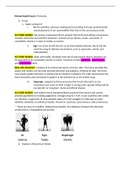
i. Id- the primitive, pleasure-seeking part (according to Freud, predominantly
sexual pleasure) of our personalities that lurks in the unconscious mind.
IN OTHER WORDS: the primary component that is present from birth and entirely unconscious.
Includes instinctive and primitive behaviors. It drives all our desires, wants, and needs. If
unsatisfied, results in a state of anxiety or tension
ii. Ego- our sense of self and acts as an intermediate between the id and the
world by using its defense mechanisms, such as repression, denial, and
rationalization
IN OTHER WORDS: deals with reality. Develops from the id and ensures that its impulses can
be expressed in an acceptable manner in reality. Functions in both conscious, preconscious,
and unconscious mind.
REAL LIFE ANALOGY: compare id to a horse and ego to a horse's rider. The horse provides the
power and motion, yet the rider provides direction and guidance. Without its rider, the horse
may simply wander wherever it wished and do whatever it pleased. The rider instead gives the
horse directions and commands to guide it in the direction he or she wishes to go.
iii. Superego- assigned to those processes that Freud referred to as our
conscience (our sense of what is right or wrong) and is greatly influenced by
our parents' or caregivers' moral and ethical stances
IN OTHER WORDS: internalized moral standards/ideals acquired from parent and society;
provides guidelines for making judgments. Emerges around 5 YOA. It acts to perfect and civilize
our behavior; suppresses all unacceptable urges of id and struggles to make ego act upon
idealistic standards vs realistic principles. Present in conscious, preconscious, and unconscious
** these are keys to a healthy, balanced personality. An imbalance between the elements
would lead to a maladaptive personality
2. Maslow’s Hierarchy of Needs
, 3. Erikson’s Stages of Development (Refer to Table 3-2)
Understand concept based on age and task to achieve
i. Trust vs Mistrust Ages- Birth to 1½ years
• Infancy
• Characteristics: learns to develop trusting relationships that form a
sense of hope. Trust requires a feeling of physical comfort and a
minimal experience of fear or uncertainty; if this occurs, the child will
extend trust to the world and self
ii. Autonomy vs shame and doubt- ages 1½ to 3 years
• Early childhood
• Characteristics: Starts the process of separation; learning to live
autonomously; gain self-control of and independence within the
environment
iii. Initiative vs Guilt: ages 3 to 6 years
• Play (Preschool)
• Characteristics: Learns about environmental influences; becomes
more aware of own identity. Achieve a sense of purpose and develop
a sense of mastery over tasks
iv. Industry vs Inferiority: ages 6-12 years
• School age
, • Characteristics: Energy is directed at accomplishments, creative
activities, and learning. Gain sense of self confidence and
recognitions through learning, competing, and performing
successfully
v. Identity vs Role Confusion: ages 12-20 years
• Adolescence
• Characteristics: Transitional period; movement towards adulthood;
starts incorporating beliefs and values that had been acquired
previously into a secure sense of self
vi. Intimacy vs Isolation: ages 20 to 30 years
• Young adulthood
• Characteristics: Maturity and social responsibility result in the ability
to love and be loved. For intense long-term relationships and commit
to another person, cause, institution, or creative effort
vii. Generativity vs Stagnation: ages 30 to 65 years
• Adulthood
• Characteristics: Emphasis on maintaining intimate relationships;
movement towards nurturing future generations. Achieve life goals
and obtain concern and awareness of future generations
viii. Integrity vs Despair: ages 60+
Senescence
Characteristics: Acceptance of life as it has been;
acceptance of both good and bad aspects of past life; maintaining a
positive self-concept. Derive meaning from one’s whole life and
obtain/maintain a sense of self-worth
Understand the role of neurotransmitters as related to disorders
1. Dopamine
a. Fine muscle movement, integration of emotions and thoughts, decision
making
b. Stimulates hypothalamus to release hormones (sex, thyroid, adrenal)
c. Too much: schizophrenia and mania
d. Not enough: Parkinson’s and depression
2. Serotonin
a. Mood, sleep regulation, hunger, pain perception, aggression, libido, and
hormone activity
b. Too much: anxiety
1. Freud
a. Apply concept of
i. Id- the primitive, pleasure-seeking part (according to Freud, predominantly
sexual pleasure) of our personalities that lurks in the unconscious mind.
IN OTHER WORDS: the primary component that is present from birth and entirely unconscious.
Includes instinctive and primitive behaviors. It drives all our desires, wants, and needs. If
unsatisfied, results in a state of anxiety or tension
ii. Ego- our sense of self and acts as an intermediate between the id and the
world by using its defense mechanisms, such as repression, denial, and
rationalization
IN OTHER WORDS: deals with reality. Develops from the id and ensures that its impulses can
be expressed in an acceptable manner in reality. Functions in both conscious, preconscious,
and unconscious mind.
REAL LIFE ANALOGY: compare id to a horse and ego to a horse's rider. The horse provides the
power and motion, yet the rider provides direction and guidance. Without its rider, the horse
may simply wander wherever it wished and do whatever it pleased. The rider instead gives the
horse directions and commands to guide it in the direction he or she wishes to go.
iii. Superego- assigned to those processes that Freud referred to as our
conscience (our sense of what is right or wrong) and is greatly influenced by
our parents' or caregivers' moral and ethical stances
IN OTHER WORDS: internalized moral standards/ideals acquired from parent and society;
provides guidelines for making judgments. Emerges around 5 YOA. It acts to perfect and civilize
our behavior; suppresses all unacceptable urges of id and struggles to make ego act upon
idealistic standards vs realistic principles. Present in conscious, preconscious, and unconscious
** these are keys to a healthy, balanced personality. An imbalance between the elements
would lead to a maladaptive personality
2. Maslow’s Hierarchy of Needs
, 3. Erikson’s Stages of Development (Refer to Table 3-2)
Understand concept based on age and task to achieve
i. Trust vs Mistrust Ages- Birth to 1½ years
• Infancy
• Characteristics: learns to develop trusting relationships that form a
sense of hope. Trust requires a feeling of physical comfort and a
minimal experience of fear or uncertainty; if this occurs, the child will
extend trust to the world and self
ii. Autonomy vs shame and doubt- ages 1½ to 3 years
• Early childhood
• Characteristics: Starts the process of separation; learning to live
autonomously; gain self-control of and independence within the
environment
iii. Initiative vs Guilt: ages 3 to 6 years
• Play (Preschool)
• Characteristics: Learns about environmental influences; becomes
more aware of own identity. Achieve a sense of purpose and develop
a sense of mastery over tasks
iv. Industry vs Inferiority: ages 6-12 years
• School age
, • Characteristics: Energy is directed at accomplishments, creative
activities, and learning. Gain sense of self confidence and
recognitions through learning, competing, and performing
successfully
v. Identity vs Role Confusion: ages 12-20 years
• Adolescence
• Characteristics: Transitional period; movement towards adulthood;
starts incorporating beliefs and values that had been acquired
previously into a secure sense of self
vi. Intimacy vs Isolation: ages 20 to 30 years
• Young adulthood
• Characteristics: Maturity and social responsibility result in the ability
to love and be loved. For intense long-term relationships and commit
to another person, cause, institution, or creative effort
vii. Generativity vs Stagnation: ages 30 to 65 years
• Adulthood
• Characteristics: Emphasis on maintaining intimate relationships;
movement towards nurturing future generations. Achieve life goals
and obtain concern and awareness of future generations
viii. Integrity vs Despair: ages 60+
Senescence
Characteristics: Acceptance of life as it has been;
acceptance of both good and bad aspects of past life; maintaining a
positive self-concept. Derive meaning from one’s whole life and
obtain/maintain a sense of self-worth
Understand the role of neurotransmitters as related to disorders
1. Dopamine
a. Fine muscle movement, integration of emotions and thoughts, decision
making
b. Stimulates hypothalamus to release hormones (sex, thyroid, adrenal)
c. Too much: schizophrenia and mania
d. Not enough: Parkinson’s and depression
2. Serotonin
a. Mood, sleep regulation, hunger, pain perception, aggression, libido, and
hormone activity
b. Too much: anxiety