CLIP
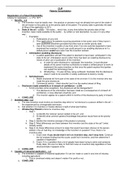
Patents Consolidation
Registration of a Patent/Patentability
Criteria for registration – s.1 PA 1977
1. Novelty – s.2
a. The invention must be totally new – the product or process must not already form part of the state of
the art known to the public as at the priority date of the patent. The priority date is generally the date
of filing of the application (s.5(1))
b. State of the art – s.2(2) – ‘All matter… which has, at any time before the priority date of that
invention, been made available to the public… by written or oral description, by use or in any other
way’.
i. Examples:
1. Publications of any kind
2. Prior applications for patents occurring anywhere in the world, even if they haven’t
been published anywhere provided that they have an earlier priority date
3. Use of the invention in public of any kind, even if no one could be expected to have
examined the invention (if such use could amount to an enabling disclosure ie if a
skilled person could have seen how the invention worked.
ii. Anticipation (enabling disclosure)
1. A patent application will fail if the patent is deemed to have been ‘anticipated’ in the
state of the art. Anticipation occurs when there has been an enabling disclosure by
means of prior use or publication of the invention.
a. In order for prior disclosure to ‘anticipate’ the invention, it must disclose
details of the same invention sufficiently to enable a skilled person to work (ie
implement) the same invention so that once the patent expires third parties
can exploit the technology freely.
b. Windsurfing – 12-year-old boy using surfboard. Illustrates that the disclosure
doesn’t need to be scientific or widely publicised to destroy novelty.
iii. Self-disclosure
1. Matter disclosed will form part of the state of the art even if it is the inventor who has
made the prior disclosure.
2. Commercial advice – client shouldn’t put it on the market ahead of filing
c. Disclosure made unlawfully or in breach of confidence – s.2(4)
i. S.2(4) provides some exceptions. Any disclosure will be disregarded if:
1. The disclosure of the information has been made as a consequence of a breach of
confidence, or was obtained unlawfully; and
2. The inventor applies for a patent within 6 months of the disclosure by party in breach.
d. CONCLUDE
2. Inventive step – s.3
a. The new invention must involve an inventive step which is ‘not obvious to a person skilled in the art’ –
the experienced by unimaginable technician.
b. Ask whether it is inventive or merely obvious in light of what went before.
c. Windsurfing//Pozzoli criteria for inventive step.
i. Step 1:
1. A) identify the notional ‘person skilled in the art’; and
2. B) identify what common general knowledge that person would have at the priority
date
ii. Step 2: Identify the inventive concept of the product or process
iii. Step 3: What differences are there between this invention and the state of the art? (what
already exists)
iv. Step 4: do these differences amount to steps that would have been obvious to the person
skilled in the art had they no knowledge of the invention in question? If so, there is no
inventive step.
1. Exam note: if you decide that it isn’t an inventive step, don’t stop here. Continue
the full analyse finding that the courts could find it inventive, and then determine if
capable of registration
2. Exam: if it is a problem that a lot of people have been trying to solve and someone
finally does, the court is likely to find that it was an inventive step regardless of how
obvious/simple it appears to be
d. CONCLUDE
3. Capable of industrial application – s.4
a. The invention is capable of industrial application if it can be ‘made or used in any kind of industry,
including agriculture’.
i. This is construed widely and doesn’t matter if for profit or not.
b. CONCLUDE
Patents Consolidation
Registration of a Patent/Patentability
Criteria for registration – s.1 PA 1977
1. Novelty – s.2
a. The invention must be totally new – the product or process must not already form part of the state of
the art known to the public as at the priority date of the patent. The priority date is generally the date
of filing of the application (s.5(1))
b. State of the art – s.2(2) – ‘All matter… which has, at any time before the priority date of that
invention, been made available to the public… by written or oral description, by use or in any other
way’.
i. Examples:
1. Publications of any kind
2. Prior applications for patents occurring anywhere in the world, even if they haven’t
been published anywhere provided that they have an earlier priority date
3. Use of the invention in public of any kind, even if no one could be expected to have
examined the invention (if such use could amount to an enabling disclosure ie if a
skilled person could have seen how the invention worked.
ii. Anticipation (enabling disclosure)
1. A patent application will fail if the patent is deemed to have been ‘anticipated’ in the
state of the art. Anticipation occurs when there has been an enabling disclosure by
means of prior use or publication of the invention.
a. In order for prior disclosure to ‘anticipate’ the invention, it must disclose
details of the same invention sufficiently to enable a skilled person to work (ie
implement) the same invention so that once the patent expires third parties
can exploit the technology freely.
b. Windsurfing – 12-year-old boy using surfboard. Illustrates that the disclosure
doesn’t need to be scientific or widely publicised to destroy novelty.
iii. Self-disclosure
1. Matter disclosed will form part of the state of the art even if it is the inventor who has
made the prior disclosure.
2. Commercial advice – client shouldn’t put it on the market ahead of filing
c. Disclosure made unlawfully or in breach of confidence – s.2(4)
i. S.2(4) provides some exceptions. Any disclosure will be disregarded if:
1. The disclosure of the information has been made as a consequence of a breach of
confidence, or was obtained unlawfully; and
2. The inventor applies for a patent within 6 months of the disclosure by party in breach.
d. CONCLUDE
2. Inventive step – s.3
a. The new invention must involve an inventive step which is ‘not obvious to a person skilled in the art’ –
the experienced by unimaginable technician.
b. Ask whether it is inventive or merely obvious in light of what went before.
c. Windsurfing//Pozzoli criteria for inventive step.
i. Step 1:
1. A) identify the notional ‘person skilled in the art’; and
2. B) identify what common general knowledge that person would have at the priority
date
ii. Step 2: Identify the inventive concept of the product or process
iii. Step 3: What differences are there between this invention and the state of the art? (what
already exists)
iv. Step 4: do these differences amount to steps that would have been obvious to the person
skilled in the art had they no knowledge of the invention in question? If so, there is no
inventive step.
1. Exam note: if you decide that it isn’t an inventive step, don’t stop here. Continue
the full analyse finding that the courts could find it inventive, and then determine if
capable of registration
2. Exam: if it is a problem that a lot of people have been trying to solve and someone
finally does, the court is likely to find that it was an inventive step regardless of how
obvious/simple it appears to be
d. CONCLUDE
3. Capable of industrial application – s.4
a. The invention is capable of industrial application if it can be ‘made or used in any kind of industry,
including agriculture’.
i. This is construed widely and doesn’t matter if for profit or not.
b. CONCLUDE