NR293/ NR 293 Exam 2 solution guide 2022 Distinction level approved.
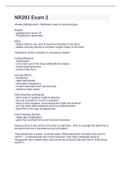
NR293 Exam 2 nitrates (Nitroglycerin) - Medication used to resolve angina. Routes: - sublingual for acute CP - PO/topical for prevention MOA: - dilates arteries and veins to decrease the load on the heart - dilates coronary arteries to increase oxygen supply to the heart Indications: stable, unstable, or vasospastic angina Contraindications: - hypotension - concurrent use of ED drugs (sildenafil aka viagra) - closed angel glaucoma - severe head injury Adverse effects: - headaches - reflex tachycardia - orthostatic hypotension - contact dermatitis (from topical route) - tolerance (from patch) Client teaching (sublingual): - don't chew or swallow; needs to dissolve - burning sensation in mouth is expected - store in dark container, avoid exposure to light and moisture - sit or lie down before taking to avoid syncope/dizziness - take PRN at first sign of anginal pain Client teaching (topical): - rotate site of application - patch free overnight (8 hours) to prevent tolerance because there is less work on the heart at night time - Why is overnight the best time to be patch free from a transdermal form of nitrates? They should take 3 doses, 5 minutes apart. While taking their 3rd dose, they need to call 911. - If experiencing new onset chest pain, how many sublingual doses of nitroglycerin can a patient take, and how far apart should they take them? Should they call 911? Class: Beta 1 adrenergic Example: Dobutamine - This drug is given to patients with heart failure. It is a positive inotrope. It can only be given IV (only in the hospital). MOA: increase cardiac output Indications: heart failure Side/adverse effects: - headache - nervousness - dizziness - palpitations - N/V Contraindications: - allergy - severe hypertension Class: Cardiac glycosides Example: digoxin (Lanoxin) - This drug is given to patients with heart failure. It is a positive inotrope. It can be given PO or IV. MOA: - changes electrical conduction properties of the heart - cholinergic stimulation via vagus nerve Indications: - HF - a fib Contraindications: - allergy - 2nd or 3rd degree AV block - v fib Interactions: - amiodarone, quinidine, and verapamil may increase levels of this drug by 50% - lots others Side/adverse effects: - headaches and dizziness - dysrhythmias - GI (anorexia, N/V/D) DIG TOXICITY: - low therapeutic window (0.5-2ng/ml) - blurred vision, halo or yellow/green vision - GI symptoms (stomach pain, no appetite) Conditions that increase risk of dig toxicity: - hypokalemia and hypomagnesemia - decrease in renal function (if kidneys are not working, digoxin can't be excreted) Management for toxicity: - ALWAYS monitor apical pulse rate for one minute (<60 or >100) - stop K depleting drugs - monitor potassium level (administer if need be) increase contractility of the heart - What do positive inotropes do? - amiodarone (Cordarone) - adenosine (Adenocard) - What are two antidysrhythmic drugs? amiodarone (Cordarone) - MOA: block potassium channels and prolong action potential duration and refractory period Indications: supraventricular tachycardia (SVT) Contraindications: - bradycardia - AV block Side/adverse effects: - BBW: pulmonary toxicity, hepatotoxicity, and dysrhythmias - thyroid dysfunction - visual disturbance - photosensitivity - neuropathy - blue/grey discoloration with long term use or high doses Notes: - can be taken at home or in hopsital - really long half life adenosine (Adenocard) - MOA: slows conduction through AV node Indications: used to covert paroxysmal supraventricular tachycardia (PSVT) to sinus rhythm Side/adverse effects: - may cause asystole for a few seconds Contraindications: - 2nd and 3rd degree heart block - sick sinus syndrome - allergy Notes: - given in emergency situations - very short half life (less than 10 seconds) - ONLY administered IV PUSH - can give more than once - "reset" of the heart The will feel as if a pound of bricks is laying on their chest. - Once adenosine is pushed, how will the patient feel? diuretics - Before starting a patient on a hypertensive, what is recommended to try first? Diuretics decrease fluid which takes pressure off the heart, which in turn lowers blood pressure. - How do diuretics help to lower blood pressure? General teaching for all antihypertensives - - all antihypertensives can cause HYPOtension - take at same type each day; if dose is missed, take asap (do not double doses) - monitor BP; keep log of BP at home - don't stop medications abruptly - avoid OTC meds without consulting HCP - do exercises that prevent blood pooling in the legs - avoid activities that may decrease BP (ETOH, hot tubs, prolonged sitting) Class: Alpha 2 receptor agonist - Examples: - clonidine (Catapres) - Methyldopa (Aldomet) MOA: stimulates adrenergic receptors in the brain to decrease sympathetic outflow from CNS Indications: - HTN - symptoms of opioid withdrawal Side/adverse effects: - orthostatic hypotension - fatigue - dizziness - dry mouth - REBOUND hypertension can happen if stopped abruptly Contraindications: allergy Nursing implications: - avoid sudden position changes to decrease likelihood of orthostatic hypotension - avoid CNS depressants and alcohol - Methyldopa (Aldomet) IS safe in pregnancy Class: alpha 1 receptor antagonists "azosin" - Examples: - doxazosin (Cadura) - terazosin (Hytrin) - prazosin (Minipress) MOA: prevents vasoconstriction Indications: - severe HF - terazosin (Hytrin) reduces symptoms of BPH and prevents urinary obstruction Side/adverse effects: - hypotension - first dose syncope - dizziness - headache Contraindications: - allergy - sildenafil (Viagra) Nursing implications: - change positions slowly - take at bedtime to avoid first dose syncope and dizziness Cardioselective block beta 1 receptors; which affect the heart. Nonselective block beta 1 and beta 2 receptors; which affect the lungs. - What do cardioselective and nonselective beta blockers do? Class: Beta Blockers "olol" - Cardioselective (B1) - metoprolol (Lopressor, Toprol XL) - atenolol (Tenormin) - nebivolol (Bystolic) Nonselective (B1 and B2) - propranolol (Inderal) MOA: - reduces BP indirectly - blocks beta receptors in heart - decrease HR (chronotropic effects) - decrease BP Indications: - HTN - cardio protective after MI - ischemic heart disease/angina Side/adverse effects: - BBW: at risk for MI or angina if stopped abruptly - bradycardia - reflex tachycardia - orthostatic hypotension - arrhythmia - edema - dizziness and drowsiness - fatigue - headache - impotence - bronchoconstriction with nonselective - hypo/hyperglycemia Contraindications: - HF - bradycardia - hypotension Nursing implications: - may mask tachycardia with hypoglycemia - caution in nonselective with patients who have asthma or COPD Class: Dual action alpha 1 and beta receptor blockers "lol" - Example: - carvedilol (Coreg) - labetalol (Trandate, Normodyne) MOA: block alpha 1 and beta 1 receptors in heart, arterioles, and kidney Indications: - HTN - HF (mild to moderate) Side/adverse effects: - hypotension - dizziness - syncope Contraindications: - severe bradycardia - bronchospasms - severe unstable HF - heart block - hypotension Prodrugs need to metabolized in the liver in order to be activated. Non prodrugs do not. - What is important to know about prodrugs? Class: Angiotensin-converting enzyme (ACE) inhibitors "pril" - Non prodrugs: - captopril (Capoten) - lisinopril (Prinivil) Prodrugs: - enalapril (Vasotec) - benazepril (Lotensin) - fosinopril (Monopril) MOA: blocks production of angiotensin II by inhibiting angiotensin-converting enzyme Indications: - FIRST LINE DRUG for HTN - cardio protective (slows progression of left ventricular hypertrophy after MI) - renal protective (good for people who have DM) - in clients who have liver dysfunction (only non prodrugs) Side/adverse effects: - orthostatic hypotension - hyperkalemia - angioedema - renal impairment (in patients who have severe heart failure) - fatigue - dizziness - headache - loss of taste - dry, nonproductive cough Contraindications: - BBW: pregnancy - hyperkalemia - hypotension Interactions: - NSAIDs decrease effects Nursing impllications: - avoid foods high in potassium or potassium supplements - change positions slowly - caution with k sparing diuretics - call 911 if angioedema occurs - monitor potassium levels clients who have liver disease - Who are non prodrugs good for? Swelling of the face, eyes, tongue, and difficultly swallowing or breathing. YES it is a medical emergency! - What are signs that angioedema is occurring? Is it a medical emergency? Class: Angiotensin II receptor blockres (ARBs) "sartan" - Example: - isosartan (Cozaar) - valsartan (Diovan) MOA: - block receptors that receive AGII - block vasoconstriction and release of aldosterone Indication: - HTN - HF Side/adverse effects: - URI - UTI - hypoglycemia - CP - fatigue and weakness - diarrhea - anemia - hyperkalemia (much less likely to occur than ACE inhibitors) TOXICITY: - hypotension - tachycardia Contraindications: - BBW: pregnancy - caution: older adults and renal/liver dysfunction Interactions: - NSAIDs (decrease effect) - lithium (increases toxicity) - k sparing diuretics - k supplements Class: Calcium channel blockers - Example: - amlodipine (Norvasc) - nifedipine (Procardia) - verapamil (Calan, Isoptin) MOA: causes smooth muscle relaxation Indications: - FIRST LINE DRUG for African Americans - angina - dysrhythmias (SVT) - migraines Side/adverse effects: - hypotension - palpations - bradycardia or tachycardia - constipation - nausea - dyspnea - rash - flushing - peripheral edema Contraindications: - acute MI ***********************Continued
Written for
- Institution
-
Chamberlain College Of Nursing
- Course
-
NR293 (NR293)
Document information
- Uploaded on
- July 28, 2022
- Number of pages
- 38
- Written in
- 2021/2022
- Type
- Other
- Person
- Unknown
Subjects
- nr293 exam 2
- nr 293 exam 2
-
medication used to resolve angina

Also available in package deal