NR 507 WEEK 3 QUIZ 2 – QUESTION AND ANSWERS
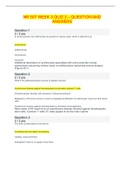
NR 507 WEEK 3 QUIZ 2 – QUESTION AND ANSWERS NR 507 WEEK 3 QUIZ 2 – QUESTION AND ANSWERS Question 1 2 / 2 pts In some anemias, the erythrocytes are present in various sizes, which is referred to as Correct! anisocytosis. poikilocytosis. microcytosis. isocytosis. Additional descriptors of erythrocytes associated with some anemias include anisocytosis (assuming various sizes) or poikilocytosis (assuming various shapes) (Figure 26-1). Question 2 2 / 2 pts What is the pathophysiologic process of aplastic anemia? Correct! Autoimmune disease against hematopoiesis by activated cytotoxic T cells Inherited genetic disorder with recessive X-linked transmission Malignancy of the bone marrow in which unregulated proliferation of erythrocytes crowd out other blood cells Autoimmune disease against hematopoiesis by activated immunoglobulins Most cases of AA result from an autoimmune disease directed against hematopoietic stem cells. Cytotoxic T cells (Tc cells) appear to be the main culprits. Question 3 2 / 2 pts The body compensates for anemia by Correct! increasing rate and depth of breathing. capillary vasoconstriction. hemoglobin holds on to oxygen more firmly. kidneys release more erythropoietin. Tissue hypoxia creates additional demands and compensatory actions on the pulmonary and hematologic systems. The rate and depth of breathing increase in an attempt to increase the availability of oxygen. Question 4 2 / 2 pts A woman complains of chronic gastritis, fatigue, weight loss, and tingling in her fingers. Laboratory findings show low hemoglobin and hematocrit levels, and a high mean corpuscular volume. These findings are consistent with _____ anemia. aplastic iron deficiency folate deficiency Correct! pernicious Gastric atrophy commonly occurs in the presence of type A chronic gastritis and may be autoimmune. Autoantibodies against gastric parietal cells are frequently observed. When the hemoglobin level in the blood has decreased significantly (7 to 8 g/dl), the individual experiences the classic symptoms of anemia—weakness, fatigue, paresthesias of the feet and fingers, difficulty in walking, loss of appetite, abdominal pains, and weight loss. Question 5 2 / 2 pts Symptoms of polycythemia vera are mainly the result of Correct! increased blood viscosity. destruction of erythrocytes. a decreased erythrocyte count. neurologic involvement. As the disease progresses many of the symptoms are related to the increased blood cellularity and viscosity. Question 6 0 / 2 pts Untreated pernicious anemia is fatal, usually because of You Answered brain hypoxia. liver hypoxia. renal failure. Correct Answer heart failure. Untreated PA is fatal, usually because of heart failure. Question 7 2 / 2 pts What is the most common cause of vitamin K deficiency? Administration of warfarin (Coumadin) An IgG-mediated autoimmune disorder Liver failure Correct! Total parenteral nutrition (TPN) with antibiotic therapy The most common cause of vitamin K deficiency is parenteral nutrition in combination with broad-spectrum antibiotics that destroy normal gut flora. Question 8 2 / 2 pts Which of the following is a description consistent with chronic lymphocytic leukemia (CLL)? Correct! There is failure of B cells to mature into plasma cells that synthesize immunoglobulins. The bone marrow and peripheral blood are characterized by leukocytosis and a predominance of blast cells. As the immature blasts increase, they replace normal myelocytic cells, megakaryocytes, and erythrocytes. The translocation of genetic material from genes 9 and 22 creates an abnormal, fused protein identified as BCR-ABL. There are defects in the ras oncogene, TP53 tumor-suppressor gene, and INK4A, the gene encoding a cell-cycle regulatory protein. Thus CLL is derived from transformation of a partially mature B cell that has not yet encountered antigen. Question 9 0 / 2 pts Local signs and symptoms of Hodgkin disease–related lymphadenopathy are a result of Correct Answer pressure and obstruction. ischemia and pressure. You Answered inflammation and ischemia. obstruction and pressure. Local symptoms caused by pressure and obstruction of the lymph nodes are the result of lymphadenopathy. Question 10 2 / 2 pts Heparin-induced thrombocytopenia (HIT) is described as a(n) IgE-mediated allergic drug reaction that reduces circulating platelets. Correct! IgG immune-mediated adverse drug reaction that reduces circulating platelets. cell-mediated drug reaction in which macrophages process the heparin and platelet complexes that are then destroyed by activated cytotoxic T cells. hematologic reaction to heparin in which the bone marrow is unable to produce sufficient platelets to meet the body’s needs. Heparin is a common cause of drug-induced thrombocytopenia. HIT is an immune-mediated, adverse drug reaction caused by IgG antibodies that leads to increased platelet consumption and a decrease in platelet counts. Question 11 2 / 2 pts In a full-term infant, the normal erythrocyte life span is _____ days, whereas the adult is _____ days. 120 to 130; 150 90 to 110; 140 30 to 50; 80 Correct! 60 to 80; 120 In full-term infants, normal erythrocyte life span is 60 to 80 days; in premature infants it may be as short as 20 to 30 days; and in children and adolescents, it is the same as that in adults—120 days. Question 12 2 / 2 pts What is the name of the disorder in which levels of bilirubin remain excessively high in the newborn and are deposited in the brain?
Written for
- Institution
-
Chamberlain College Nursing
- Course
-
ADV PATHO NR 507
Document information
- Uploaded on
- July 13, 2022
- Number of pages
- 9
- Written in
- 2021/2022
- Type
- Exam (elaborations)
- Contains
- Questions & answers
Subjects
- nr 507 week 3 quiz 2
- nr 507
- th
-
nr 507 week 3 quiz 2 – question and answers
-
nr 507 week quiz 2 – question and answers
-
nr 507 week 3 quiz 2 – question and answers question 1 2 2 pts in some anemias

Also available in package deal