Emed Review Exam 1
Respiratory Emergencies
Dyspnea
• Labored breathing
• 2/3rd of ED patients with this complaint have a pulm/cardiac etiology
o Asthma, COPD, PNA, CHF, MI, PE, pneumothorax, upper airway obstruction, anxiety attack
• Signs of resp failure → cyanosis, hypoxia, retractions, accessory muscle use, stridor, tachypnea, tachycardic,
lethargy, paradoxical ABD wall movements
• COPD → long-term smokers and present with pursed lip breathing
• Hemoptysis → bronchitis or PE
• Respiratory or Ventilatory failure → when lungs/vent muscles can’t move air in and out to adequately
oxygenate
COPD
• Chronic. Progressive airway obstruction that is NOT FULLY reversible (this is how you differentiate from
asthma! asthma is fully reversible)
• Abnormal inflammatory process to noxious particles or gases
• 85% chronic bronchitis and 15% emphysema
• Exacerbations to → infection, drugs, irritants, cold weather, BB, NSAIDS
• HALLMARK → exertional dyspnea & cough
• S&S → bronchoconstriction, vasoconstriction, mucus hypersecretion, worse VQ mismatch & hyoxemia
o Tachypnea, tachycardia, HTN, cyanotic, AMS, pulses paradoxus, pursed lip breathing, tripoding
• Dx → pulse ox, ABG, CXR, ECG, Labs, CT chest, BNP
• Tx → O2 (raise PaO2 >60 or SaO2 >90%) → takes 20-30 min to work/ see changes on ABG
o Beta agonists and anti-cholinergic (albuterol & Ipratropium) – KNOW
o Corticosteroids in ED reduces visits (solumedrol and then a short course for @ home)
o ABX if indicated and assisted vent (resp acidosis,
fatigue)
,CHF & Acute Pulmonary Edema
• Acute respiratory distress, HTN, cool diaphoretic skin, JVD, edema and Bibasilar rales → KEY FOR CHF
• Other causes of pulm edema → injection opioid & Narcan, high altitude, sepsis, transfusion, DIC
• Dx → Hx and PE, CXR (can be normal until 6 hours later), CBC, CMP, BMP, UA, cardiac enzymes, EKG
• Tx → manage AIRWAY & BREATHING 1st, Nitroglycerine and furosemide (Lasix) for HTN
o If HYPOtensive → dopamine (IVF in R sided HF)
Asthma
• Chronic inflammatory disorder caused by INCREASED AIRWAY RESPONSIVNESS to multiple stimuli
• REVERSIBLE (unlike COPD)
• HALLMARK → reduced airway diameter caused by smooth muscle contractions, vascular congestion, bronchial
wall edema and THICK secretions
• TRIAD → DYSPNEA, WHEEZE, COUGH
• ASK → severity (what you take and how often, have u ever been in the hospital, intubated, spirometry
measurements)
• S&S → WHEEZING (intensity does NOT correlate to severity of attack → beware of silent test)
o Pulses paradoxus, tachypnea, tachycardia
• Dx → bedside spirometry (FEVI and PEF)
o Pulse ox, ABG (shows high PCO2), CXR
• Tx → bronchodilators (B2 agonist → albuterol vs levalbuterol)
o Anticholinergics → ipratropium
o Corticosteroids
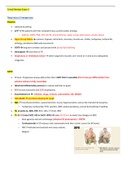
KNOW THIS CHART → TEST Q ON IT
, Status Asthmaticus
• Refractory asthma exacerbations that does not respond to usual treatments
• Mg sulfate, EPI, NPPV, mechanical vent
Ex. women with asthma exacerbation, cyanotic and silent lungs, what do you do? → PREPARE TO INTUBATE
Pneumonia
• Infection of alveolar (gas exchange) tissue of the lungs
• M/C agents → Strep Pneumo (#1), H flu, M. cat
• CAP → no hospital or LTC for 2 weeks before infection
• HAP → 48 hours or more after admission
• HCAP → hospitalized 2+ days within last 90 days, LTC residents, immunocompromised
• S&S → cough, fatigue, fever, dyspnea, rust color sputum, pleuritic CP, preceded URI symptoms, tachypnea
o Ronchi → more mycoplasma PNA
• Dx → CXR that shows consolidation
• Atypical PNA → HILAR infiltrates or viral pattern, extrapulm signs & sx
o The bugs that cause this are mycoplasma, legionella, chlamydial
• Tx →
o CAP → ceftriaxone + azithromycin
o HAP → (for pseudomonas) → quinolones & an aminoglycoside
o Staph → (cover for MRSA) → VANCO and if you want to send them home BACTRIM
TYPES OF PNA
• Klebsiella → currant jelly sputum
• Strep Pneumo → rust colored sputum
• Mycoplasma → upper & lower resp tract sx, interstitial infiltrates (reticulonodular pattern)
• Legionella → GI sx (N/V/D)
• S. aureus → after viral illness (AFTER HAVING THE FLU) and CXR shows empyema
• Pseudomonas → recently hospitalized, immunocomp patients
Respiratory Emergencies
Dyspnea
• Labored breathing
• 2/3rd of ED patients with this complaint have a pulm/cardiac etiology
o Asthma, COPD, PNA, CHF, MI, PE, pneumothorax, upper airway obstruction, anxiety attack
• Signs of resp failure → cyanosis, hypoxia, retractions, accessory muscle use, stridor, tachypnea, tachycardic,
lethargy, paradoxical ABD wall movements
• COPD → long-term smokers and present with pursed lip breathing
• Hemoptysis → bronchitis or PE
• Respiratory or Ventilatory failure → when lungs/vent muscles can’t move air in and out to adequately
oxygenate
COPD
• Chronic. Progressive airway obstruction that is NOT FULLY reversible (this is how you differentiate from
asthma! asthma is fully reversible)
• Abnormal inflammatory process to noxious particles or gases
• 85% chronic bronchitis and 15% emphysema
• Exacerbations to → infection, drugs, irritants, cold weather, BB, NSAIDS
• HALLMARK → exertional dyspnea & cough
• S&S → bronchoconstriction, vasoconstriction, mucus hypersecretion, worse VQ mismatch & hyoxemia
o Tachypnea, tachycardia, HTN, cyanotic, AMS, pulses paradoxus, pursed lip breathing, tripoding
• Dx → pulse ox, ABG, CXR, ECG, Labs, CT chest, BNP
• Tx → O2 (raise PaO2 >60 or SaO2 >90%) → takes 20-30 min to work/ see changes on ABG
o Beta agonists and anti-cholinergic (albuterol & Ipratropium) – KNOW
o Corticosteroids in ED reduces visits (solumedrol and then a short course for @ home)
o ABX if indicated and assisted vent (resp acidosis,
fatigue)
,CHF & Acute Pulmonary Edema
• Acute respiratory distress, HTN, cool diaphoretic skin, JVD, edema and Bibasilar rales → KEY FOR CHF
• Other causes of pulm edema → injection opioid & Narcan, high altitude, sepsis, transfusion, DIC
• Dx → Hx and PE, CXR (can be normal until 6 hours later), CBC, CMP, BMP, UA, cardiac enzymes, EKG
• Tx → manage AIRWAY & BREATHING 1st, Nitroglycerine and furosemide (Lasix) for HTN
o If HYPOtensive → dopamine (IVF in R sided HF)
Asthma
• Chronic inflammatory disorder caused by INCREASED AIRWAY RESPONSIVNESS to multiple stimuli
• REVERSIBLE (unlike COPD)
• HALLMARK → reduced airway diameter caused by smooth muscle contractions, vascular congestion, bronchial
wall edema and THICK secretions
• TRIAD → DYSPNEA, WHEEZE, COUGH
• ASK → severity (what you take and how often, have u ever been in the hospital, intubated, spirometry
measurements)
• S&S → WHEEZING (intensity does NOT correlate to severity of attack → beware of silent test)
o Pulses paradoxus, tachypnea, tachycardia
• Dx → bedside spirometry (FEVI and PEF)
o Pulse ox, ABG (shows high PCO2), CXR
• Tx → bronchodilators (B2 agonist → albuterol vs levalbuterol)
o Anticholinergics → ipratropium
o Corticosteroids
KNOW THIS CHART → TEST Q ON IT
, Status Asthmaticus
• Refractory asthma exacerbations that does not respond to usual treatments
• Mg sulfate, EPI, NPPV, mechanical vent
Ex. women with asthma exacerbation, cyanotic and silent lungs, what do you do? → PREPARE TO INTUBATE
Pneumonia
• Infection of alveolar (gas exchange) tissue of the lungs
• M/C agents → Strep Pneumo (#1), H flu, M. cat
• CAP → no hospital or LTC for 2 weeks before infection
• HAP → 48 hours or more after admission
• HCAP → hospitalized 2+ days within last 90 days, LTC residents, immunocompromised
• S&S → cough, fatigue, fever, dyspnea, rust color sputum, pleuritic CP, preceded URI symptoms, tachypnea
o Ronchi → more mycoplasma PNA
• Dx → CXR that shows consolidation
• Atypical PNA → HILAR infiltrates or viral pattern, extrapulm signs & sx
o The bugs that cause this are mycoplasma, legionella, chlamydial
• Tx →
o CAP → ceftriaxone + azithromycin
o HAP → (for pseudomonas) → quinolones & an aminoglycoside
o Staph → (cover for MRSA) → VANCO and if you want to send them home BACTRIM
TYPES OF PNA
• Klebsiella → currant jelly sputum
• Strep Pneumo → rust colored sputum
• Mycoplasma → upper & lower resp tract sx, interstitial infiltrates (reticulonodular pattern)
• Legionella → GI sx (N/V/D)
• S. aureus → after viral illness (AFTER HAVING THE FLU) and CXR shows empyema
• Pseudomonas → recently hospitalized, immunocomp patients