HIEU 201 CHAPTER 12 QUIZ
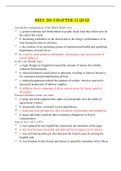
Among the consequences of the Black Death were
a. greater tolerance and brotherhood as people faced what they believed to be
the end of the world.
b. increasing confidence in the church due to the clergy's performance of its
duty during the time of adversity.
c. the creation of art portraying scenes of optimism and health and signifying
hopefulness of God's favor.
d. a turn by some people to debauchery, lawlessness, and various forms of
bizarre behavior.
In the Late Middle Ages
a. legal changes in England increased the amount of money the nobility
collected from peasants.
b. reduced demand caused prices to plummet, resulting in reduced incentive
for commercial and manufacturing activity.
c. reduced population reduced the amount of warfare, which in turn led to
decreased production of military supplies.
d. inflation, due to a shortage of silver, caused prices for luxury goods to
skyrocket.
Peasant rebellions broke out when
a. kings and lords supported the rights of townspeople over the rights of
agricultural workers.
b. democratic ideas circulated in rural populations.
c. kings and lords attempted to alter customary relationships and obligations.
d. kings and lords would not alter customary obligations to fit new
circumstances.
Joan of Arc (1412–1431)
a. was captured by the English but released on the insistence of the pope.
b. led French troops into battle and liberated the besieged city of Orléans.
c. was a French peasant girl who betrayed the French cause by joining the
English side.
d. was forsaken by the French and forced to spend the remainder of her life in
, a convent.
Unam Sanctam (1302)
a. systematized the goals of the Conciliar Movement.
b. upheld papal claims to supremacy over secular rulers.
c. provided a statement of the beliefs of Jan Hus.
d. expressed the supremacy of earthly power over spiritual power.
In his The Defender of the Peace, Marsiglio of Padua
a. critiqued clerical intrusion into worldly affairs.
b. argued that kings received their power from God.
c. argued that the state should be subordinate to the church.
d. supported the doctrine of papal power.
The Babylonian Captivity (1309–1377) refers to a period when
a. there were two popes: one in Avignon, one in Rome.
b. the seat of the papacy was moved to Avignon, in southern France, and was
subject to pressure by the kings of France.
c. there was no pope, since no consensus could be reached about who should
fill the position.
d. the seat of the papacy was moved to England and was subject to pressure
by the kings of England.
The Conciliar Movement
a. attempted to limit the pope's powers through a general council of clergy.
b. attempted to resolve the Great Schism by convening a general council at
Pisa.
c. attempted to defend the pope's right to dominate church councils.
d. succeeded in reorganizing the papacy into a constitutional monarchy.
The Lollards were
a. French heretics who supported Wycliffe and Hus.
b. a new group of friars, like the Franciscans and the Dominicans.
c. supporters of Hus and his movement.
d. an order of priests who took vows of poverty and spread Wycliffe's
message of teaching the Bible to all Christians.
William of Ockham's main purpose in writing that reason could not prove the
existence of God was to
a. disengage faith from reason.
Among the consequences of the Black Death were
a. greater tolerance and brotherhood as people faced what they believed to be
the end of the world.
b. increasing confidence in the church due to the clergy's performance of its
duty during the time of adversity.
c. the creation of art portraying scenes of optimism and health and signifying
hopefulness of God's favor.
d. a turn by some people to debauchery, lawlessness, and various forms of
bizarre behavior.
In the Late Middle Ages
a. legal changes in England increased the amount of money the nobility
collected from peasants.
b. reduced demand caused prices to plummet, resulting in reduced incentive
for commercial and manufacturing activity.
c. reduced population reduced the amount of warfare, which in turn led to
decreased production of military supplies.
d. inflation, due to a shortage of silver, caused prices for luxury goods to
skyrocket.
Peasant rebellions broke out when
a. kings and lords supported the rights of townspeople over the rights of
agricultural workers.
b. democratic ideas circulated in rural populations.
c. kings and lords attempted to alter customary relationships and obligations.
d. kings and lords would not alter customary obligations to fit new
circumstances.
Joan of Arc (1412–1431)
a. was captured by the English but released on the insistence of the pope.
b. led French troops into battle and liberated the besieged city of Orléans.
c. was a French peasant girl who betrayed the French cause by joining the
English side.
d. was forsaken by the French and forced to spend the remainder of her life in
, a convent.
Unam Sanctam (1302)
a. systematized the goals of the Conciliar Movement.
b. upheld papal claims to supremacy over secular rulers.
c. provided a statement of the beliefs of Jan Hus.
d. expressed the supremacy of earthly power over spiritual power.
In his The Defender of the Peace, Marsiglio of Padua
a. critiqued clerical intrusion into worldly affairs.
b. argued that kings received their power from God.
c. argued that the state should be subordinate to the church.
d. supported the doctrine of papal power.
The Babylonian Captivity (1309–1377) refers to a period when
a. there were two popes: one in Avignon, one in Rome.
b. the seat of the papacy was moved to Avignon, in southern France, and was
subject to pressure by the kings of France.
c. there was no pope, since no consensus could be reached about who should
fill the position.
d. the seat of the papacy was moved to England and was subject to pressure
by the kings of England.
The Conciliar Movement
a. attempted to limit the pope's powers through a general council of clergy.
b. attempted to resolve the Great Schism by convening a general council at
Pisa.
c. attempted to defend the pope's right to dominate church councils.
d. succeeded in reorganizing the papacy into a constitutional monarchy.
The Lollards were
a. French heretics who supported Wycliffe and Hus.
b. a new group of friars, like the Franciscans and the Dominicans.
c. supporters of Hus and his movement.
d. an order of priests who took vows of poverty and spread Wycliffe's
message of teaching the Bible to all Christians.
William of Ockham's main purpose in writing that reason could not prove the
existence of God was to
a. disengage faith from reason.