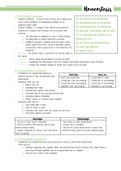
Homeostasis
15.1 The Principle of Homeostasis
- Negative feedback – a process that reverses any change away 15.1 The principles of homeostasis
from normal conditions, so maintaining conditions at an 15.2 thermoregulation in ectotherms
optimum steady state.
- Positive feedback – a change in the internal environment is 15.3 thermoregulation in endotherms
detected by receptors and effectors act to increase that 15.4 excretion, homeostasis, and the liver
response.
15.5 the structure and function of the
o The attraction of platelets to a site of blood clotting
o The generation of action potential in neurones mammalian liver
o Childbirth (oxytocin is released when the baby’s head 15.6 the kidney and osmoregulation
pushes against the cervix, oxytocin stimulates uterine
contractions, which causes more of the hormone to be 15.7 urine and diagnosis
produced.) 15.8 kidney failure
- Set point – the desired value, it represents the normal range of
the factor
- Receptors – detect stimuli and deviations from the set point
- Controller – coordinates the information from the receptors and sends instructions to the effectors.
- Effectors – produce the changes required to return the system to the set point
15.2 Thermoregulation in Ectotherms
- Ectotherms are animals that depend on Heat Gains Heat Loss
external sources of heat to determine body
- Heat from respiration - Evaporation of water
temperature.
- Conduction from surroundings - Conduction to surroundings
- Behaviour when too cold:
- Convection from surroundings - Convection to surroundings
o Bask in the sun
- Radiation from surroundings - Radiation to surroundings
o Changing body shape
o Pressing body against warm ground
o Orientate body to sun, increase surface area
o Increasing cellular metabolism
o Darker colours as it absorbs more radiation
- Behaviour when too hot:
o Seek shade, hide in rocks
o Move to water or mud
o Orientate body away from sun, reduce surface area
o Press body against cool stones
Advantages Disadvantages
- Use less of their food in respiration - Less active in colder temperatures
- Need to find less food and may survive long - Greater risk of predation
periods without eating - May be less active during winter so must have
- Greater proportion of energy from food can be sufficient energy stores to survive without eating
used for growth
15.3 Thermoregulation in Endotherms
- Endotherms are animals that use internal sources of heat to control body temperature.
- When too hot:
o Arterioles supplying skin capillaries dilate and arteriovenous shunt constricts, this means there is
more blood through capillaries and so increased heat loss by radiation
o Hairs lie flat so there is less insulation
, o Sweat glands secrete more sweat, more heat loss by evaporation
o Panting increases heat loss by evaporation, rate of respiration falls
o Move into shade
o Orientate body
o Become less active
- When too cold:
o Arterioles supplying skin capillaries constrict and arteriovenous shunt dilate, this means there is
less blood through the capillaries and so less heat loss by radiation.
o Hair stands erect to trap air which insulates so there is less heat loss.
o Sweat glands secrete less sweat, so there is less heat loss by evaporation
o Involuntary contraction of large ‘voluntary’ skeletal muscle, heat released from increased
respiration.
o Move into the sun
o Orientate body
o Move about more
Advantages Disadvantages
- Maintain constant body temperature despite - Significant proportion of energy intake needed to
external surroundings so remain active even in low maintain body temperature
temperatures, so can take advantage of prey or - Need to eat more food
escape from predators - Lower proportion of energy intake used for growth
- Inhabit colder parts of the planet - Hypo/hyperthermia
15.4 Excretion, Homeostasis and the Liver
- Excretion is the removal of gaseous or liquid metabolic waste toxins from the body.
- The main metabolic waste products are:
o Carbon dioxide
o Bile pigments – formed from the breakdown of haemoglobin
o Nitrogenous waste products formed from the breakdown of excess amino acids
§ Ammonia (fish)
§ Urea (mammals)
§ Uric acid (birds)
- Hepatic artery ~ this carries oxygenated blood directly from the
heart via the aorta.
- Hepatic portal vein ~ takes blood, rich in the products of digestion
from the intestine to the liver.
- Hepatic vein ~ this re-joins to vena cava, taking the products of
liver metabolism away.
- The liver is made of hepatocytes, these cells can carry out hundreds
of different functions due to their position in the surface of the
liver.
- Hepatocytes have a large nucleus, prominent Golgi apparatus and lots of
mitochondria as they are metabolically active cells.
- The liver is divided into lobules:
o Each lobule is a six-sided structure consisting of hepatocytes.
o The lobules are arranged in irregular, branching, interconnected plates around a central vein.
15.1 The Principle of Homeostasis
- Negative feedback – a process that reverses any change away 15.1 The principles of homeostasis
from normal conditions, so maintaining conditions at an 15.2 thermoregulation in ectotherms
optimum steady state.
- Positive feedback – a change in the internal environment is 15.3 thermoregulation in endotherms
detected by receptors and effectors act to increase that 15.4 excretion, homeostasis, and the liver
response.
15.5 the structure and function of the
o The attraction of platelets to a site of blood clotting
o The generation of action potential in neurones mammalian liver
o Childbirth (oxytocin is released when the baby’s head 15.6 the kidney and osmoregulation
pushes against the cervix, oxytocin stimulates uterine
contractions, which causes more of the hormone to be 15.7 urine and diagnosis
produced.) 15.8 kidney failure
- Set point – the desired value, it represents the normal range of
the factor
- Receptors – detect stimuli and deviations from the set point
- Controller – coordinates the information from the receptors and sends instructions to the effectors.
- Effectors – produce the changes required to return the system to the set point
15.2 Thermoregulation in Ectotherms
- Ectotherms are animals that depend on Heat Gains Heat Loss
external sources of heat to determine body
- Heat from respiration - Evaporation of water
temperature.
- Conduction from surroundings - Conduction to surroundings
- Behaviour when too cold:
- Convection from surroundings - Convection to surroundings
o Bask in the sun
- Radiation from surroundings - Radiation to surroundings
o Changing body shape
o Pressing body against warm ground
o Orientate body to sun, increase surface area
o Increasing cellular metabolism
o Darker colours as it absorbs more radiation
- Behaviour when too hot:
o Seek shade, hide in rocks
o Move to water or mud
o Orientate body away from sun, reduce surface area
o Press body against cool stones
Advantages Disadvantages
- Use less of their food in respiration - Less active in colder temperatures
- Need to find less food and may survive long - Greater risk of predation
periods without eating - May be less active during winter so must have
- Greater proportion of energy from food can be sufficient energy stores to survive without eating
used for growth
15.3 Thermoregulation in Endotherms
- Endotherms are animals that use internal sources of heat to control body temperature.
- When too hot:
o Arterioles supplying skin capillaries dilate and arteriovenous shunt constricts, this means there is
more blood through capillaries and so increased heat loss by radiation
o Hairs lie flat so there is less insulation
, o Sweat glands secrete more sweat, more heat loss by evaporation
o Panting increases heat loss by evaporation, rate of respiration falls
o Move into shade
o Orientate body
o Become less active
- When too cold:
o Arterioles supplying skin capillaries constrict and arteriovenous shunt dilate, this means there is
less blood through the capillaries and so less heat loss by radiation.
o Hair stands erect to trap air which insulates so there is less heat loss.
o Sweat glands secrete less sweat, so there is less heat loss by evaporation
o Involuntary contraction of large ‘voluntary’ skeletal muscle, heat released from increased
respiration.
o Move into the sun
o Orientate body
o Move about more
Advantages Disadvantages
- Maintain constant body temperature despite - Significant proportion of energy intake needed to
external surroundings so remain active even in low maintain body temperature
temperatures, so can take advantage of prey or - Need to eat more food
escape from predators - Lower proportion of energy intake used for growth
- Inhabit colder parts of the planet - Hypo/hyperthermia
15.4 Excretion, Homeostasis and the Liver
- Excretion is the removal of gaseous or liquid metabolic waste toxins from the body.
- The main metabolic waste products are:
o Carbon dioxide
o Bile pigments – formed from the breakdown of haemoglobin
o Nitrogenous waste products formed from the breakdown of excess amino acids
§ Ammonia (fish)
§ Urea (mammals)
§ Uric acid (birds)
- Hepatic artery ~ this carries oxygenated blood directly from the
heart via the aorta.
- Hepatic portal vein ~ takes blood, rich in the products of digestion
from the intestine to the liver.
- Hepatic vein ~ this re-joins to vena cava, taking the products of
liver metabolism away.
- The liver is made of hepatocytes, these cells can carry out hundreds
of different functions due to their position in the surface of the
liver.
- Hepatocytes have a large nucleus, prominent Golgi apparatus and lots of
mitochondria as they are metabolically active cells.
- The liver is divided into lobules:
o Each lobule is a six-sided structure consisting of hepatocytes.
o The lobules are arranged in irregular, branching, interconnected plates around a central vein.