Contents
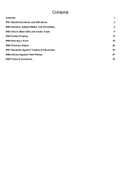
Contents 1
WS1 Beneficial Interest and Definitions 2
WS2 Intention, Subject Matter, and Formalities 4
WS3 How to Make Gifts and Create Trusts 9
WS4 Family Property 12
WS5 Running a Trust 16
WS6 Fiduciary Duties 20
WS7 Remedies Against Trustees & Fiduciaries 24
WS8 Actions Against Third Parties 27
WS9 Trusts & Commerce 30
, WS1 Beneficial Interest and Definitions
Trust - Where a binding obligation is placed on a person (Trustee) to look after property for the benefit of another (Beneficiary)
Express trust - set up intentionally by the settlor, many of which are created using a ‘trust instrument’
- Settlor can declare themself as the trustee or transfer property to trustees on trust
- Can be created in a will (settlor becomes testator/testatrix)
Implied trusts
- Resulting trusts are where trustees hold on trust for the settlor e.g. a trust is set to benefit a beneficiary on the condition
they turn 21, but they die beforehand. Their interest never vests and and so the trustees hold the trust property on a
resulting trust for the settlor
- Constructive trusts arise where it would be unconscionable for the legal owner to deny the claimant an equitable
interest, e.g. a house is bought in a sole persons name and their partner paid part of the purchase price
Settlor - Creator of the trust, transfers trust property to trustees using a ‘declaration of trust’ (only has to be in writing if its Land)
Trustee - has management and control of the trust property, holds the legal interest in it. Has many duties to the beneficiaries.
Beneficiary - enjoys the benefit of the of the property and holds the equitable interest in it giving them personal and proprietary
rights in it
- Personal - beneficiaries have a personal right to enforce the trustees duties and to seek compensation for any breaches
- Proprietary - an ownership interest in the trust property, that can be enforced against the trustee and any successors to
that legal ownership and is an item of property much like shares or money in the bank that can be sold or given away
Fixed trusts - defines the share amounts that the beneficiaries will receive
- ‘On trust for X for life remainder to Y’ - X has life interest and benefits from the income of the trust for life, Y is the
remainderman and will receive the capital of the trust upon the death of X. These are successive interests.
- ‘On trust for A if he attains 21 but if he dies before then, for B’ - A’s interest is contingent on reaching the age, if he fails
to do so his interest fails and B becomes entitled
- ‘On trust for Z where Z is an infant or cannot manage his affairs’ - Circumstances require the property to be managed
by the trustees for the benefit of Z
- ‘On trust for C’ where C is a sole adult with full mental capacity - this is a ‘bare trust’, usually more common in investing,
will also occur where beneficiary from one of the other types of trust becomes solely/absolutely entitled to the trust
property. Beneficiary can end the trust at any time by asking trustees to transfer legal title to him (Saunders v Vautier)
Discretionary trust - Discretion given to the trustees on how the beneficiaries benefit from the trust, how much they get and
whether they get any. Potential beneficiaries are called ‘objects’ until the trustees decide to give them an interest.
Extension of bare trusts - Beneficiaries can end the trust by calling for a transfer of the trust property to themselves or other
trustees if all the beneficiaries under the trust who could possible become entitled
a) Are in existence and become ascertained;
b) Are 18 or older and of sound mind; and
c) Are in agreement
Good receipt - given by the beneficiary of any trust upon receiving the trust property (must be 18)
Wills
Testator/testatrix - creator of the will
Personal representatives - estate is dealt with by executors (if named in the will) who will get grant of probate or administrators
(if no will or no executors named statutory rules will decide who this is)
Codicils - an amendment to a will, must be signed and witnessed (s9 Wills Act 1837)
Will only has effect when testator dies, before then beneficiaries has the ‘hope’ or ‘expectancy’ of receiving his gift, the forms of
gift are below
Devise - gift of freehold land (realty)
, Legacy/bequest - gift of personal property
Specific gifts/legacies/devises - a gift distinguished from other assets of the same kind (BT shares or Car)
Pecuniary legacies - money
Residuary gift - what remains after payment of debts, tax, specific legacies and devises and pecuniary legacies
Gifts on trusts - Given to trustees on beneficiaries behalf
Gifts can fail in the following ways
Ademption - specific gift fails if the testator no longer owns it when they die
Lapse - gift will fail if the beneficiary dies before the testator, it will go into the residuary estate instead
Witness rule - if beneficiary or their partner witness to the will then the gift to the witness fails
Died intestate - Death without a will, the intestacy rules apply
Revocation of Wills possible by a) marriage/civil partnership, b) destruction of will with intention to revoke, c) making new will
which deals with same property. Individual gifts within a will can be revoked by codicil.
Beneficial interest terminology
Vested Contingent
Unconditional interest in the trust property Their interest is conditional upon the happening of some future
event that may not happen. If satisfied it becomes vested
interest
In Possession In Remainder
The benefit can be enjoyed immediately Must wait for some other beneficiary’s right to enjoyment to
expire e.g. a life interest to end
Absolute Limited
Capital of the trust property Income only
If it satisfies all three of the above criteria then beneficiary
becomes ‘absolutely entitled’, at this point a sole adult
beneficiary can bring the trust to an end (see case law)
Cases
Saunders v Vautier - Beneficiaries can end a bare trust by calling for a transfer of the trust property to themselves or other
trustees if all the beneficiaries under the trust who could possibly become entitled
d) Are in existence and become ascertained;
e) Are 18 or older and of sound mind; and
f) Are in agreement
, WS2 Intention, Subject Matter, and Formalities
Choithram v Pagarani: The donee did not transfer legal title of the property via stock transfer forms, instead making
an oral statement that he was giving it to the foundation. The court interpreted the donee’s words of gift as meaning a
transfer to the foundation to hold on trust. As a trustee of the foundation, the donee was effectively declaring himself
as a trustee to that property (which he already had the legal title to).
Re Rose: In equity a gift is complete as soon as the settlor/donor has done everything they needed to do. As in
Mascall v Mascall, the donor no longer has control over the required documents. The court implies a constructive
trust making the donee a beneficiary and donor trustee until full legal title is transferred.
Pennington v Waine: despite not handing over necessary documents, it would be unconscionable to retract the gift;
the gift is complete in equity. Curtis v Pulbrook suggests Pennington is a case of detrimental reliance (proprietary
estoppel).
Strong v Bird: exception to ‘equity will not perfect an imperfect gift’. On the death of the intended donor, gift will
become perfect if all the following are met:
1. Donor intends to make an immediate gift but fails to comply with appropriate formality
2. Intention was to make immediate gift, not one conditional on an event (Re Freeland)
3. Intention to give continues unchanged until donor’s death, i.e. donor acted/believed that gift was given and
was not acting as though they still owned it (Re Gonin)
4. Donee is appointed as donor’s executor/PR on their death, meaning legal title vests in them. (Walton J said in
Re Gonin that getting legal title due to being next of kin administrator is complete chance; not the same as
being chosen as Executor. The rationale for Strong v Bird therefore may not apply where executor/PR isn’t
chosen because deceased died without will)
Re Adams and Kensington Vestry: no trust created where settlor used precatory words (‘in full confidence’ etc)
Paul v Constance: intent over form. ‘The money is as much yours as mine’ constituted an express declaration of trust
Re Freeland: A gift conditional on a future event does not satisfy intention requirement, it is not immediate
Richards v Delbridge: a failed gift will not be recategorised as a trust in order to save the invalid gift
London Wine: collection of chattels which are distinguishable must be clearly identified
Hunter v Moss: Shares are indistinguishable from each other and need not be separated, unlike wine.
Lewis’s of Leicester: Unlike shares, money should be separated in another account, even though technically
indistinguishable
Re Golay: subject matter is certain if the settlor gives a workable formula for calculating an amount (a ‘reasonable
income’ was held to be workable)
Grey v IRC: disposition of equitable interest was oral, not in signed writing, so was ineffective under s53(1)(c) LPA
Contents 1
WS1 Beneficial Interest and Definitions 2
WS2 Intention, Subject Matter, and Formalities 4
WS3 How to Make Gifts and Create Trusts 9
WS4 Family Property 12
WS5 Running a Trust 16
WS6 Fiduciary Duties 20
WS7 Remedies Against Trustees & Fiduciaries 24
WS8 Actions Against Third Parties 27
WS9 Trusts & Commerce 30
, WS1 Beneficial Interest and Definitions
Trust - Where a binding obligation is placed on a person (Trustee) to look after property for the benefit of another (Beneficiary)
Express trust - set up intentionally by the settlor, many of which are created using a ‘trust instrument’
- Settlor can declare themself as the trustee or transfer property to trustees on trust
- Can be created in a will (settlor becomes testator/testatrix)
Implied trusts
- Resulting trusts are where trustees hold on trust for the settlor e.g. a trust is set to benefit a beneficiary on the condition
they turn 21, but they die beforehand. Their interest never vests and and so the trustees hold the trust property on a
resulting trust for the settlor
- Constructive trusts arise where it would be unconscionable for the legal owner to deny the claimant an equitable
interest, e.g. a house is bought in a sole persons name and their partner paid part of the purchase price
Settlor - Creator of the trust, transfers trust property to trustees using a ‘declaration of trust’ (only has to be in writing if its Land)
Trustee - has management and control of the trust property, holds the legal interest in it. Has many duties to the beneficiaries.
Beneficiary - enjoys the benefit of the of the property and holds the equitable interest in it giving them personal and proprietary
rights in it
- Personal - beneficiaries have a personal right to enforce the trustees duties and to seek compensation for any breaches
- Proprietary - an ownership interest in the trust property, that can be enforced against the trustee and any successors to
that legal ownership and is an item of property much like shares or money in the bank that can be sold or given away
Fixed trusts - defines the share amounts that the beneficiaries will receive
- ‘On trust for X for life remainder to Y’ - X has life interest and benefits from the income of the trust for life, Y is the
remainderman and will receive the capital of the trust upon the death of X. These are successive interests.
- ‘On trust for A if he attains 21 but if he dies before then, for B’ - A’s interest is contingent on reaching the age, if he fails
to do so his interest fails and B becomes entitled
- ‘On trust for Z where Z is an infant or cannot manage his affairs’ - Circumstances require the property to be managed
by the trustees for the benefit of Z
- ‘On trust for C’ where C is a sole adult with full mental capacity - this is a ‘bare trust’, usually more common in investing,
will also occur where beneficiary from one of the other types of trust becomes solely/absolutely entitled to the trust
property. Beneficiary can end the trust at any time by asking trustees to transfer legal title to him (Saunders v Vautier)
Discretionary trust - Discretion given to the trustees on how the beneficiaries benefit from the trust, how much they get and
whether they get any. Potential beneficiaries are called ‘objects’ until the trustees decide to give them an interest.
Extension of bare trusts - Beneficiaries can end the trust by calling for a transfer of the trust property to themselves or other
trustees if all the beneficiaries under the trust who could possible become entitled
a) Are in existence and become ascertained;
b) Are 18 or older and of sound mind; and
c) Are in agreement
Good receipt - given by the beneficiary of any trust upon receiving the trust property (must be 18)
Wills
Testator/testatrix - creator of the will
Personal representatives - estate is dealt with by executors (if named in the will) who will get grant of probate or administrators
(if no will or no executors named statutory rules will decide who this is)
Codicils - an amendment to a will, must be signed and witnessed (s9 Wills Act 1837)
Will only has effect when testator dies, before then beneficiaries has the ‘hope’ or ‘expectancy’ of receiving his gift, the forms of
gift are below
Devise - gift of freehold land (realty)
, Legacy/bequest - gift of personal property
Specific gifts/legacies/devises - a gift distinguished from other assets of the same kind (BT shares or Car)
Pecuniary legacies - money
Residuary gift - what remains after payment of debts, tax, specific legacies and devises and pecuniary legacies
Gifts on trusts - Given to trustees on beneficiaries behalf
Gifts can fail in the following ways
Ademption - specific gift fails if the testator no longer owns it when they die
Lapse - gift will fail if the beneficiary dies before the testator, it will go into the residuary estate instead
Witness rule - if beneficiary or their partner witness to the will then the gift to the witness fails
Died intestate - Death without a will, the intestacy rules apply
Revocation of Wills possible by a) marriage/civil partnership, b) destruction of will with intention to revoke, c) making new will
which deals with same property. Individual gifts within a will can be revoked by codicil.
Beneficial interest terminology
Vested Contingent
Unconditional interest in the trust property Their interest is conditional upon the happening of some future
event that may not happen. If satisfied it becomes vested
interest
In Possession In Remainder
The benefit can be enjoyed immediately Must wait for some other beneficiary’s right to enjoyment to
expire e.g. a life interest to end
Absolute Limited
Capital of the trust property Income only
If it satisfies all three of the above criteria then beneficiary
becomes ‘absolutely entitled’, at this point a sole adult
beneficiary can bring the trust to an end (see case law)
Cases
Saunders v Vautier - Beneficiaries can end a bare trust by calling for a transfer of the trust property to themselves or other
trustees if all the beneficiaries under the trust who could possibly become entitled
d) Are in existence and become ascertained;
e) Are 18 or older and of sound mind; and
f) Are in agreement
, WS2 Intention, Subject Matter, and Formalities
Choithram v Pagarani: The donee did not transfer legal title of the property via stock transfer forms, instead making
an oral statement that he was giving it to the foundation. The court interpreted the donee’s words of gift as meaning a
transfer to the foundation to hold on trust. As a trustee of the foundation, the donee was effectively declaring himself
as a trustee to that property (which he already had the legal title to).
Re Rose: In equity a gift is complete as soon as the settlor/donor has done everything they needed to do. As in
Mascall v Mascall, the donor no longer has control over the required documents. The court implies a constructive
trust making the donee a beneficiary and donor trustee until full legal title is transferred.
Pennington v Waine: despite not handing over necessary documents, it would be unconscionable to retract the gift;
the gift is complete in equity. Curtis v Pulbrook suggests Pennington is a case of detrimental reliance (proprietary
estoppel).
Strong v Bird: exception to ‘equity will not perfect an imperfect gift’. On the death of the intended donor, gift will
become perfect if all the following are met:
1. Donor intends to make an immediate gift but fails to comply with appropriate formality
2. Intention was to make immediate gift, not one conditional on an event (Re Freeland)
3. Intention to give continues unchanged until donor’s death, i.e. donor acted/believed that gift was given and
was not acting as though they still owned it (Re Gonin)
4. Donee is appointed as donor’s executor/PR on their death, meaning legal title vests in them. (Walton J said in
Re Gonin that getting legal title due to being next of kin administrator is complete chance; not the same as
being chosen as Executor. The rationale for Strong v Bird therefore may not apply where executor/PR isn’t
chosen because deceased died without will)
Re Adams and Kensington Vestry: no trust created where settlor used precatory words (‘in full confidence’ etc)
Paul v Constance: intent over form. ‘The money is as much yours as mine’ constituted an express declaration of trust
Re Freeland: A gift conditional on a future event does not satisfy intention requirement, it is not immediate
Richards v Delbridge: a failed gift will not be recategorised as a trust in order to save the invalid gift
London Wine: collection of chattels which are distinguishable must be clearly identified
Hunter v Moss: Shares are indistinguishable from each other and need not be separated, unlike wine.
Lewis’s of Leicester: Unlike shares, money should be separated in another account, even though technically
indistinguishable
Re Golay: subject matter is certain if the settlor gives a workable formula for calculating an amount (a ‘reasonable
income’ was held to be workable)
Grey v IRC: disposition of equitable interest was oral, not in signed writing, so was ineffective under s53(1)(c) LPA