

CHROMOSOMES
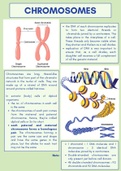
the DNA of each chromosome replicates
to form two identical threads or
chromatids joined by a centromere. This
takes place in the interphase of a cell.
These threads only become visible when
they shorten and thicken as a cell divides
replication of DNA is very important to
ensure that, as a cell divides, each
daughter cell receives a full complement
of all the genetic material
Chromosomes are long, thread-like
structures that form part of the chromatin
network in the nuclei of cells. They are
made up of a strand of DNA wound
around proteins called histones.
In somatic (body) cells of diploid
organisms:
the no. of chromosomes in each cell
is the same
the chromosomes of each pair comes
from the maternal and paternal
chromosome. Hence, they're called
diploid cells or 2n for short
each paternal and maternal
chromosome forms a homologous
pair. The chromosomes forming a
pair are the same size and shape
and have the same genes in the
place, but the alleles for each trait 1 chromatid = 1 DNA molecule and 1
may not be the same chromosome = 2 identical DNA
molecules joined by a centromere
Note: Double-stranded chromosomes are
only present just before cell division.
46 double stranded chromosomes = 92
chromatids and 92 DNA molecules
, Each species has a characteristic number of chromosomes
e.g. Humans = 46 chromosomes (23 pairs) - diploid
Fruit flies = 14 single / 7 pairs
HOMOLOGOUS CHROMOSOMES
In somatic cells, chromosomes occur in pairs
the two chromosomes of a pair are identical in
appearance and are called homologous
chromosomes
Haploid vs Diploid
All somatic cells have a complete set of 46 chromosomes
in each cell
these are DIPLOID cells
HOWEVER....
Gametes (Sperm and Ova) only have half the number of chromosomes ( i.e. 23
chromosomes ) in each sperm or egg cell
these are HAPLOID cells
Gametes have half the chromosome number to avoid the doubling of chromosomes at
fertilization
1 sperm cell fuses with 1 egg cell:
23 + 23 = 46 chromosomes
( n + n = 2n )
What is meant by chromosome number ?
Each species has a specific number of
chromosomes in its somatic cells. Some
organisms have identical chromosome
numbers but these need not be related. It is
similarities in the DNA of the chromosomes
that show relationships, not their number
the DNA of each chromosome replicates
to form two identical threads or
chromatids joined by a centromere. This
takes place in the interphase of a cell.
These threads only become visible when
they shorten and thicken as a cell divides
replication of DNA is very important to
ensure that, as a cell divides, each
daughter cell receives a full complement
of all the genetic material
Chromosomes are long, thread-like
structures that form part of the chromatin
network in the nuclei of cells. They are
made up of a strand of DNA wound
around proteins called histones.
In somatic (body) cells of diploid
organisms:
the no. of chromosomes in each cell
is the same
the chromosomes of each pair comes
from the maternal and paternal
chromosome. Hence, they're called
diploid cells or 2n for short
each paternal and maternal
chromosome forms a homologous
pair. The chromosomes forming a
pair are the same size and shape
and have the same genes in the
place, but the alleles for each trait 1 chromatid = 1 DNA molecule and 1
may not be the same chromosome = 2 identical DNA
molecules joined by a centromere
Note: Double-stranded chromosomes are
only present just before cell division.
46 double stranded chromosomes = 92
chromatids and 92 DNA molecules
, Each species has a characteristic number of chromosomes
e.g. Humans = 46 chromosomes (23 pairs) - diploid
Fruit flies = 14 single / 7 pairs
HOMOLOGOUS CHROMOSOMES
In somatic cells, chromosomes occur in pairs
the two chromosomes of a pair are identical in
appearance and are called homologous
chromosomes
Haploid vs Diploid
All somatic cells have a complete set of 46 chromosomes
in each cell
these are DIPLOID cells
HOWEVER....
Gametes (Sperm and Ova) only have half the number of chromosomes ( i.e. 23
chromosomes ) in each sperm or egg cell
these are HAPLOID cells
Gametes have half the chromosome number to avoid the doubling of chromosomes at
fertilization
1 sperm cell fuses with 1 egg cell:
23 + 23 = 46 chromosomes
( n + n = 2n )
What is meant by chromosome number ?
Each species has a specific number of
chromosomes in its somatic cells. Some
organisms have identical chromosome
numbers but these need not be related. It is
similarities in the DNA of the chromosomes
that show relationships, not their number


