NURS 315Gerontological Nursing Chapter 4.docs
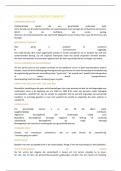
Chapter 04: Life Transitions and Story Eliopoulos: Gerontological Nursing, 9th Edition 1.1. A nurse manager at a long-term care facility is engaged in efforts to change many staff members' inaccurate and negative views of older adults. Which of the following statements made by staff is most clearly indicative of ageism? A) "Older people seem to have so many more chronic health problems than younger people." B) "Older adults' motor skills get progressively slower as they age." C) "It's normal to expect a gradual loss of memory and intelligence with age." D) "A lot of the physical changes that accompany aging are inevitable.": Ans: C Feedback: A common ageist misconception is that senility and loss of intelligence inevitably, and normally, accompany the aging process. Older adults do have more chronic conditions than younger adults, and motor skills become slower. Many of the physical changes that accompany aging are considered normal and largely inevitable. 2.2. According to Erikson, the final stage of the life cycle is centered on achieving integrity versus despair. Which of the following situations would signal to the nurse that the client in question is at risk for disappointment and despair as characterized by Erikson? A) An 81-year-old woman has needed to adopt a minced diet following a recent stroke. B) A 78-year-old man has had a pacemaker implanted to address his atrial fibrillation. C) A 90-year-old woman is grieving the recent death of her husband to whom she was married for 66 years. D) An 80-year-old man describes himself as "useless" since he can no longer help his adult
Written for
- Institution
-
Texas A&M University
- Course
-
NURS 315
Document information
- Uploaded on
- December 15, 2021
- Number of pages
- 12
- Written in
- 2021/2022
- Type
- Exam (elaborations)
- Contains
- Questions & answers
Subjects
- nurs 315
-
gerontological nursing chapter 4docs
-
a nurse manager at a long term care facility is engaged in efforts to change many staff members inaccurate and negative views of older adults whic