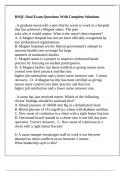
OB HESI POSSIBLE QUESTIONS 2021 WITH COMPLETE SOLUTION
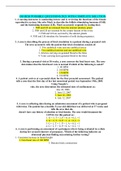
OB HESI POSSIBLE QUESTIONS 2021 WITH COMPLETE SOLUTION 1. A nursing instructor is conducting lecture and is reviewing the functions of the female reproductive system. She asks Mark to describe the follicle-stimulating hormone (FSH) and the luteinizing hormone (LH). Mark accurately responds by stating that: 1. FSH and LH are released from the anterior pituitary gland. 2. FSH and LH are secreted by the corpus luteum of the ovary 3. FSH and LH are secreted by the adrenal glands 4. FSH and LH stimulate the formation of milk during pregnancy. 2. A nrse is describing the process of fetal circulation to a patient during a prenatal visit. The nrse accurately tells the patient that fetal circulation consists of: 1. Two umbilical veins and one umbilical artery 2. Two umbilical arteries and one umbilical vein 3. Arteries carrying oxygenated blood to the fetus 4. Veins carrying deoxygenated blood to the fetus 3. During a prenatal visit at 38 weeks, a nrse assesses the fetal heart rate. The nrse determines that the fetal heart rate is normal if which of the following is noted? 1. 80 BPM 2. 100 BPM 3. 150 BPM 4. 180 BPM 4. A patient arrives at a prenatal clinic for the first prenatal assessment. The patient tells a nrse that the first day of her last menstrual period was September 19th, 2005. Using Naegele’s rule, the nrse determines the estimated date of confinement as: July 26, 2006 2. June 12, 2007 3. June 26, 2006 4. July 12, 2007 5. A nrse is collecting data during an admission assessment of a patient who is pregnant with twins. The patient has a healthy 5-year old child that was delivered at 37 weeks and tells the nrse that she doesn’t have any history of abortion or fetal demise. The nrse would document the GTPAL for this patient as: 1. G = 3, T = 2, P = 0, A = 0, L =1 2. G = 2, T = 0, P = 1, A = 0, L =1 3. G = 1, T = 1. P = 1, A = 0, L = 1 4. G = 2, T = 0, P = 0, A = 0, L = 1 6. A nrse is performing an assessment of a primipara who is being evaluated in a clinic during her second trimester of pregnancy. Which of the following indicates an abnormal physical finding necessitating further testing? 1. Consistent increase in fundal height 2. Fetal heart rate of 180 BPM 3. Braxton hicks contractions 4. Quickening 7. A nrse is reviewing the record of a patient who has just been told that a pregnancy test is positive. The physician has documented the presence of a Goodell’s sign. The nrse determines this sign indicates: 1. A softening of the cervix 2. A soft blowing sound that corresponds to the maternal pulse during auscultation of the uterus. 3. The presence of hCG in the urine 4. The presence of fetal movement 8. A nursing instructor asks a nursing student who is preparing to assist with the assessment of a pregnant patient to describe the process of quickening. Which of the following statements if made by the student indicates an understanding of this term? 1. ―It is the irregular, painless contractions that occur throughout pregnancy. 2. ―It is the soft blowing sound that can be heard when the uterus is auscultated. 3. ―It is the fetal movement that is felt by the mother. 4. ―It is the thinning of the lower uterine segment. 9. A nrse midwife is performing an assessment of a pregnant patient and is assessing the patient for the presence of ballottement. Which of the following would the nrse implement to test for the presence of ballottement? 1. Auscultating for fetal heart sounds 2. Palpating the abdomen for fetal movement 3. Assessing the cervix for thinning 4. Initiating a gentle upward tap on the cervix 10. A nrse is assisting in performing an assessment on a patient who suspects that she is pregnant and is checking the patient for probable signs of pregnancy. Select all probable signs of pregnancy. 1. Uterine enlargement 2. Fetal heart rate detected by nonelectric device 3. Outline of the fetus via radiography or ultrasound 4. Chadwick‘s sign 5. Braxton Hicks contractions 6. Ballottement 11. A pregnant patient calls the clinic and tells a nrse that she is experiencing leg cramps and is awakened by the cramps at night. To provide relief from the leg cramps, the nrse tells the patient to: 1. Dorsiflex the foot while extending the knee when the cramps occur 2. Dorsiflex the foot while flexing the knee when the cramps occur 3. Plantar flex the foot while flexing the knee when the cramps occur 4. Plantar flex the foot while extending the knee when the cramps occur. 12. A nrse is providing instructions to a patient in the first trimester of pregnancy regarding measures to assist in reducing breast tenderness. The nrse tells the patient to: 1. Avoid wearing a bra 2. Wash the nipples and areola area daily with soap and massage the breasts with lotion. 3. Wear tight-fitting blouses or dresses to provide support 4. Wash the breasts with warm water and keep them dry 13. A pregnant patient in the last trimester has been admitted to the hospital with a diagnosis of severe preeclampsia. A nrse monitors for complications associated with the diagnosis and assesses the patient for: 1. Any bleeding, such as in the gums, petechiae, and purpura. 2. Enlargement of the breasts 3. Periods of fetal movement followed by quiet periods 4. Complaints of feeling hot when the room is cool 14. A patient in the first trimester of pregnancy arrives at a health care clinic and reports that she has been experiencing vaginal bleeding. A threatened abortion is suspected, and the nrse instructs the patient regarding management of care. Which statement, if made by the patient, indicates a need for further education? 1. ―I will maintain strict bedrest throughout the remainder of pregnancy. 2. ―I will avoid sexual intercourse until the bleeding has stopped, and for 2 weeks following the last evidence of bleeding. 3. ―I will count the number of perineal pads used on a daily basis and note the amount and color of blood on the pad. 4. ―I will watch for the evidence of the passage of tissue. 15. A prenatal nrse is providing instructions to a group of pregnant patients regarding measures to prevent toxoplasmosis. Which statement if made by one of the patients indicates a need for further instructions? 1. ―I need to cook meat thoroughly. 2. ―I need to avoid touching mucous membranes of the mouth or eyes while handling raw meat. 3. ―I need to drink unpasteurized milk only. 4. ―I need to avoid contact with materials that are possibly contaminated with cat feces. 16. Ahomecare nrse visits a pregnant patient who has a diagnosis of mild Preeclampsia and who is being monitored for pregnancy induced hypertension (PIH). Which assessment finding indicates a worsening of the Preeclampsia and the need to notify the physician? 1. Blood pressure reading is at the prenatal baseline 2. Urinary output has increased 3. The patient complains of a headache and blurred vision 4. Dependent edema has resolved 17. A nrse implements a teaching plan for a pregnant patient who is newly diagnosed with gestational diabetes. Which statement if made by the patient indicates a need for further education? 1. ―I need to stay on the diabetic diet. 2. ―I will perform glucose monitoring at home. 3. ―I need to avoid exercise because of the negative effects of insulin production. 4. ―I need to be aware of any infections and report signs of infection immediately to my health care provider. 18. A primigravida is receiving magnesium sulfate for the treatment of pregnancy induced hypertension (PIH). The nrse who is caring for the patient is performing assessments every 30 minutes. Which assessment finding would be of most concern to the nrse? 1. Urinary output of 20 ml since the previous assessment 2. Deep tendon reflexes of 2+ 3. Respiratory rate of 10 BPM 4. Fetal heart rate of 120 BPM 19. Anrse is caring for a pregnant patient with Preeclampsia. The nrse prepares a plan of care for the patient and documents in the plan that if the patient progresses from Preeclampsia to eclampsia, the nrse’s first action is to: 1. Administer magnesium sulfate intravenously 2. Assess the blood pressure and fetal heart rate 3. Clean and maintain an open airway 4. Administer oxygen by face mask 20. A nrse is monitoring a pregnant patient with pregnancy induced hypertension who is at risk for Preeclampsia. The nrse checks the patient for which specific signs of Preeclampsia (select all that apply)? 1. Elevated blood pressure 2. Negative urinary protein 3. Facial edema 4. Increased respirations 21. Rho (D) immune globulin (RhoGAM) is prescribed for a woman following delivery of a newborn infant and the nrse provides information to the woman about the purpose of the medication. The nrse determines that the woman understands the purpose of the medication if the woman states that it will protect her next baby from which of the following? 1. Being affected by Rh incompatibility 2. Having Rh positive blood 3. Developing a rubella infection 4. Developing physiological jaundice 22. A pregnant patient is receiving magnesium sulfate for the management of preeclampsia. A nrse determines the patient is experiencing toxicity from the medication if which of the following is noted on assessment? 1. Presence of deep tendon reflexes 2. Serum magnesium level of 6 mEq/L 3. Proteinuria of +3 4. Respirations of 10 per minute 23. A woman with preeclampsia is receiving magnesium sulfate. The nrse assigned to care for the patient determines that the magnesium therapy is effective if: 1. Ankle clonus in noted 2. The blood pressure decreases 3. Seizures do not occur 4. Scotomas are present 24. A nrse is caring for a pregnant patient with severe preeclampsia who is receiving IV magnesium sulfate. Select all nursing interventions that apply in the care for the patient. 1. Monitor maternal vital signs every 2 hours 2. Notify the physician if respirations are less than 18 per minute. 3. Monitor renal function and cardiac function closely 4. Keep calcium gluconate on hand in case of a magnesium sulfate overdose 5. Monitor deep tendon reflexes hourly 6. Monitor I and O‘s hourly 7. Notify the physician if urinary output is less than 30 ml per hour. 25. In the 12th week of gestation, a patient completely expels the products of conception. Because the patient is Rh negative, the nrse must: 1. Administer RhoGAM within 72 hours 2. Make certain she receives RhoGAM on her first clinic visit 3. Not give RhoGAM, since it is not used with the birth of a stillborn 4. Make certain the patient does not receive RhoGAM, since the gestation only lasted 12 weeks. 26. In a lecture on sexual functioning, the nrse plans to include the fact that ovulation occurs when the: 1. Oxytocin is too high 2. Blood level of LH is too high 3. Progesterone level is high 4. Endometrial wall is sloughed off. 27. The chief function of progesterone is the: 1. Development of the female reproductive system 2. Stimulation of the follicles for ovulation to occur 3. Preparation of the uterus to receive a fertilized egg 4. Establishment of secondary male sex characteristics 28. The developing cells are called a fetus from the: 1. Time the fetal heart is heard 2. Eighth week to the time of birth 3. Implantation of the fertilized ovum 4. End of the send week to the onset of labor 29. After the first four months of pregnancy, the chief source of estrogen and progesterone is the: 1. Placenta 2. Adrenal cortex 3. Corpus luteum 4. Anterior hypophysis 30. The nrse recognizes that an expected change in the hematologic system that occurs during the 2nd trimester of pregnancy is: 1. A decrease in WBC‘s 2. In increase in hematocrit 3. An increase in blood volume 4. A decrease in sedimentation rate 31. The nrse is aware than an adaptation of pregnancy is an increased blood supply to the pelvic region that results in a purplish discoloration of the vaginal mucosa, which is known as: 1. Ladin‘s sign 2. Hegar‘s sign 3. Goodell‘s sign 4. Chadwick‘s sign 32. A pregnant patient is making her first Antepartum visit. She has a two-year-old son born at 40 weeks, a 5-year-old daughter born at 38 weeks, and 7 year old twin daughters born at 35 weeks. She had a spontaneous abortion 3 years ago at 10 weeks. Using the GTPAL format, the nrse should identify that the patient is: 1. G4 T3 P2 A1 L4 2. G5 T2 P2 A1 L4 3. G5 T2 P1 A1 L4 4. G4 T3 P1 A1 L4 33. An expected cardiopulmonary adaptation experienced by most pregnant women is: 1. Tachycardia 2. Dyspnea at rest 3. Progression of dependent edema 4. Shortness of breath on exertion 34. Nutritional planning for a newly pregnant woman of average height and weighing 145 pounds should include: 1. A decrease of 200 calories a day 2. An increase of 300 calories a day 3. An increase of 500 calories a day 4. A maintenance of her present caloric intake per day 35. During a prenatal examination, the nrse draws blood from a young Rh negative patient and explain that an indirect Coombs test will be performed to predict whether the fetus is at risk for: 1. Acute hemolytic disease 2. Respiratory distress syndrome 3. Protein metabolic deficiency 4. Physiologic hyperbilirubinemia 36. When involved in prenatal teaching, the nrse should advise the patients that an increase in vaginal secretions during pregnancy is called leukorrhea and is caused by increased: 1. Metabolic rates 2. Production of estrogen 3. Functioning of the Bartholin glands 4. Supply of sodium chloride to the cells of the vagina 37. A 26-year old multigravida is 14 weeks’ pregnant and is scheduled for an alpha-fetoprotein test. She asks the nrse, “What does the alpha-fetoprotein test indicate?” The nrse bases a response on the knowledge that this test can detect: 1. Kidney defects 2. Cardiac defects 3. Neural tube defects 4. Urinary tract defects 38. At a prenatal visit at 36 weeks’ gestation, a patient complains of discomfort with irregularly occurring contractions. The nrse instructs the patient to: 1. Lie down until they stop 2. Walk around until they subside 3. Time contraction for 30 minutes 4. Take 10 grains of aspirin for the discomfort 39. The nrse teaches a pregnant woman to avoid lying on her back. The nrse has based this statement on the knowledge that the supine position can: 1. Unduly prolong labor 2. Cause decreased placental perfusion 3. Lead to transient episodes of hypotension 4. Interfere with free movement of the coccyx 40. The pituitary hormone that stimulates the secretion of milk from the mammary glands is: 1. Prolactin 2. Oxytocin 3. Estrogen 4. Progesterone 41. Which of the following symptoms occurs with a hydatidiform mole? 1. Heavy, bright red bleeding every 21 days 2. Fetal cardiac motion after 6 weeks gestation 3. Benign tumors found in the smooth muscle of the uterus 4. ―Snowstorm‖ pattern on ultrasound with no fetus or gestational sac 42. Which of the following terms applies to the tiny, blanched, slightly raised end arterioles found on the face, neck, arms, and chest during pregnancy? 1. Epulis 2. Linea nigra 3. Striae gravidarum 4. Telangiectasias 43. Which of the following conditions is common in pregnant women in the 2nd trimester of pregnancy? 1. Mastitis 2. Metabolic alkalosis 3. Physiologic anemia 4. Respiratory acidosis 44. A 21-year old patient, 6 weeks’ pregnant is diagnosed with hyperemesis gravidarum. This excessive vomiting during pregnancy will often result in which of the following conditions? 1. Bowel perforation 2. Electrolyte imbalance 3. Miscarriage 4. Pregnancy induced hypertension (PIH) 45. Patients with gestational diabetes are usually managed by which of the following therapies? 1. Diet 2. NPH insulin (long-acting) 3. Oral hypoglycemic drugs 4. Oral hypoglycemic drugs and insulin 46. The antagonist for magnesium sulfate should be readily available to any patient receiving IV magnesium. Which of the following drugs is the antidote for magnesium toxicity? 1. Calcium gluconate 2. Hydralazine (Apresoline) 3. Narcan 4. RhoGAM 47. Which of the following answers best describes the stage of pregnancy in which maternal and fetal blood are exchanged? 1. Conception 2. 9 weeks‘gestation, when the fetal heart is well developed 3. 32-34 weeks gestation 4. maternal and fetal blood are never exchanged 48. Gravida refers to which of the following descriptions? 1. A serious pregnancy 2. Number of times a female has been pregnant 3. Number of children a female has delivered 4. Number of term pregnancies a female has had. 49. A pregnant woman at 32 weeks’ gestation complains of feeling dizzy and lightheaded while her fundal height is being measured. Her skin is pale and moist. The nrse’s initial response would be to: 1. Assess the woman ‘s blood pressure and pulse 2. Have the woman breathe into a paper bag 3. Raise the woman‘s legs 4. Turn the woman on her side. 50. A pregnant woman’s last menstrual period began on April 8, 2005 and ended on April 13. Using Naegele’s rule her estimated date of birth would be: 1. January 15, 2006 2. 2. January 20, 2006 3. 3. July 1, 2006 4. 4. November 5, 2005 Hesi Maternity Questions Updated 1. The nrse is planning discharge teaching for a patient who had an evacuation of gestational trophoblastic disease (GTD) two days ago. Which information is most important for the nrse to include in this patient’s teaching plan? A. Oral contraceptive use for at least one year. 2. The nrse is planning care for a patient at 30-weeks gestation who is experiencing preterm labor. What maternal prescription is most important in preventing this fetus from developing respiratory distress syndrome? C. Betamethasone (Celestone) 12 mg deep IM. 3. The nrse places one hand above the symphysis while massaging the fundus of a multiparous patient whose uterine tone is boggy 15 minutes after delivering a 7 pound 10 ounce infant. Which information should the nrse provide the patient about this fiding? B. Both the lower uterine segment and the fundus must be massaged. 4. Which instruction should the nrse include in the discharge teaching plan of a 7-year-old girl with a history of frequent urinary tract infections? D. Monitor for changes in urinary odor. 5. A pregnant woman in the first trimester of pregnancy has a hemoglobin of 8.6 mg/dl and a hematocrit of 25.1%. What foot should the nrse encourage this patient to include in her diet? B. Chicken. 6. The newborn nrsery admission protocol includes a prescption for phytonadione (Vitamin K1, AquaMEPHYTON) 0.5 mg IM to newborns upon admission. The ampoule provides 2 mg/ml. How many ml should the nrse administer? 0.3 7. The nrse is preparing to administer methylergonovine maleate (Methergine) to a postpartum patient. Based on what assessment finding should the nrse withhold the drug? C. Blood pressure 149/90. 8. The nrse is preparing a 10-year-old with a lacerated forehead for suturing. Both parents and a 12-year-old sibling are the child bedside. Which instruction best supports this family? A. “ While waiting for the healthcare provider, only one visitor may stay with the child” 9. The nrse is planning care for a 16-year-old, who has juvenile rheumatoid arthritis (JRA). The nrse includes activities to strengthen and mobilize the joints and surrounding muscle. Which physical therapy regimen should the nrse encourage the adolescent to implement? C. Exercise in a swimming pool. 10. A primigravida arrives at the observation unit of the maternity unit because thinks is in labor. The nrse applies the external fetal heart monitor and determines that the fetal heart rate is 140 beats/minute and the contractions are occurring irregularly every 10 to 15 minutes. What assessment finding confirms to the nrse that the patient is not labor at this time? D. Contractions decrease with walking. 11. Which toy is most appropriate for a 10-year-old child with acute rheumatic fever who is on strict bedrest? D. Checkers 12. The nrse has completed a teaching plan for the mother of a child who is taking digitalis and a diuretic for treatment of the heart failure. Choosing which lunch would indicate that the mother understands the best diet for her child? B. Peanut butter and banana sandwich with orange juice. 13. A breastfeeding infant, screened for congenital hypothyroidism, is found to have low levels of thyroxine (T4) and high levels of thyroid stimulating hormone (TSH). What is the best explanation for this finding? C. The TSH is high because of the low production of T4 by the thyroid. 14. A full-term, 24-hour-old infant in the nrsery regurgitates and suddenly turns cyanotic. What should the nrse do first? D. Stimulate the infant to cry. 15. At 6-weeks gestation, the rubella titer of a patient indicates she is non-immune. When is the best time to administer a rubella vaccine to this patient? D. Early postpartum, within 72 hours of delivery. 16. A patient is receiving oxytocin (Pitocin) to augment early labor. Which assessment is most important for the nrse to obtain each time the infusion rate is increased? D. Contraction pattern. 17. One day after vaginal delivery of a full-term baby, a postpartum patient’s white blood cell count is 15,000/mm3. What action should the nrse take first? A. Check the differential, since the WBC is normal for this patient. 18. A patient delivers a viable infant, but begins to have excessive uncontrolled vaginal bleeding after the IV Pitocin is infused. When notifying the healthcare provider of the patient’s condition, what information is most important for the nrse to provide? A. Maternal blood pressure. 19. While obtaining the vital signs of a 10-year-old who had a tonsillectomy this morning, the nrse observes the child swallowing every 2 to 3 minutes. Which assessment should the nrse implement? A. Inspect the posterior oropharynx. 20. During a routine clinic visit, the nrse determines that a 5-year- old boy’s blood pressure is 112/70. When calculating the child’s blood pressure percentile, the nrse adjusts the calculation for age and height. What actions should the nrse implement next? A. Compare the child’s blood pressure with readings from previous visits. 21. A neonate who has congenital adrenal hyperplasia (CAH) presents with ambiguous genitalia. What is the primary nursing consideration when supporting the parents of a child with this anomaly? C. Offer information about ultrasonography and genotyping to determine sex assignment. 22. A 3-year-old boy in a daycare facility scratches his head frequently, and the nrse confirms the presence of head lice. The nrse washes the child’s hair with permethrin (Nix) shampoo and calls his parents. What instruction should the nrse provide to the parents about treatment for head lice? A. Rewash the child’s hair following a 24-hour isolation period. B. Wash the child’s bed linens and clothing in hot soapy water. ---- Maybe this C. Take the child to a hair salon for a shampoo and a shorter haircut. D. Dispose of the child’s brusches, combs, and others hair accessories. 23. During a 26-week gestation prenatal exam, a patient reports occasional dizziness and lightheadness when she is lying down. What intervention is best for the nrse to recommend to this patient. D. Elevate the head with two pillows while sleeping. 24. The current vital signs for a primipara who delivered vaginally during the previous shift are: temperature 100.4 F, heart rate 58 beats/minute, respiratory rate 16 breaths/minute, and blood pressure 130/74. What action should the nrse implement? A. Document the vital signs in the record. 25. The nrse is assessing a 9-year-old boy who has been admitted to the hospital with possible acute poststreptococcal glomerulonephritis (APSGN). In obtaining his history, what information is most significant? C. A sore throat last week 26. A 4-day postpartum patient calls the clinic and reports that her nipples are so sore that she does not know if she can continue to breastfeed her infant. What instruction is best for the nrse to provide? C. Apply hot packs just before each feeding. 27. A loading dose of terbutaline (Bretine) 250 mcg IV is prescribed for a patient in preterm labor. Brethine 20 mg is added to 1000 ml D5W. How many ml of the solution should the nrse administer? (Enter numeric value only) 13 28. A newborn with myelomeningocele is admitted to the neonatal intensive care unit. Which preoperative nursing intervention should the nrse implement first? A. Place the infant on the abdomen to protect the sac. 29. An infant is placed in a radiant warmer immediately after birth. At one hour of age, the nrse finds the infant to be jittery, tachypneic, and hypotonic. What is the first action that the nrse should take? D. Determine the infant’s blood sugar level. 30. The mother of a 5-week-old tells the nrse that her baby has acne and asks if she can use her teenage son’s acne cream, benzoyl peroxide, on the baby’s face. Which answer should the nrse to provide? A. “ Your baby may be showing signs of a systemic disease and needs to be seen by a healthcare provider” 31. The nrse is providing preoperative teaching to a teenaged patient with appendicitis information should the nrse include about postoperative activity? D. Early ambulation after surgery will be encouraged to reduce complications and promote healing. 32. A 36-week primigravida is admitted to labor and delivery with severe abdominal pain and bright red vaginal bleeding. Her abdomen is rigid and tender to touch. The fetal heart rate (FHR) is 90 beats/minute, and the maternal heart rate is 120 beats/minute. What action should the nrse implement first? C. obtain written consent for an emergency cesarean section. 34. A laboring patient’s membranes rupture spontaneously. The nrse notices that the amniotic fluid is greenish-brown. What intervention should the nrse implement first? B. Contact the healthcare provider. 35. A 34-week primigravida with pregnancy induced hypertension (PIH) is receiving Ringer’s Lactate 500 ml with magnesium sulfate 20 grams at the rate of 3 grams/hour. How many ml/hour should the nrse program the infusion pump? (Enter numeric value only) 75 36. The nrse weighs a 6-month-old infant during a well-baby check- up and determines that the baby’s weight has triple compared to the birth weight of 7 pounds 8 ounces. The mother asks if the baby is gaining enough weight. What response should the nrse offer? D. “What food does your baby usually eat in a normal day?” 37. A 5-year-old child is admitted to the pediatric unit fever and pain secondary to a sickle cell crisis. Which intervention should the nrse implement first? B. Initiate normal saline IV at 50ml/hr. 38. A child who has been vomiting for 3 days is admitted for correction of fluid and electrolyte imbalances. What acid base imbalance is this child likely to exhibit? C. Metabolic Alkalosis. 39. Artificial rupture of the membranes of a laboring patient reveals meconium-stained fluid. What intervention has the greatest priority? D. Have a meconium aspirator available at delivery. 40. A child admitted with diabetic ketoacidosis is demonstrating Kussmaul respiration. The nrse determines that the increased respiratory rate is a compensatory mechanism for wich acid base alteration? C. Metabolic acidosis 41. The nrse is caring for a 5-year-old child with Reye’s syndrome. Which goal of treatment most clearly relates to caring for this child? A. Reduce cerebral edema and lower intracranial pressure. 42. A patient whose labor is being augmented with an oxytocin (Pitocin) infusion requests an epidural for pain control. Findings of the last vaginal exam, performed 1 hour ago, were 3 cm cervical dilatation, 60% effacement, and a -2 station. What action should the nrse implement first? B. Determine current cervical dilation. 43. A mother brings her 2-month-old to the well-baby clinic. She states that when she kisses her baby, the infant’s skin tastes salty. The nrse should prepare the mother for what standard diagnostic test to screen for cystic fibrosis (CF)? A. Sweat-chloride test. 44. A patient with gestational diabetes is undergoing a non-stress test (NST) at 34-weeks gestation. The baseline fetal heart rate (FHR) is 144 beats/minute. The patient is instructed to mark the fetal monitor paper by pressing a button attached to the fetal monitor each time the baby moves. After 20 minutes, the nrse evaluates the fetal monitor strip. Which outcome indicates a reactive NST? C. Two FHR accelerations of 15 beats/minute x 15 seconds are recorded. 45. A newborn who was a breech presentation is admitted to the nrsery. Which assessment procedure is a priority for the nrse to perform? B. Babinski’s reflex. 46. A child who received multiple blood transfusions after correction of a congenital heart defect is demonstrating muscular irritability and is oozing blood from the surgical incision. Which serum value is most important for the nrse to review before reporting to the healthcare provider? B. Calcium. 47. A 6-year-old child is diagnosed with rheumatic fever and demonstrates associated chorea ( sudden aimless movements of the arms and legs). Which information should the nrse tell to the parents? B. The chorea or movements are temporary and will eventually disappear. 48. The nrse is assessing a 38-week gestation newborn infant immediately following a vaginal birth. Which assessment finding best indicates that the infant is transitioning well to extrauterine life? C. Cries vigorously when stimulated. 49. The nrse is measuring the frontal occipital circumference (FOC) of a 3-month-old infant, and notes that the FOC has increased 5 inches since birth and the child’s head appears large in relation to the body size. Which action is most important for the nrse to take next? C. Palpate the anterior fontanel for tension and bulding. 50. A 16-year-old gravida 1, para 0 patient has just been admitted to the hospital with a diagnosis af eclampsia. She is not presently convulsing. Which intervention should the nrse plan to include in this patient’s nursing care plan? C. Monitor Blood pressure, pulse, and respirations q4h. 51. During a well-child visit for their child, one of the parents who has an autosomal dominant disorder tells the nrse, “We don’t plan on having any more children, since the next child is likely to inherit this disorder.” How should the nrse respond? D. Confirm that there is a 50% chance of their future children inheriting the disorder. 52. The nrse is caring for a one-year-old child following surgical correction of hypospadias. What nursing action has the highest priority? A. Monitor urinary output. 53. What goal is most important for the nrse to include in the plan of care for a patient with gestational diabetes? A. Restrict carbohydrate intake. 54. A new mother is having trouble breastfeeding her newborn son. He is making frantic rooting motions and will not grasp the nipple. What intervention would be most helpful to this mother? B. Ask the mother to stop feeding, comfort the infant, and then assist the mother to help the baby lactch on. 55. The nrse is interacting with a female patient who is diagnosed with postpartum depression. Which finding should the nrse document as an objective signs of depression? (Select all that apply.) A. Avoids eye contact. B. Interacts with a flat affect. C. Reports feeling sad. D. Expresses suicidal thoughts. E. Has a disheveled appearance. Screenshots: 1. A primipara has delivered a stillborn fetus at 30 weeks gestation. To assist the parents with the grieving process, which intervention is most important for the nruse to implement? Answer: Provide an opportunity for the parents to hold their infant in privact. 2. What is the most important assessment for the nrse to conduct following the administration of epidural anesthesia to a patient who is at 40 weeks gestation? Answer: Maternal blood pressure 3. A mother of a 3-year-old boy has just given birth to a new baby girl. The little boy asks the nrse, “Why is my baby sister eating my mommy’s breast?” How should the nrse. SATA Answer: a. explain that newborns get milk from their mothers in this way b. Reassure the older brother that it does not hurt his mother c. Remind him that his mother breastfeeds him too. 4. The nrse is examining an infant for possible cryptorchidism. Which exam technique should be used? Answer: Place the infant in a warm room and use a calm approach 5. Pain whenever the baby moves with temp 101.2: Answer: Chorioamnionitis 6. A male infant with a 2-day history of ever and diarrhea is brough to the clnic by his mother who tells the nrse that child refuses to drink anything. The nrse determines that the child has a weak cry with no tears. Which prescription is most important to implement? Options: A. Provide a bottle of electrolyte solution B. Infuse normal saline intravenously C. Administer an antipyretic rectally D. Apply external cooling blanket. 7. A new mother calls the nrse stating that she wants to start feeding her 6 months old child something besides breast milk but is concerned that the infant is too young to start eating foods. How should the nrse respond? Answer: Reassure the mother that the infant is old enough to eatiron fortified cearl 8. V shaper: answer: Change maternal position 9. A postpartum patient who is rh negative refuses to receive rogham Answer: Rhogam prevents maternal antibody formation for future Rh positive. 10. A patient at 40 weeks’ gestation presents to the obstetrical floor and indicates that the amniotic membranes ruptured spontaneously at home. She is in active labor and feels the need to bear down and push. What information is most important for the nrse to obtain? Answer option: A. Estimated amount of fluid B. Any odor noted when membranes ruptured C. Color and consistency of fluids D. Time the membranes ruptured 11. Infant is cyanotic and hyperpneic AnsweR: Place infant knee- chest position. 12. Breastfeeding mom when discussing birth control Answer: condoms and contraceptive foam or gel 13. A community health nrse visits a family in which a 16-year-old unmarried daughter is pregnant with her first child and is at 32 weeks’ gestation. The patient tells the nrse that she has been having intermittent back pain since the night before. What is the priority nursing intervention? A. Ask the patient’s mother to call an ambulance to transport to the hospital B. Determine what physical activity the patient has performed for the past 24 hours C. Teach the patient how to perform pelvic rock exercises and observe for correct feedback D. Ask the patient if she has experienced any recent changes in vaginal discharge. 14. At 39 weeks’ gestation, a multigravida is having a nonstress test NST. The fetal heart rate has remained non-reactive during 30 mins of evaluation. Based on this finding, which action should the nrse implement? A. Initiate an intravenous infusion B. Observe the FHR pattern for 30 or more minutes C. Schedule a biophysical profile D. Place an acoustic stimulator on the abdomen
Written for
- Institution
- Hesi OB
- Course
- Hesi OB
Document information
- Uploaded on
- December 11, 2021
- Number of pages
- 20
- Written in
- 2021/2022
- Type
- Exam (elaborations)
- Contains
- Questions & answers
Subjects
- hesi ob
-
ob hesi possible questions 2021 with complete solution
-
1 a nursing instructor is conducting lecture and is reviewing the functions of the female reproductive system she asks mark to describe

Also available in package deal