Digital Innovation and Entrepreneurship
6013B0524Y
2021-2022
Mandatory course material:
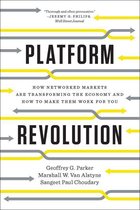
- Parker, G. G., Van Alstyne, M. W., & Choudary, S. P. (2016). Platform Revolution: How
Networked Markets Are Transforming the Economy and How to Make Them Work for You.
WW Norton & Company.
Grading:
➢ Group Term Project (40%)
➢ Final Exam (60%)
➢ Guest speakers
➢ Workshops and Project Progress Report (group)
➢ Feedback FruitPeer Evaluation (individual)
○ Using Feedback Fruit—a tool integrated in Canvas—student will provide feedback
regarding the quality of theirpeer’sProject Progress Reports. Students will judge their
peeron various provided metrics and will give open ended feedback when prompted.
Plagiarism: if in doubt, cite references for ideas and always quote text directly lifted from another
document. For written submissions, be sure to cite references for any related work that provided the
basis for your ideas.
,WEEK 1: Learning material
Pipeline vs. platform (DMI, 2018)
The ability for enterprises to navigate the business road towards digital success depends upon
finding the right platform. Not a technology platform, but a business model platform that pushes
enterprises toward digital leadership: moving from a pipeline model to a platform model.
Traditional companies operate in a series: supplier → factory → store → checkout and the
operations for these pipeline technologies reflect the serial model. This model typically doesn’t
provide the infrastructure to engage the tremendous growth potential available in a platform model.
Platform businesses enable interactions between buyers, suppliers and the platform, building value
at every stage.
These companies and similar innovators combine network effects and interactive technologies to pull
buyers into their orbit and encourage them to become producers through collaboration.
- Collaboration happens when people get so much value from the platform that they feel
compelled to contribute to it and to encourage everyone in their network to do the same. It
requires an unforgettable customer experience, only available through a platform model.
Successful platform companies achieve more than just customer satisfaction, they achieve:
transformation. It changes the way humans interact and connect, while providing incredible value
whether they are customers, employees, partners or external channels.
Digitally extending your business toward a platform model is both an art and a science, it requires a human centric
customer obsessed approach to designing the experience and then scaling innovation that meets the pace of change.
i.e. Facebook, Uber, AirBnB, TaskRabbit, Foodora...
Pant (2017)
Differences between both models can help us understand strategic competition in the digital economy.
Business Model definition: specifies the fundamental assumptions, hypotheses and logics of a
business. For example, the Business Model Canvas comprises 9 main dimensions that can be used to
analyse the business model of any firm: customer segments, customer relationships, channels,
revenue streams, cost structures, value propositions, key activities, key resources and key partners.
It’s useful to express the core internal components of a firm, and its main external relationships.
➢ Pipeline businesses:
○ It typically sources its raw materials and transforms them into an intermediate good
or a finished product which is later sold to its customers.
1
, ○ i.e. a restaurant buys ingredients to suppliers, to prepare meals to serve to dinners.
➢ Platform businesses:
○ They set up infrastructures and rules that allow their members and participants to
interact and transact with each other.
○ i.e a mall, where multiple retailers can have shops and customers can shop.
Differences between both models:
1. The nature of contact between the suppliers and the customers of the firm.
- Pipeline: No/Indirect contact between suppliers and customers of a firm. i.e. diner
has no contact with the farmer.
- Platform: Direct contact between clients and providers associated with a firm. i.e.
food court, which brings together participating restaurants with diners.
2. Pipeline (high value activities are performed by the focal firm) vs. Platform (firm sets up
infrastructures and rules so that clients and providers can perform high value activities.
- Firms with pipeline business models typically perform the highest value activities
themselves, because it allows them to exert control over valuable resources and also
to create a competitive advantage in the marketplace. i.e. oil and gas sector: mega
firms perform core activities associated with the extraction of crude, its refinement,
distribution and retail.
- Platform i.e. sharing rides on uber, delivering meals on fedora, renting
accommodations in AirBnb… It’s not the platform operator that performs the
highest value activities, it’s the members and users of the platform that give rides,
deliver meals...
3. Pipeline (focus on maximization of customer lifetime value) vs. Platform (focus on
maximization of ecosystem value)
- Pipeline: to maximize the customer lifetime value, based on the assumption that if a
firm can maximize the value that it can appropriate from each customer, then this
will lead to overall value maximization from all customers. The problem with this
individualistic approach of looking at each customer independently is that it
overlooks the gains from synergy and the benefits of complementarity within the
network.
- Platform: focus on the maximization of ecosystem value, which means that rather
than focusing on the incremental value added by each customer/user, they instead
focus on the exponential added value of the entire network of customers/users. It
recognizes the importance of network externalities and spillovers
2
, WEEK 1: Lecture slides
A digital economy
➢ Digital Technology is widespread and spreading fast
○ There are more mobile connections than people on the planet
○ More people have access to the mobile phone than to a toilet
➢ Digital technologies are poised to change the future of work
○ Automation, big data, and AI could affect 50% of the world economy
○ 1B jobs and $14.6T are automatable given today’s technology
Smartphone adoption
- 2005 – Joseph Ratzinger became Pope Benedict XVI
- 2013 – Jorge Bergoglio became Pope Francis
The rise of big tech
The Silicon Valley: From a community of nerds to a locus of power
Companies with $1T valuation: Apple, Amazon, Microsoft, Alphabet (2021) and
Facebook (2021)
Digital evolution index
Def.: state of digital evolution across 60 countries using 4 drivers for the level and the pace of
evolution.
1. Supply condition
- Access, transaction, and fulfillment infrastructures
2. Demand condition
- Digital literacy of consumers
3. Institutional environment
- Rule of law, government digitization regulation
4. Innovation and change
- Inputs (startups, access to finance),
- Process (quality of R&D, managerial practices), and
- Output (what helps propagate new ideas and business models?)
3
6013B0524Y
2021-2022
Mandatory course material:
- Parker, G. G., Van Alstyne, M. W., & Choudary, S. P. (2016). Platform Revolution: How
Networked Markets Are Transforming the Economy and How to Make Them Work for You.
WW Norton & Company.
Grading:
➢ Group Term Project (40%)
➢ Final Exam (60%)
➢ Guest speakers
➢ Workshops and Project Progress Report (group)
➢ Feedback FruitPeer Evaluation (individual)
○ Using Feedback Fruit—a tool integrated in Canvas—student will provide feedback
regarding the quality of theirpeer’sProject Progress Reports. Students will judge their
peeron various provided metrics and will give open ended feedback when prompted.
Plagiarism: if in doubt, cite references for ideas and always quote text directly lifted from another
document. For written submissions, be sure to cite references for any related work that provided the
basis for your ideas.
,WEEK 1: Learning material
Pipeline vs. platform (DMI, 2018)
The ability for enterprises to navigate the business road towards digital success depends upon
finding the right platform. Not a technology platform, but a business model platform that pushes
enterprises toward digital leadership: moving from a pipeline model to a platform model.
Traditional companies operate in a series: supplier → factory → store → checkout and the
operations for these pipeline technologies reflect the serial model. This model typically doesn’t
provide the infrastructure to engage the tremendous growth potential available in a platform model.
Platform businesses enable interactions between buyers, suppliers and the platform, building value
at every stage.
These companies and similar innovators combine network effects and interactive technologies to pull
buyers into their orbit and encourage them to become producers through collaboration.
- Collaboration happens when people get so much value from the platform that they feel
compelled to contribute to it and to encourage everyone in their network to do the same. It
requires an unforgettable customer experience, only available through a platform model.
Successful platform companies achieve more than just customer satisfaction, they achieve:
transformation. It changes the way humans interact and connect, while providing incredible value
whether they are customers, employees, partners or external channels.
Digitally extending your business toward a platform model is both an art and a science, it requires a human centric
customer obsessed approach to designing the experience and then scaling innovation that meets the pace of change.
i.e. Facebook, Uber, AirBnB, TaskRabbit, Foodora...
Pant (2017)
Differences between both models can help us understand strategic competition in the digital economy.
Business Model definition: specifies the fundamental assumptions, hypotheses and logics of a
business. For example, the Business Model Canvas comprises 9 main dimensions that can be used to
analyse the business model of any firm: customer segments, customer relationships, channels,
revenue streams, cost structures, value propositions, key activities, key resources and key partners.
It’s useful to express the core internal components of a firm, and its main external relationships.
➢ Pipeline businesses:
○ It typically sources its raw materials and transforms them into an intermediate good
or a finished product which is later sold to its customers.
1
, ○ i.e. a restaurant buys ingredients to suppliers, to prepare meals to serve to dinners.
➢ Platform businesses:
○ They set up infrastructures and rules that allow their members and participants to
interact and transact with each other.
○ i.e a mall, where multiple retailers can have shops and customers can shop.
Differences between both models:
1. The nature of contact between the suppliers and the customers of the firm.
- Pipeline: No/Indirect contact between suppliers and customers of a firm. i.e. diner
has no contact with the farmer.
- Platform: Direct contact between clients and providers associated with a firm. i.e.
food court, which brings together participating restaurants with diners.
2. Pipeline (high value activities are performed by the focal firm) vs. Platform (firm sets up
infrastructures and rules so that clients and providers can perform high value activities.
- Firms with pipeline business models typically perform the highest value activities
themselves, because it allows them to exert control over valuable resources and also
to create a competitive advantage in the marketplace. i.e. oil and gas sector: mega
firms perform core activities associated with the extraction of crude, its refinement,
distribution and retail.
- Platform i.e. sharing rides on uber, delivering meals on fedora, renting
accommodations in AirBnb… It’s not the platform operator that performs the
highest value activities, it’s the members and users of the platform that give rides,
deliver meals...
3. Pipeline (focus on maximization of customer lifetime value) vs. Platform (focus on
maximization of ecosystem value)
- Pipeline: to maximize the customer lifetime value, based on the assumption that if a
firm can maximize the value that it can appropriate from each customer, then this
will lead to overall value maximization from all customers. The problem with this
individualistic approach of looking at each customer independently is that it
overlooks the gains from synergy and the benefits of complementarity within the
network.
- Platform: focus on the maximization of ecosystem value, which means that rather
than focusing on the incremental value added by each customer/user, they instead
focus on the exponential added value of the entire network of customers/users. It
recognizes the importance of network externalities and spillovers
2
, WEEK 1: Lecture slides
A digital economy
➢ Digital Technology is widespread and spreading fast
○ There are more mobile connections than people on the planet
○ More people have access to the mobile phone than to a toilet
➢ Digital technologies are poised to change the future of work
○ Automation, big data, and AI could affect 50% of the world economy
○ 1B jobs and $14.6T are automatable given today’s technology
Smartphone adoption
- 2005 – Joseph Ratzinger became Pope Benedict XVI
- 2013 – Jorge Bergoglio became Pope Francis
The rise of big tech
The Silicon Valley: From a community of nerds to a locus of power
Companies with $1T valuation: Apple, Amazon, Microsoft, Alphabet (2021) and
Facebook (2021)
Digital evolution index
Def.: state of digital evolution across 60 countries using 4 drivers for the level and the pace of
evolution.
1. Supply condition
- Access, transaction, and fulfillment infrastructures
2. Demand condition
- Digital literacy of consumers
3. Institutional environment
- Rule of law, government digitization regulation
4. Innovation and change
- Inputs (startups, access to finance),
- Process (quality of R&D, managerial practices), and
- Output (what helps propagate new ideas and business models?)
3