100% satisfaction guarantee Immediately available after payment Both online and in PDF No strings attached 4.2 TrustPilot
logo-home
Exam (elaborations)

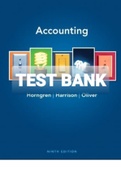
Exam (elaborations) Test Bank for Accounting 9th Edition Horngren, Harrison, Oliver

Rating
-
Sold
-
Pages
77
Grade
A+
Uploaded on
26-10-2021
Written in
2021/2022

TEST BANK with Complete Questions and Solutions. To clarify, this is the TEST BANK, not the textbook. You get immediate access to download your test bank. You will receive a complete test bank; in other words, all chapters will be there. Test banks come in PDF format; therefore, you do not need specialized software to open them. Exam (elaborations) Test Bank for Accounting 9th Edition Horngren, Harrison, Oliver eu/Test-Bank-for-Accounting-9th-Edition-Horngren,-Harrison,-Oliver Chapter 2: Recording Business Transactions 2.1-1 An account is the detailed record of the changes in a particular asset, liability, or owner’s equity. Answer: True LO: 2-1 Difficulty: 1 EOC Ref: Accounting Vocabulary AACSB: Reflective Thinking AICPA Business Perspective Competencies: Strategic/Critical Thinking AICPA Functional Competencies: Reporting 2.1-2 A chart of accounts is the book holding all of the company's accounts. Answer: False LO: 2-1 Difficulty: 1 EOC Ref: Accounting Vocabulary AACSB: Reflective Thinking AICPA Business Perspective Competencies: Legal/Regulatory AICPA Functional Competencies: Reporting 2.1-3 A trial balance is the list of all a company's accounts along with their account numbers. Answer: False LO: 2-1 Difficulty: 1 EOC Ref: Accounting Vocabulary AACSB: Reflective Thinking AICPA Business Perspective Competencies: Legal/Regulatory AICPA Functional Competencies: Measurement, Reporting 2.1-4 A journal is a chronological record of transactions. Answer: True LO: 2-1 Difficulty: 1 EOC Ref: S2-1 AACSB: Reflective Thinking AICPA Business Perspective Competencies: Strategic/Critical Thinking AICPA Functional Competencies: Reporting 2.1-5 In a typical chart of accounts, liabilities appear before assets. Answer: False LO: 2-1 Difficulty: 1 EOC: P2-27A AACSB: Analytic Skills AICPA Business Perspective Competencies: Legal/Regulatory AICPA Functional Competencies: Reporting 1 Full file at 2.1-6 A trial balance is a list of all of the accounts with their balances. Answer: True LO: 2-1 Difficulty: 1 EOC Ref: Accounting Vocabulary AACSB: Reflective Thinking AICPA Business Perspective Competencies: Legal/Regulatory AICPA Functional Competencies: Reporting 2.1-7 Expenses are increases in owner’s equity caused by providing goods or services for customers. Answer: False LO: 2-1 Difficulty: 1 EOC Ref: S2-2 AACSB: Reflective Thinking AICPA Business Perspective Competencies: Legal/Regulatory AICPA Functional Competencies: Reporting 2.1-8 Which of the following accounts is NOT an example of an asset? A) Accounts receivable B) Cash C) Building D) Notes payable Answer: D LO: 2-1 Difficulty: 1 EOC Ref: S2-3 AACSB: Analytic Skills AICPA Business Perspective Competencies: Legal/Regulatory AICPA Functional Competencies: Reporting 2.1-9 Which of the following accounts is NOT an example of a liability? A) Wages payable B) Notes payable C) Accounts payable D) Accounts receivable Answer: D LO: 2-1 Difficulty: 1 EOC Ref: S2-3 AACSB: Analytic Skills AICPA Business Perspective Competencies: Legal/Regulatory AICPA Functional Competencies: Reporting 2 Full file at 2.1-10 Which of the following accounts is an example of an owner’s equity account? A) Accounts payable B) Equipment C) Cash D) Drawing Answer: D LO: 2-1 Difficulty: 1 EOC Ref: S2-3 AACSB: Analytic Skills AICPA Business Perspective Competencies: Legal/Regulatory AICPA Functional Competencies: Reporting 2.1-11 Accountants first record transactions in the: A) chart of accounts. B) trial balance. C) journal. D) ledger. Answer: C LO: 2-1 Difficulty: 1 EOC Ref: S2-4 AACSB: Analytic Skills AICPA Business Perspective Competencies: Strategic/Critical Thinking AICPA Functional Competencies: Reporting 2.1-12 Which of the following accounts is an asset? A) Salary expense B) Accounts payable C) Service revenue D) Prepaid expenses Answer: D LO: 2-1 Difficulty: 1 EOC Ref: S2-3 AACSB: Analytic Skills AICPA Business Perspective Competencies: Legal/Regulatory AICPA Functional Competencies: Reporting 3 Full file at 2.1-13 Which of the following accounts is a liability? A) Accounts payable B) Prepaid expenses C) Salary expense D) Service revenue Answer: A LO: 2-1 Difficulty: 1 EOC Ref: S2-3 AACSB: Analytic Skills AICPA Business Perspective Competencies: Legal/Regulatory AICPA Functional Competencies: Reporting 2.1-14 Which of the following accounts is an owner’s equity account? A) Accrued liability B) Accounts payable C) Prepaid expense D) Capital Answer: D LO: 2-1 Difficulty: 1 EOC Ref: S2-3 AACSB: Analytic Skills AICPA Business Perspective Competencies: Legal/Regulatory AICPA Functional Competencies: Reporting 2.1-15 Prepaid expenses are recorded as: A) assets. B) liabilities. C) debits and credits. D) owner’s equity. Answer: A LO: 2-1 Difficulty: 1 EOC: S2-3 AACSB: Analytic Skills AICPA Business Perspective Competencies: Legal/Regulatory AICPA Functional Competencies: Reporting 4 Full file at 2.1-16 In a typical chart of accounts, what information is provided along with the account name? A) Account balance B) Account number C) Dates of transactions D) Transaction amounts Answer: B LO: 2-1 Difficulty: 1 EOC: P2-27A AACSB: Analytic Skills AICPA Business Perspective Competencies: Legal/Regulatory AICPA Functional Competencies: Reporting 2.1-17 Which of the following are accrued liabilities? A) Taxes payable B) Interest payable C) Salary payable D) All of the above Answer: D LO: 2-1 Difficulty: 1 EOC: S2-1 AACSB: Reflective Thinking AICPA Business Perspective Competencies: Legal/Regulatory AICPA Functional Competencies: Reporting 2.1-18 Which of the following accounts is an example of a liability? A) Service revenue B) Building C) Accounts receivable D) Notes payable Answer: D LO: 2-1 Difficulty: 1 EOC Ref: S2-3 AACSB: Reflective Thinking AICPA Business Perspective Competencies: Legal/Regulatory AICPA Functional Competencies: Reporting 2.1-19 A listing of all account titles in numerical order is a(n): A) ledger. B) journal. C) income statement. D) chart of accounts. Answer: D LO: 2-1 Difficulty: 1 EOC: Accounting Vocabulary AACSB: Reflective Thinking AICPA Business Perspective Competencies: Legal/Regulatory AICPA Functional Competencies: Reporting 5 Full file at 2.1-20 Which of the following accounts is an asset? A) Cash B) Notes payable C) Drawing D) Expenses Answer: A LO: 2-1 Difficulty: 2 EOC: S2-3 AACSB: Reflective Thinking AICPA Business Perspective Competencies: Legal/Regulatory AICPA Functional Competencies: Reporting 2.1-21 Which of the following is NOT part of owner’s equity? A) Accounts receivable B) Capital C) Notes payable D) Both A and C Answer: D LO: 2-1 Difficulty: 1 EOC: S2-3 AACSB: Reflective Thinking AICPA Business Perspective Competencies: Legal/Regulatory AICPA Functional Competencies: Reporting 2.1-22 A book holding all of the accounts is called the: A) ledger. B) journal. C) income statement. D) balance sheet. Answer: A LO: 2-1 Difficulty: 2 EOC: Accounting Vocabulary AACSB: Reflective Thinking AICPA Business Perspective Competencies: Legal/Regulatory AICPA Functional Competencies: Reporting 6 Full file at 7 Full file at 2.1-23 Which of the following is the detailed record of the changes in a particular asset, liability, or owner’s equity? A) Journal B) Trial balance C) Ledger D) Account Answer: D LO: 2-1 Difficulty: 1 EOC Ref: Accounting Vocabulary AACSB: Reflective Thinking AICPA Business Perspective Competencies: Legal/RegulatoryAICPA Functional Competencies: Measurement, Reporting 2.2-1 Debit refers to the right side of the T-account, and credit refers to the left side. Answer: False LO: 2-2 Difficulty: 1 EOC Ref: S2-2 AACSB: Reflective Thinking AICPA Business Perspective Competencies: Strategic/Critical Thinking AICPA Functional Competencies: Measurement 2.2-2 In the standard accounting system, we use double entry accounting, which means we record the dual effects of each transaction. Answer: True LO: 2-2 Difficulty: 1 EOC Ref: Accounting Vocabulary AACSB: Reflective Thinking AICPA Business Perspective Competencies: Strategic/Critical Thinking AICPA Functional Competencies: Measurement 2.2-3 An asset account is increased by a debit. Answer: True LO: 2-2 Difficulty: 1 EOC Ref: S2-2 AACSB: Reflective Thinking AICPA Business Perspective Competencies: Strategic/Critical Thinking AICPA Functional Competencies: Measurement 8 Full file at 2.2-4 The owner’s capital account is increased by a debit. Answer: False LO: 2-2 Difficulty: 1 EOC Ref: S2-2 AACSB: Analytic Skills AICPA Business Perspective Competencies: Strategic/Critical Thinking AICPA Functional Competencies: Measurement 2.2-5 The drawing (withdrawals) account is increased by a debit. Answer: True LO: 2-2 Difficulty: 1 EOC Ref: S2-2 AACSB: Analytic Skills AICPA Business Perspective Competencies: Strategic/Critical Thinking AICPA Functional Competencies: Measurement 2.2-6 A liability account is increased by a debit. Answer: False LO: 2-2 Difficulty: 1 EOC Ref: S2-2 AACSB: Analytic Skills AICPA Business Perspective Competencies: Strategic/Critical Thinking AICPA Functional Competencies: Measurement 2.2-7 Which of the following accounts increases with a credit? A) Cash B) Capital C) Accounts receivable D) Prepaid expenses Answer: B LO: 2-2 Difficulty: 1 EOC Ref: S2-2 AACSB: Analytic Skills AICPA Business Perspective Competencies: Strategic/Critical Thinking AICPA Functional Competencies: Measurement 9 Full file at 2.2-8 Which of the following accounts decreases with a credit? A) Cash B) Capital C) Accounts payable D) Notes Payable Answer: A LO: 2-2 Difficulty: 1 EOC Ref: S2-2 AACSB: Analytic Skills AICPA Business Perspective Competencies: Strategic/Critical Thinking AICPA Functional Competencies: Measurement 2.2-9 Which of the following accounts increases with a debit? A) Cash B) Interest payable C) Accounts payable D) Capital Answer: A LO: 2-2 Difficulty: 1 EOC Ref: S2-2 AACSB: Analytic Skills AICPA Business Perspective Competencies: Strategic/Critical Thinking AICPA Functional Competencies: Measurement 2.2-10 Which of the following accounts decreases with a debit? A) Notes payable B) Prepaid insurance C) Cash D) Land Answer: A LO: 2-

Show more Read less


Whoops! We can’t load your doc right now. Try again or contact support.

Document information

Uploaded on
October 26, 2021
Number of pages
77
Written in
2021/2022
Type
Exam (elaborations)
Contains
Questions & answers

Subjects

Content preview

,Full file at http://testbankscafe.eu/Test-Bank-for-Accounting-9th-Edition-Horngren,-Harrison,-Oliver
Chapter 2: Recording Business Transactions

2.1-1 An account is the detailed record of the changes in a particular asset, liability, or owner’s equity.

Answer: True
LO: 2-1
Difficulty: 1
EOC Ref: Accounting Vocabulary
AACSB: Reflective Thinking
AICPA Business Perspective Competencies: Strategic/Critical Thinking
AICPA Functional Competencies: Reporting

2.1-2 A chart of accounts is the book holding all of the company's accounts.

Answer: False
LO: 2-1
Difficulty: 1
EOC Ref: Accounting Vocabulary
AACSB: Reflective Thinking
AICPA Business Perspective Competencies: Legal/Regulatory
AICPA Functional Competencies: Reporting

2.1-3 A trial balance is the list of all a company's accounts along with their account numbers.

Answer: False
LO: 2-1
Difficulty: 1
EOC Ref: Accounting Vocabulary
AACSB: Reflective Thinking
AICPA Business Perspective Competencies: Legal/Regulatory
AICPA Functional Competencies: Measurement, Reporting

2.1-4 A journal is a chronological record of transactions.

Answer: True
LO: 2-1
Difficulty: 1
EOC Ref: S2-1
AACSB: Reflective Thinking
AICPA Business Perspective Competencies: Strategic/Critical Thinking
AICPA Functional Competencies: Reporting

2.1-5 In a typical chart of accounts, liabilities appear before assets.

Answer: False
LO: 2-1
Difficulty: 1
EOC: P2-27A
AACSB: Analytic Skills
AICPA Business Perspective Competencies: Legal/Regulatory
AICPA Functional Competencies: Reporting


1

,Full file at http://testbankscafe.eu/Test-Bank-for-Accounting-9th-Edition-Horngren,-Harrison,-Oliver
2.1-6 A trial balance is a list of all of the accounts with their balances.

Answer: True
LO: 2-1
Difficulty: 1
EOC Ref: Accounting Vocabulary
AACSB: Reflective Thinking
AICPA Business Perspective Competencies: Legal/Regulatory
AICPA Functional Competencies: Reporting

2.1-7 Expenses are increases in owner’s equity caused by providing goods or services for customers.

Answer: False
LO: 2-1
Difficulty: 1
EOC Ref: S2-2
AACSB: Reflective Thinking
AICPA Business Perspective Competencies: Legal/Regulatory
AICPA Functional Competencies: Reporting

2.1-8 Which of the following accounts is NOT an example of an asset?
A) Accounts receivable
B) Cash
C) Building
D) Notes payable

Answer: D
LO: 2-1
Difficulty: 1
EOC Ref: S2-3
AACSB: Analytic Skills
AICPA Business Perspective Competencies: Legal/Regulatory
AICPA Functional Competencies: Reporting

2.1-9 Which of the following accounts is NOT an example of a liability?
A) Wages payable
B) Notes payable
C) Accounts payable
D) Accounts receivable

Answer: D
LO: 2-1
Difficulty: 1
EOC Ref: S2-3
AACSB: Analytic Skills
AICPA Business Perspective Competencies: Legal/Regulatory
AICPA Functional Competencies: Reporting


2

, Full file at http://testbankscafe.eu/Test-Bank-for-Accounting-9th-Edition-Horngren,-Harrison,-Oliver
2.1-10 Which of the following accounts is an example of an owner’s equity account?
A) Accounts payable
B) Equipment
C) Cash
D) Drawing

Answer: D
LO: 2-1
Difficulty: 1
EOC Ref: S2-3
AACSB: Analytic Skills
AICPA Business Perspective Competencies: Legal/Regulatory
AICPA Functional Competencies: Reporting

2.1-11 Accountants first record transactions in the:
A) chart of accounts.
B) trial balance.
C) journal.
D) ledger.

Answer: C
LO: 2-1
Difficulty: 1
EOC Ref: S2-4
AACSB: Analytic Skills
AICPA Business Perspective Competencies: Strategic/Critical Thinking
AICPA Functional Competencies: Reporting

2.1-12 Which of the following accounts is an asset?
A) Salary expense
B) Accounts payable
C) Service revenue
D) Prepaid expenses

Answer: D
LO: 2-1
Difficulty: 1
EOC Ref: S2-3
AACSB: Analytic Skills
AICPA Business Perspective Competencies: Legal/Regulatory
AICPA Functional Competencies: Reporting


3
Get to know the seller

Seller avatar
Reputation scores are based on the amount of documents a seller has sold for a fee and the reviews they have received for those documents. There are three levels: Bronze, Silver and Gold. The better the reputation, the more your can rely on the quality of the sellers work.
Expert001 Chamberlain School Of Nursing
View profile
Follow You need to be logged in order to follow users or courses
Sold
799
Member since
4 year
Number of followers
566
Documents
1190
Last sold
4 days ago
Expert001

High quality, well written Test Banks, Guides, Solution Manuals and Exams to enhance your learning potential and take your grades to new heights. Kindly leave a review and suggestions. We do take pride in our high-quality services and we are always ready to support all clients.

4.2

159 reviews

5
104
4
18
3
14
2
7
1
16

Recently viewed by you

Why students choose Stuvia

Created by fellow students, verified by reviews

Quality you can trust: written by students who passed their tests and reviewed by others who've used these notes.

Didn't get what you expected? Choose another document

No worries! You can instantly pick a different document that better fits what you're looking for.

Pay as you like, start learning right away

No subscription, no commitments. Pay the way you're used to via credit card and download your PDF document instantly.

Student with book image

“Bought, downloaded, and aced it. It really can be that simple.”

Alisha Student

Frequently asked questions