Hate Speech And Disinformation Online:
Analyzing Sacha Baron Cohen’s speech on the spread of hate and disinformation online and
the regulation of social media companies
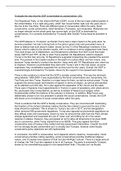
This November, comedian Sacha Baron Cohen (2019) was awarded the International
Leadership Award by the Anti-Defamation League at this year’s Never is Now Summit. In
his keynote speech, Baron Cohen uses a combination of humor, loaded language and concrete
examples to support his main conclusion: Social media companies must be regulated by our
elected representatives and held accountable for the content on their platforms.
Baron Cohen (2019) focuses on Facebook and the arguments put forth by the
company’s CEO, Mark Zuckerberg, against the regulation of social media companies like his.
To counter these, the comedian points out the multiple instances in which social media
platforms have been used to spread hate and disinformation. The comedian’s strongest
argument in support of his main conclusion is that social media platforms facilitate the spread
of this kind of content. According to Baron Cohen (2019), Facebook’s algorithms are
designed to “amplify the type of content that keeps users engaged” and this content is usually
that which “triggers outrage and fear.” Social media platforms ease the spread of violence and
disinformation online, therefore, they must be regulated to stop this content from spreading.
Baron Cohen (2019) uses the Rohingya genocide in Myanmar as an example of the
consequences of the spread of hate speech through social media.
Baron Cohen (2019) uses loaded language in his speech as a tool aimed at appealing
to his audience’s emotions (Weston, 2017, p. 91). When discussing the issue of political ads
on social media platforms, Baron Cohen (2019) attempts to draw a parallel between the way
in which politicians use platforms nowadays and the way in which the same tool could have
been used by Adolf Hitler. His non sequitur argument does not properly link to his main
conclusion and there is no clear correlation between the two scenarios he draws attention to
(Weston, 2017, p. 92). The mention of a historical figure that incited violence against
minority groups decades before the birth of social media is clearly aimed at painting an
imaginary scenario in people’s minds, one which Baron Cohen (2019) cannot prove would
have happened. Overall, this argument does not add substance to his main conclusion.
Baron Cohen (2019) aims at shedding light on the negative consequences of not
regulating social media companies and not holding them accountable for the content spread
within their platforms. Addressing an international audience and pushing for policy change
could classify him as a transnational moral entrepreneur. According to Nadelmann (2008),
Analyzing Sacha Baron Cohen’s speech on the spread of hate and disinformation online and
the regulation of social media companies
This November, comedian Sacha Baron Cohen (2019) was awarded the International
Leadership Award by the Anti-Defamation League at this year’s Never is Now Summit. In
his keynote speech, Baron Cohen uses a combination of humor, loaded language and concrete
examples to support his main conclusion: Social media companies must be regulated by our
elected representatives and held accountable for the content on their platforms.
Baron Cohen (2019) focuses on Facebook and the arguments put forth by the
company’s CEO, Mark Zuckerberg, against the regulation of social media companies like his.
To counter these, the comedian points out the multiple instances in which social media
platforms have been used to spread hate and disinformation. The comedian’s strongest
argument in support of his main conclusion is that social media platforms facilitate the spread
of this kind of content. According to Baron Cohen (2019), Facebook’s algorithms are
designed to “amplify the type of content that keeps users engaged” and this content is usually
that which “triggers outrage and fear.” Social media platforms ease the spread of violence and
disinformation online, therefore, they must be regulated to stop this content from spreading.
Baron Cohen (2019) uses the Rohingya genocide in Myanmar as an example of the
consequences of the spread of hate speech through social media.
Baron Cohen (2019) uses loaded language in his speech as a tool aimed at appealing
to his audience’s emotions (Weston, 2017, p. 91). When discussing the issue of political ads
on social media platforms, Baron Cohen (2019) attempts to draw a parallel between the way
in which politicians use platforms nowadays and the way in which the same tool could have
been used by Adolf Hitler. His non sequitur argument does not properly link to his main
conclusion and there is no clear correlation between the two scenarios he draws attention to
(Weston, 2017, p. 92). The mention of a historical figure that incited violence against
minority groups decades before the birth of social media is clearly aimed at painting an
imaginary scenario in people’s minds, one which Baron Cohen (2019) cannot prove would
have happened. Overall, this argument does not add substance to his main conclusion.
Baron Cohen (2019) aims at shedding light on the negative consequences of not
regulating social media companies and not holding them accountable for the content spread
within their platforms. Addressing an international audience and pushing for policy change
could classify him as a transnational moral entrepreneur. According to Nadelmann (2008),