

HRM3704 Contemporary Issues in Human Resource Management
Study Unit 6 - Talent Management
Attraction and retention - a theoretical perspective
Two theoretical perspectives which provide a framework for analysing the strategic approach associated with the long-
term development of the organisation’s human resources.
• The first human capital theory, which links investment in the organisation's key asset, its employees, to
increased productivity and sustained competitive advantage. The strategic aspect is the long-term
enhancement of the firm's resource base by linking employees’ skill development with retention through
training and development, career management, and progression. This is also consistent with the second
theoretical perspective - the RBV of the firm.
• Focus of the RBV is on an organisation retaining and developing these human resources through investments
such as human resource development (HRD) strategies. This retention and development will ensure that these
assets become valuable, rare, and difficult to imitate enhancing further the organisation’s competitive
advantage
A critical element is the strategic development of diverse strategies for staff enhancement and development as
important tools for both attraction and retention. Organisations taking the strategic course will seek a long-term and
diverse approach to managing and investing in their human resources, to ensure that appropriate training and
development are available to all employees.
Talent management and the demographic time-bomb
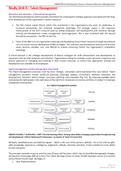
The Talent-management processes must be more strategic, connected, and broad-based than ever before. Talent
management processes include workforce planning, talent-gap analysis, recruitment, selection, education and
development, retention, talent reviews, succession planning, and evaluation (Fig. 6.1). By assessing available talent
and placing the right people in the right place at the right time companies can survive and thrive in todays’ increasingly
competitive environment.
6.1 Talent-management system
SOURCE: ELKELES, T. & PHILLIPS, J. 2007. The chief learning officer: Driving value within a changing organisation through learning
and development. Oxford: Butterworth-Heinemann, an imprint of Taylor & Francis:234.
Michaels, Handfield-Jones, and Axelrod argued - ‘Talent is the sum of the person's abilities - his or her intrinsic gifts,
skills, knowledge, experience, intelligence, judgement, attitude, character and drive. It also includes his or her ability
to learn and grow.’
The principal corporate resource over the next 20 years will be talent, which, due to identified demographic changes,
will become increasingly difficult to find. The Talent Shortage Survey of nearly 33 000 employers across 23 countries
and territories found major shortages in:
1. Sales Representatives
Page 1 of 6
Summary by L Petzer
, HRM3704 Contemporary Issues in Human Resource Management
2. Engineers
3. Technicians (primarily production and operations, engineering and maintenance)
4. Production operators
5. Skilled manual traders (primarily carpenters, welders and plumbers)
6. IT staff (primarily programmers and developers)
7. Administrative and personal assistants
8. Drivers
9. Accountants
10. Management and executives
Organisations that are prepared to focus on attracting and developing talent will be in a stronger position to retain key
human resources as the so-called war for talent intensifies. It is also clear that the way organisations seek to retain
these highly skilled resources will have to change. Places human resources at the centre of policy and systems
development to achieve outcomes that promote the organisation as an employer of choice for increasingly discerning
employees. The structural changes driving the ‘war for talent’ are widespread across many of the more industrialised
market economies (Table 6.1 and 6.2)
6.1 The old and new business realities
The old reality The new reality
People need companies Companies need people
Machines, capital and geography are the competitive Talented people are the competitive advantage
advantage
Better talent makes some difference Better talent mages a huge difference
Jobs are scarce Talented people are scarce
Employees are loyal, and jobs are secure People are mobile, and their commitment is short-term
People accept the standard package they are offered People demand much more
6.2 The old way and new way of doing things
The old way The new way
HR is responsible for people management All managers, starting at CEO, are accountable for
strengthening their talent pool
We provide good pay and benefits We shape our company, our jobs, even our strategy to
appeal to talented people
Recruiting is like purchasing Recruiting is like marketing
We think development happens in training We fuel development primarily through stretch jobs,
coaching and mentoring
We treat everyone the same and like to think that We affirm all our people but invest differently in our A, B
everyone is equally capable and C players
Building a new paradigm
Michaels, Handfield-Jones, and Axelrod - five key areas for organisations to act upon if they were going to make talent
a source of competitive advantage. These were:
• Embrace a talent mindset
• Craft a winning employee value proposition
• Rebuild your recruitment strategy
• Weave development into your organisation
• Differentiate and affirm your people
Embrace a talent mindset
Whilst most organisations would like to see themselves in this context, many tend to adopt the old style of talent
management, as indicated in (Table 6.3)
Page 2 of 6
Summary by L Petzer
Study Unit 6 - Talent Management
Attraction and retention - a theoretical perspective
Two theoretical perspectives which provide a framework for analysing the strategic approach associated with the long-
term development of the organisation’s human resources.
• The first human capital theory, which links investment in the organisation's key asset, its employees, to
increased productivity and sustained competitive advantage. The strategic aspect is the long-term
enhancement of the firm's resource base by linking employees’ skill development with retention through
training and development, career management, and progression. This is also consistent with the second
theoretical perspective - the RBV of the firm.
• Focus of the RBV is on an organisation retaining and developing these human resources through investments
such as human resource development (HRD) strategies. This retention and development will ensure that these
assets become valuable, rare, and difficult to imitate enhancing further the organisation’s competitive
advantage
A critical element is the strategic development of diverse strategies for staff enhancement and development as
important tools for both attraction and retention. Organisations taking the strategic course will seek a long-term and
diverse approach to managing and investing in their human resources, to ensure that appropriate training and
development are available to all employees.
Talent management and the demographic time-bomb
The Talent-management processes must be more strategic, connected, and broad-based than ever before. Talent
management processes include workforce planning, talent-gap analysis, recruitment, selection, education and
development, retention, talent reviews, succession planning, and evaluation (Fig. 6.1). By assessing available talent
and placing the right people in the right place at the right time companies can survive and thrive in todays’ increasingly
competitive environment.
6.1 Talent-management system
SOURCE: ELKELES, T. & PHILLIPS, J. 2007. The chief learning officer: Driving value within a changing organisation through learning
and development. Oxford: Butterworth-Heinemann, an imprint of Taylor & Francis:234.
Michaels, Handfield-Jones, and Axelrod argued - ‘Talent is the sum of the person's abilities - his or her intrinsic gifts,
skills, knowledge, experience, intelligence, judgement, attitude, character and drive. It also includes his or her ability
to learn and grow.’
The principal corporate resource over the next 20 years will be talent, which, due to identified demographic changes,
will become increasingly difficult to find. The Talent Shortage Survey of nearly 33 000 employers across 23 countries
and territories found major shortages in:
1. Sales Representatives
Page 1 of 6
Summary by L Petzer
, HRM3704 Contemporary Issues in Human Resource Management
2. Engineers
3. Technicians (primarily production and operations, engineering and maintenance)
4. Production operators
5. Skilled manual traders (primarily carpenters, welders and plumbers)
6. IT staff (primarily programmers and developers)
7. Administrative and personal assistants
8. Drivers
9. Accountants
10. Management and executives
Organisations that are prepared to focus on attracting and developing talent will be in a stronger position to retain key
human resources as the so-called war for talent intensifies. It is also clear that the way organisations seek to retain
these highly skilled resources will have to change. Places human resources at the centre of policy and systems
development to achieve outcomes that promote the organisation as an employer of choice for increasingly discerning
employees. The structural changes driving the ‘war for talent’ are widespread across many of the more industrialised
market economies (Table 6.1 and 6.2)
6.1 The old and new business realities
The old reality The new reality
People need companies Companies need people
Machines, capital and geography are the competitive Talented people are the competitive advantage
advantage
Better talent makes some difference Better talent mages a huge difference
Jobs are scarce Talented people are scarce
Employees are loyal, and jobs are secure People are mobile, and their commitment is short-term
People accept the standard package they are offered People demand much more
6.2 The old way and new way of doing things
The old way The new way
HR is responsible for people management All managers, starting at CEO, are accountable for
strengthening their talent pool
We provide good pay and benefits We shape our company, our jobs, even our strategy to
appeal to talented people
Recruiting is like purchasing Recruiting is like marketing
We think development happens in training We fuel development primarily through stretch jobs,
coaching and mentoring
We treat everyone the same and like to think that We affirm all our people but invest differently in our A, B
everyone is equally capable and C players
Building a new paradigm
Michaels, Handfield-Jones, and Axelrod - five key areas for organisations to act upon if they were going to make talent
a source of competitive advantage. These were:
• Embrace a talent mindset
• Craft a winning employee value proposition
• Rebuild your recruitment strategy
• Weave development into your organisation
• Differentiate and affirm your people
Embrace a talent mindset
Whilst most organisations would like to see themselves in this context, many tend to adopt the old style of talent
management, as indicated in (Table 6.3)
Page 2 of 6
Summary by L Petzer


