MKT202_StudyGuide
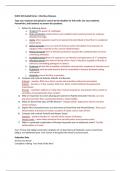
Chapter 1: Defining Marketing 1.1 The Importance of Marketing Today’s competitive business environment often challenges firms to prosper financially or even just to survive. Marketing plays a key role in addressing these challenges. Finance, operations, accounting, and other business functions won’t really matter without sufficient demand for products and services so the firm can make a profit. Marketing’s broader importance extends to society as a whole. Marketing helps introduce and gain acceptance of new products that ease or enrich people’s lives. 1.2 The Scope of Marketing What Is Marketing? a. The American Marketing Association offers the following formal definition: “Marketing is the activity, set of institutions, and processes for creating, communicating, delivering, and exchanging offerings that have value for customers, clients, partners, and society at large”.. b. Marketing is about identifying and meeting human and social needs. One of the shortest good definitions of marketing is “meeting needs profitably”. In this traditional definition of marketing, can you find the four words that are corresponding to the 4Ps of Marketing? What Is Marketed? Marketers market ten main types of entities: 1) goods; 2) services; 3) events; 4) experiences; 5) persons; 6) places; 7) properties; 8) organisations; 9) information; and 10) ideas. The (five) Basic Markets: 1) resource markets; 2) government markets; 3) manufacturer markets; 4) intermediary markets; and 5) consumer markets. 1.3 Core Marketing Concepts Needs, Wants, and Demands a. Needs Needs are basic human requirements; needs become wants when they are directed to specific objects that may satisfy the need. b. Marketers do not create needs; needs pre-exist marketers. Marketers influence wants. We distinguish five types of needs: 1) Stated needs; 2) Real needs; 3) Unstated needs; 4) Delight needs; and 5) Secret needs. Value Proposition: key promises to consumers from the brand 1.4 The New Marketing Realities a. Three transformative forces are shaping the marketing practices today: technology, globalisation and social responsibility. b. Widespread technology adoption has created new opportunities and challenges to marketers. Product and information become more accessible to customers, and technology helps promote consumer engagement and improve customer relationship management. Meanwhile, technology also makes prices more transparent, placing pressures on the manufacturers and intermediaries to compete on the price. As technology savvy customers become more powerful and vocal, companies need to constantly monitor customer reviews. c. Globalisation: 1) At the individual level, transportation, shipping, and communication technologies have made it easier for us to know the rest of the world, to travel, to buy and sell anywhere; 2) At the country level, globalisation has made countries increasingly multicultural; and 3) At the business level, globalisation changes innovation and product development as companies take ideas and lessons from one country and apply them to another. d. Social Responsibility: 1) The organisation’s task is to determine the needs, wants, and interests of target markets and satisfy them more effectively and efficiently than competitors while preserving or enhancing consumers’ and society’s long- term well-being; and 2) Companies may incorporate social responsibility as a way to differentiate themselves from competitors, build consumer preference, and achieve notable sales and profit gains. e. Three central trends that change the way companies do business: increased consumer participation and collaborative marketing, globalisation, and the rise of a creative society. .........................CONTINUED..........................
Written for
- Institution
-
123 University
- Course
-
MARKETING 202
Document information
- Uploaded on
- July 23, 2021
- Number of pages
- 196
- Written in
- 2020/2021
- Type
- OTHER
- Person
- Unknown
Subjects
-
14 the new marketing realities a three transformative forces are shaping the marketing practices today technology
-
globalisation and social responsibility b widespread technology adoption has cre