

RELATIONS AND NETWORKS OF
ORGANIZATIONS.
LECTU R E 1 – I NTR ODU CTI ON
RAN O: AN OVERVIEW
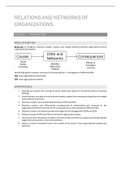
M ain aim: to recognize, describe, analyse, explain, and assess relations between organizations and of
organizational networks.
Everything together (causes, networks, and consequences) = management of IORs and IONs.
IOR: inter organizational relationship
ION: inter organizational network
LEARN IN G GOALS
1. Describe and explain the concept of social capital and apply the theoretical ideas to empirical
settings.
2. Know the basic concepts in social network analysis, explain their meaning and apply them to analyse
social network structures.
3. Describe, explain, and compare determinants of IORs and IONs
4. Describe, explain, and differentiate consequences of relationships and networks at the
organizational level and are able to link consequences to characteristics of IORs and IONs.
5. Describe, explain, and apply concepts with regard to the management of IORs and IONs.
6. Relate concepts of IORs and IONs to the field of organization studies.
7. Use and combine theoretical concepts in the area of IORs and IONs to analyse and interpret specific
organizational, societal, or economic problems.
8. Apply a number of analytical tools in the context of the study of inter-organizational relations and
networks.
,THE M Y TH OF IN DIVIDUALISM & THE RELATION AL BASIS OF SUC CESS
Social: resources available in and through personal and business networks
C apital: it is productive, it creates value.
Social capital is not a feature of an entity (attribute variable), but it is a feature of a relationship (relational
variable). Relational variables often have an equal/higher explanatory power than attribute variables. The
network of an organization often explains more about the organization than the organization itself.
“The friction is that society consists of a set of independent individuals, each of whom acts to achieve goals
that are independently arrived at, and that the functioning of the social system consists of the combination
of these actions of independent individuals.” (James Coleman)
Social capital refers to the resources available in and through personal and business networks
IORS AN D ION S: A RELATION AL VIEW OF ORGAN IZATION S
Interorganizational networks are “relatively enduring transactions, flows and linkages that occur among
and between an organization and one or more organization in its environment”.
Relationships and networks of organizational are about the exchange and flow of resources between
organizations. For an individual organization, relations and networks mean access to and dependency on
resources (e.g., information, ideas, reputation, trust). The notion of ‘social capital’ captures the resources
available through relationships and networks, i.e. (specifically) relational view of organizations.
SOC IAL C APITAL AN D SUC C ESS: M ULTI -LEVEL EF F ECT
Talent: nature or nurture? Relations are important for developing talents.
Intelligence: genetically determined but also developed and strengthened by relations (social interactions,
quality of education)
Education: writing and reading skills are a result of social interaction.
Dedication: supportive settings (e.g., friends and family)
C hance: the importance of ‘spider web networks’.
SOC IAL C APITAL AN D IN DIVIDUAL’S QUALITY OF LIF E
W ell being: sensemaking work and social relations are important predictors of well-being
Health: networkers are often healthier.
Life expectancy: networkers live longer.
SOC IAL C APITAL IN THE EC ON OMY
Payment and career development: people who are strongly embedded tend to earn higher salaries and
experience faster career development. (“structural holes”, Ronald Burt)
Raising financial capital: informal financial capital market
Learning in organizations: informal relations and learning
M arketing: verbal advertising, importance of social networks for diffusion of new products
Strategic alliances: importance of relationships between organizations (learning and reputation effects).
,LECTU R E 2 – DEFI NI TI ONS, TYPES A ND CHA R A CTERI STICS
ORGAN IZATION AN D EN VIRON MEN T
C LOSED VS OPEN SY STEM S
IN PUT AN D OUTPUT
, EN VIRON MENT AN D ITS C OM PONENTS
Framework to look at different factors from the environment that influence an organization:
SOC IAL N ETW ORKS: A RESEARC HER’S PERSPECTIVE
THE IN TERORGAN IZATIONAL PROBLEM
IOR’s are ‘relatively enduring transactions, flows and linkages that occur among and between an
organization and one or more organizations in its environment’.
When studying IORs and IONs, keep in mind the following:
• There are important differences between (social) networks within (intra) and between (inter)
organizations.
o E.g., networks between business units inside one firm vs networks between different
firms.
• IORs display absence of ‘true’ hierarchy
o Absence of ‘boss’ → implications for coordination, ownership, profit-sharing etc.
IORs and IONs as dependent variable:
• Why do organizations form relationships with other organizations?
• How do IORs form, develop, dissolve and how are they managed?
• Which factors explain changes in network structure over time?
IORs and IONs as independent variable:
• What are the effects of IORs and IONs on the behaviour and strategies of organizations?
• What are the effects of IORs on the outcome of organizations?
• To what extent do different network structures impact on project success?
ORGANIZATIONS.
LECTU R E 1 – I NTR ODU CTI ON
RAN O: AN OVERVIEW
M ain aim: to recognize, describe, analyse, explain, and assess relations between organizations and of
organizational networks.
Everything together (causes, networks, and consequences) = management of IORs and IONs.
IOR: inter organizational relationship
ION: inter organizational network
LEARN IN G GOALS
1. Describe and explain the concept of social capital and apply the theoretical ideas to empirical
settings.
2. Know the basic concepts in social network analysis, explain their meaning and apply them to analyse
social network structures.
3. Describe, explain, and compare determinants of IORs and IONs
4. Describe, explain, and differentiate consequences of relationships and networks at the
organizational level and are able to link consequences to characteristics of IORs and IONs.
5. Describe, explain, and apply concepts with regard to the management of IORs and IONs.
6. Relate concepts of IORs and IONs to the field of organization studies.
7. Use and combine theoretical concepts in the area of IORs and IONs to analyse and interpret specific
organizational, societal, or economic problems.
8. Apply a number of analytical tools in the context of the study of inter-organizational relations and
networks.
,THE M Y TH OF IN DIVIDUALISM & THE RELATION AL BASIS OF SUC CESS
Social: resources available in and through personal and business networks
C apital: it is productive, it creates value.
Social capital is not a feature of an entity (attribute variable), but it is a feature of a relationship (relational
variable). Relational variables often have an equal/higher explanatory power than attribute variables. The
network of an organization often explains more about the organization than the organization itself.
“The friction is that society consists of a set of independent individuals, each of whom acts to achieve goals
that are independently arrived at, and that the functioning of the social system consists of the combination
of these actions of independent individuals.” (James Coleman)
Social capital refers to the resources available in and through personal and business networks
IORS AN D ION S: A RELATION AL VIEW OF ORGAN IZATION S
Interorganizational networks are “relatively enduring transactions, flows and linkages that occur among
and between an organization and one or more organization in its environment”.
Relationships and networks of organizational are about the exchange and flow of resources between
organizations. For an individual organization, relations and networks mean access to and dependency on
resources (e.g., information, ideas, reputation, trust). The notion of ‘social capital’ captures the resources
available through relationships and networks, i.e. (specifically) relational view of organizations.
SOC IAL C APITAL AN D SUC C ESS: M ULTI -LEVEL EF F ECT
Talent: nature or nurture? Relations are important for developing talents.
Intelligence: genetically determined but also developed and strengthened by relations (social interactions,
quality of education)
Education: writing and reading skills are a result of social interaction.
Dedication: supportive settings (e.g., friends and family)
C hance: the importance of ‘spider web networks’.
SOC IAL C APITAL AN D IN DIVIDUAL’S QUALITY OF LIF E
W ell being: sensemaking work and social relations are important predictors of well-being
Health: networkers are often healthier.
Life expectancy: networkers live longer.
SOC IAL C APITAL IN THE EC ON OMY
Payment and career development: people who are strongly embedded tend to earn higher salaries and
experience faster career development. (“structural holes”, Ronald Burt)
Raising financial capital: informal financial capital market
Learning in organizations: informal relations and learning
M arketing: verbal advertising, importance of social networks for diffusion of new products
Strategic alliances: importance of relationships between organizations (learning and reputation effects).
,LECTU R E 2 – DEFI NI TI ONS, TYPES A ND CHA R A CTERI STICS
ORGAN IZATION AN D EN VIRON MEN T
C LOSED VS OPEN SY STEM S
IN PUT AN D OUTPUT
, EN VIRON MENT AN D ITS C OM PONENTS
Framework to look at different factors from the environment that influence an organization:
SOC IAL N ETW ORKS: A RESEARC HER’S PERSPECTIVE
THE IN TERORGAN IZATIONAL PROBLEM
IOR’s are ‘relatively enduring transactions, flows and linkages that occur among and between an
organization and one or more organizations in its environment’.
When studying IORs and IONs, keep in mind the following:
• There are important differences between (social) networks within (intra) and between (inter)
organizations.
o E.g., networks between business units inside one firm vs networks between different
firms.
• IORs display absence of ‘true’ hierarchy
o Absence of ‘boss’ → implications for coordination, ownership, profit-sharing etc.
IORs and IONs as dependent variable:
• Why do organizations form relationships with other organizations?
• How do IORs form, develop, dissolve and how are they managed?
• Which factors explain changes in network structure over time?
IORs and IONs as independent variable:
• What are the effects of IORs and IONs on the behaviour and strategies of organizations?
• What are the effects of IORs on the outcome of organizations?
• To what extent do different network structures impact on project success?


