
Comprehensive Nursing Exam 4 Study Guide Abdomen, Breast, Reproductive, Anus & Older Adult
Comprehensive Nursing Exam 4 Study Guide: Abdomen, Breast, Reproduc
tive, Anus & Older Adult
Study online at https://quizlet.com/_jtj5p0
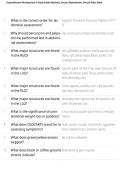
1. What is the correct order for ab- Inspection ’Auscultation ’Percussion ’Palpation (I ’A ’P ’
dominal assessment? P)
2. Why should percussion and palpa- They can stimulate peristalsis and alter bowel sounds.
tion be performed last in abdomi-
nal assessments?
3. What major structures are found Liver, gallbladder, duodenum, head of pancreas, right
in the RUQ? kidney, right adrenal, hepatic flexure, portions of as-
cending/transverse colon.
4. What major structures are found Stomach, spleen, left lobe of liver, body of pancreas, left
in the LUQ? kidney, left adrenal, splenic flexure, portions of trans-
verse/descending colon.
5. What major structures are found Cecum, appendix, ascending colon, right ovary/tube,
in the RLQ? right ureter, right spermatic cord.
6. What major structures are found Descending colon, sigmoid colon, left ovary/tube, left
in the LLQ? ureter, left spermatic cord.
7. What is the significance of unin- It may indicate a possible sign of illness or metastatic
tentional weight loss in patients? disease.
8. What does OLDCARTS stand for in Onset, Location, Duration, Characteristics, Aggravating
assessing symptoms? factors, Relieving factors, Treatment, Severity.
9. What does green/yellow emesis Bile or biliary involvement.
suggest?
10. What does black or coffee-ground Blood altered by gastric digestion.
emesis indicate?
, Comprehensive Nursing Exam 4 Study Guide Abdomen, Breast, Reproductive, Anus & Older Adult
Comprehensive Nursing Exam 4 Study Guide: Abdomen, Breast, Reproduc
tive, Anus & Older Adult
Study online at https://quizlet.com/_jtj5p0
11. What is the typical description of Dull, gnawing, cramping, burning, poorly localized;
visceral abdominal pain? originates in abdominal organs.
12. What is the typical description of Steady, sharp, localized, worsens with movement; often
parietal abdominal pain? from parietal peritoneal inflammation.
13. What is the typical description of Pain perceived away from the origin; e.g., gallbladder
referred abdominal pain? pain may be felt in the right shoulder.
14. What does narrow or pencil-like Possible intestinal obstruction or mass.
stool suggest?
15. What does melena indicate? Black, tarry stool; associated with GI bleeding.
16. What are the signs of dehydration Decreased skin turgor, decreased urine output, dry
due to prolonged vomiting? mouth, fatigue, and weakness.
17. What is the first step in assessing Assess areas away from the painful area first.
a patient with abdominal pain?
18. What is the normal bowel frequen- From about three times per day to three times per week.
cy range?
19. What is the significance of Cullen's Periumbilical ecchymosis, possible intra-abdominal
sign? bleeding.
20. What should be inspected during Contour, size, symmetry, umbilicus, skin, lesions, veins,
an abdominal examination? hair distribution, pulsations, and visible peristalsis.
21. What is the role of the liver in the Metabolizes nutrients and drugs, produces bile, detox-
body? ifies substances, and produces clotting factors.
22. What is the function of the gall- Stores and concentrates bile, releasing it to help digest
bladder? fats.
Comprehensive Nursing Exam 4 Study Guide: Abdomen, Breast, Reproduc
tive, Anus & Older Adult
Study online at https://quizlet.com/_jtj5p0
1. What is the correct order for ab- Inspection ’Auscultation ’Percussion ’Palpation (I ’A ’P ’
dominal assessment? P)
2. Why should percussion and palpa- They can stimulate peristalsis and alter bowel sounds.
tion be performed last in abdomi-
nal assessments?
3. What major structures are found Liver, gallbladder, duodenum, head of pancreas, right
in the RUQ? kidney, right adrenal, hepatic flexure, portions of as-
cending/transverse colon.
4. What major structures are found Stomach, spleen, left lobe of liver, body of pancreas, left
in the LUQ? kidney, left adrenal, splenic flexure, portions of trans-
verse/descending colon.
5. What major structures are found Cecum, appendix, ascending colon, right ovary/tube,
in the RLQ? right ureter, right spermatic cord.
6. What major structures are found Descending colon, sigmoid colon, left ovary/tube, left
in the LLQ? ureter, left spermatic cord.
7. What is the significance of unin- It may indicate a possible sign of illness or metastatic
tentional weight loss in patients? disease.
8. What does OLDCARTS stand for in Onset, Location, Duration, Characteristics, Aggravating
assessing symptoms? factors, Relieving factors, Treatment, Severity.
9. What does green/yellow emesis Bile or biliary involvement.
suggest?
10. What does black or coffee-ground Blood altered by gastric digestion.
emesis indicate?
, Comprehensive Nursing Exam 4 Study Guide Abdomen, Breast, Reproductive, Anus & Older Adult
Comprehensive Nursing Exam 4 Study Guide: Abdomen, Breast, Reproduc
tive, Anus & Older Adult
Study online at https://quizlet.com/_jtj5p0
11. What is the typical description of Dull, gnawing, cramping, burning, poorly localized;
visceral abdominal pain? originates in abdominal organs.
12. What is the typical description of Steady, sharp, localized, worsens with movement; often
parietal abdominal pain? from parietal peritoneal inflammation.
13. What is the typical description of Pain perceived away from the origin; e.g., gallbladder
referred abdominal pain? pain may be felt in the right shoulder.
14. What does narrow or pencil-like Possible intestinal obstruction or mass.
stool suggest?
15. What does melena indicate? Black, tarry stool; associated with GI bleeding.
16. What are the signs of dehydration Decreased skin turgor, decreased urine output, dry
due to prolonged vomiting? mouth, fatigue, and weakness.
17. What is the first step in assessing Assess areas away from the painful area first.
a patient with abdominal pain?
18. What is the normal bowel frequen- From about three times per day to three times per week.
cy range?
19. What is the significance of Cullen's Periumbilical ecchymosis, possible intra-abdominal
sign? bleeding.
20. What should be inspected during Contour, size, symmetry, umbilicus, skin, lesions, veins,
an abdominal examination? hair distribution, pulsations, and visible peristalsis.
21. What is the role of the liver in the Metabolizes nutrients and drugs, produces bile, detox-
body? ifies substances, and produces clotting factors.
22. What is the function of the gall- Stores and concentrates bile, releasing it to help digest
bladder? fats.


