Group Home (GH) Administrator
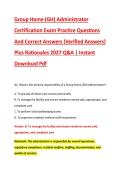
Certification Exam Practice Questions
And Correct Answers (Verified Answers)
Plus Rationales 2027 Q&A | Instant
Download Pdf
Q1. What is the primary responsibility of a Group Home (GH) Administrator?
A. To provide all direct-care services personally
B. To manage the facility and ensure residents receive safe, appropriate, and
compliant care
C. To perform only bookkeeping duties
D. To supervise residents without staff involvement
Answer: B. To manage the facility and ensure residents receive safe,
appropriate, and compliant care
Rationale: The administrator is responsible for overall operations,
regulatory compliance, resident welfare, staffing, documentation, and
quality of services.
,Q2. Which principle should guide decisions concerning residents in a group
home?
A. Convenience for staff
B. Minimizing paperwork
C. Resident health, safety, rights, and well-being
D. Reducing operating expenses
Answer: C. Resident health, safety, rights, and well-being
Rationale: Resident welfare is the central consideration in group-home
administration and should take precedence over convenience or financial
considerations.
Q3. What is the best way for an administrator to promote resident rights?
A. Restrict resident choices whenever possible
B. Establish policies that respect dignity, privacy, autonomy, and lawful
rights
C. Allow only staff to make decisions
D. Prevent residents from expressing complaints
,Answer: B. Establish policies that respect dignity, privacy, autonomy, and
lawful rights
Rationale: Respecting resident rights includes promoting dignity, privacy,
informed choice, participation, and freedom from discrimination and
abuse.
Q4. Which document generally provides important information about a
resident's needs and services?
A. Staff attendance sheet
B. Individual service or care plan
C. Facility purchase order
D. Maintenance invoice
Answer: B. Individual service or care plan
Rationale: An individualized plan identifies the resident's needs, goals,
services, supports, and relevant interventions.
Q5. What should an administrator do when a resident's needs change
significantly?
, A. Ignore the change until the next annual review
B. Remove the resident immediately
C. Ensure the resident's plan and services are reassessed and updated as
appropriate
D. Ask another resident to provide assistance
Answer: C. Ensure the resident's plan and services are reassessed and
updated as appropriate
Rationale: Significant changes in condition or needs require timely
assessment and appropriate modification of services.
Q6. Which action best demonstrates effective medication management?
A. Allowing residents to share medications
B. Keeping medications unsecured for convenience
C. Following applicable medication administration, storage, documentation,
and monitoring requirements
D. Allowing staff to change doses without authorization
Answer: C. Following applicable medication administration, storage,
documentation, and monitoring requirements
Certification Exam Practice Questions
And Correct Answers (Verified Answers)
Plus Rationales 2027 Q&A | Instant
Download Pdf
Q1. What is the primary responsibility of a Group Home (GH) Administrator?
A. To provide all direct-care services personally
B. To manage the facility and ensure residents receive safe, appropriate, and
compliant care
C. To perform only bookkeeping duties
D. To supervise residents without staff involvement
Answer: B. To manage the facility and ensure residents receive safe,
appropriate, and compliant care
Rationale: The administrator is responsible for overall operations,
regulatory compliance, resident welfare, staffing, documentation, and
quality of services.
,Q2. Which principle should guide decisions concerning residents in a group
home?
A. Convenience for staff
B. Minimizing paperwork
C. Resident health, safety, rights, and well-being
D. Reducing operating expenses
Answer: C. Resident health, safety, rights, and well-being
Rationale: Resident welfare is the central consideration in group-home
administration and should take precedence over convenience or financial
considerations.
Q3. What is the best way for an administrator to promote resident rights?
A. Restrict resident choices whenever possible
B. Establish policies that respect dignity, privacy, autonomy, and lawful
rights
C. Allow only staff to make decisions
D. Prevent residents from expressing complaints
,Answer: B. Establish policies that respect dignity, privacy, autonomy, and
lawful rights
Rationale: Respecting resident rights includes promoting dignity, privacy,
informed choice, participation, and freedom from discrimination and
abuse.
Q4. Which document generally provides important information about a
resident's needs and services?
A. Staff attendance sheet
B. Individual service or care plan
C. Facility purchase order
D. Maintenance invoice
Answer: B. Individual service or care plan
Rationale: An individualized plan identifies the resident's needs, goals,
services, supports, and relevant interventions.
Q5. What should an administrator do when a resident's needs change
significantly?
, A. Ignore the change until the next annual review
B. Remove the resident immediately
C. Ensure the resident's plan and services are reassessed and updated as
appropriate
D. Ask another resident to provide assistance
Answer: C. Ensure the resident's plan and services are reassessed and
updated as appropriate
Rationale: Significant changes in condition or needs require timely
assessment and appropriate modification of services.
Q6. Which action best demonstrates effective medication management?
A. Allowing residents to share medications
B. Keeping medications unsecured for convenience
C. Following applicable medication administration, storage, documentation,
and monitoring requirements
D. Allowing staff to change doses without authorization
Answer: C. Following applicable medication administration, storage,
documentation, and monitoring requirements