

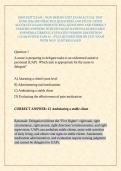
HESI EXIT EXAM / NGN HESI RN EXIT EXAM ACTUAL TEST
BANK 2026/2027 PRACTICE QUESTIONS AND STUDY GUIDE
ACCURATE EXAM COMPLETE REAL QUESTIONS AND CORRECT
VERIFIED ANSWERS WITH DETAILED RATIONALES (RELIABLE
ANSWERS) CURRENTLY UPDATED VERSION 2026 EDITION
|GUARANTEED PASS A+ |FULL REVISED HESI RN EXIT EXAM
WITH NGN |JUST RELEASED
Question 1
A nurse is preparing to delegate tasks to an unlicensed assistive
personnel (UAP). Which task is appropriate for the nurse to
delegate?
A) Assessing a client's pain level
B) Administering oral medications
C) Ambulating a stable client
D) Evaluating the effectiveness of pain medication
CORRECT ANSWER: C) Ambulating a stable client
Rationale: Delegation follows the "Five Rights": right task, right
circumstance, right person, right direction/communication, and right
supervision. UAPs can ambulate stable clients, assist with activities
of daily living, and obtain vital signs on stable clients. Assessment,
medication administration, and evaluation require nursing judgment
and cannot be delegated to UAPs.
,Question 2
A nurse receives a telephone order from a provider for a client's pain
medication. What is the nurse's priority action?
A) Read the order back to the provider for verification
B) Administer the medication immediately
C) Document the order in the medical record
D) Ask another nurse to verify the order
CORRECT ANSWER: A) Read the order back to the provider for
verification
Rationale: The "read back" process is a critical safety measure that
ensures accurate communication of verbal and telephone orders.
After writing the order, the nurse reads it back and receives
confirmation from the provider before implementation.
Question 3
A nurse is caring for a client who has a new prescription for wrist
restraints. Which action is most important?
A) Document the reason for restraint use
B) Tie the restraints to the bed frame (not side rail)
C) Remove restraints every 4 hours for range of motion
D) Obtain a PRN order for restraints
,CORRECT ANSWER: B) Tie the restraints to the bed frame (not
side rail)
Rationale: Restraints must be tied to the bed frame to prevent injury
if the side rail is lowered. PRN orders for restraints are not permitted;
a specific time-limited order is required. Restraints should be
removed every 2 hours for range of motion and toileting.
Question 4
A nurse is caring for a client who has a new diagnosis of diabetes
mellitus. Which action demonstrates the nurse's role in client
advocacy?
A) Providing the client with educational materials about diabetes
B) Ensuring the client's dietary preferences are respected
C) Administering insulin as prescribed
D) Documenting the client's blood glucose levels
CORRECT ANSWER: B) Ensuring the client's dietary
preferences are respected
Rationale: Advocacy involves speaking up for and protecting the
client's rights and preferences. Ensuring the client's dietary
preferences are respected is an example of advocacy. Providing
, education, administering medications, and documenting are nursing
roles but are not specifically advocacy.
Question 5
A nurse is caring for a client who refuses a blood transfusion due to
religious beliefs. Which action is appropriate?
A) Administer the blood transfusion without consent
B) Respect the client's refusal and document it
C) Notify the healthcare provider to override the client's decision
D) Inform the family of the client's decision
CORRECT ANSWER: B) Respect the client's refusal and
document it
Rationale: Clients have the right to refuse treatment based on
religious or personal beliefs. The nurse should respect the client's
decision, document the refusal, and explore alternative treatments.
The provider should be notified, but the decision must be respected.
Question 6
A nurse is preparing a client for discharge. Which is the nurse's
priority action?
A) Provide written discharge instructions
BANK 2026/2027 PRACTICE QUESTIONS AND STUDY GUIDE
ACCURATE EXAM COMPLETE REAL QUESTIONS AND CORRECT
VERIFIED ANSWERS WITH DETAILED RATIONALES (RELIABLE
ANSWERS) CURRENTLY UPDATED VERSION 2026 EDITION
|GUARANTEED PASS A+ |FULL REVISED HESI RN EXIT EXAM
WITH NGN |JUST RELEASED
Question 1
A nurse is preparing to delegate tasks to an unlicensed assistive
personnel (UAP). Which task is appropriate for the nurse to
delegate?
A) Assessing a client's pain level
B) Administering oral medications
C) Ambulating a stable client
D) Evaluating the effectiveness of pain medication
CORRECT ANSWER: C) Ambulating a stable client
Rationale: Delegation follows the "Five Rights": right task, right
circumstance, right person, right direction/communication, and right
supervision. UAPs can ambulate stable clients, assist with activities
of daily living, and obtain vital signs on stable clients. Assessment,
medication administration, and evaluation require nursing judgment
and cannot be delegated to UAPs.
,Question 2
A nurse receives a telephone order from a provider for a client's pain
medication. What is the nurse's priority action?
A) Read the order back to the provider for verification
B) Administer the medication immediately
C) Document the order in the medical record
D) Ask another nurse to verify the order
CORRECT ANSWER: A) Read the order back to the provider for
verification
Rationale: The "read back" process is a critical safety measure that
ensures accurate communication of verbal and telephone orders.
After writing the order, the nurse reads it back and receives
confirmation from the provider before implementation.
Question 3
A nurse is caring for a client who has a new prescription for wrist
restraints. Which action is most important?
A) Document the reason for restraint use
B) Tie the restraints to the bed frame (not side rail)
C) Remove restraints every 4 hours for range of motion
D) Obtain a PRN order for restraints
,CORRECT ANSWER: B) Tie the restraints to the bed frame (not
side rail)
Rationale: Restraints must be tied to the bed frame to prevent injury
if the side rail is lowered. PRN orders for restraints are not permitted;
a specific time-limited order is required. Restraints should be
removed every 2 hours for range of motion and toileting.
Question 4
A nurse is caring for a client who has a new diagnosis of diabetes
mellitus. Which action demonstrates the nurse's role in client
advocacy?
A) Providing the client with educational materials about diabetes
B) Ensuring the client's dietary preferences are respected
C) Administering insulin as prescribed
D) Documenting the client's blood glucose levels
CORRECT ANSWER: B) Ensuring the client's dietary
preferences are respected
Rationale: Advocacy involves speaking up for and protecting the
client's rights and preferences. Ensuring the client's dietary
preferences are respected is an example of advocacy. Providing
, education, administering medications, and documenting are nursing
roles but are not specifically advocacy.
Question 5
A nurse is caring for a client who refuses a blood transfusion due to
religious beliefs. Which action is appropriate?
A) Administer the blood transfusion without consent
B) Respect the client's refusal and document it
C) Notify the healthcare provider to override the client's decision
D) Inform the family of the client's decision
CORRECT ANSWER: B) Respect the client's refusal and
document it
Rationale: Clients have the right to refuse treatment based on
religious or personal beliefs. The nurse should respect the client's
decision, document the refusal, and explore alternative treatments.
The provider should be notified, but the decision must be respected.
Question 6
A nurse is preparing a client for discharge. Which is the nurse's
priority action?
A) Provide written discharge instructions


