

RNSG 1533 exam 4 immunity, cognition, coping
Study online at https://quizlet.com/_eyay4t
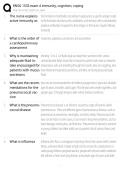
1. The nurse explains the formation of antibodies secondary to exposure to a specific antigen; leads
active immunity as to the formation of plasma cells, antibodies, and memory cells to immediately
produce antibodies if exposed to that antigen in the future; imparts lifelong
immunity
2. What is the order of inspection, palpation, percussion, and auscultation.
a cardiopulmonary
assessment
3. Why is maintaining drinking 1.5 to 2 L of fluids daily can keep their secretions thin; unless
adequate fluid in- contraindicated fluids should be increased in patients who have an elevated
take encouraged for temperature, who are breathing through the mouth, who are coughing, who
patients with mucus have thickened respiratory secretions, and who are losing excessive body
secretions fluids
4. What are the recom- Vaccines are recommended for all children younger than 2 years old, all adults
mendations for the ages 65 years and older, adults ages 19 to 64 years who smoke cigarettes, and
pneumococcal vac- people ages 2 through 64 years with certain medical conditions
cine
5. What is the pneumo- Pneumococcal disease is an infection caused by a type of bacteria called
coccal disease pneumococcus. There are different types of pneumococcal disease, such as
pneumococcal pneumonia, meningitis, and otitis media. Pneumococcal dis-
ease can be fatal. In some cases, it can result in long-term problems, such as
brain damage, hearing loss, and limb loss. Pneumococcal disease is common
in young children, but older adults are at greatest risk of serious illness and
death
6. What is influenza Influenza (the flu) is a contagious respiratory illness that causes mild to severe
illness, and even death. People at high risk for serious flu complications in-
clude young children; pregnant women; people with chronic health conditions
like asthma or heart and lung disease; and people ages 65 years and older.
, RNSG 1533 exam 4 immunity, cognition, coping
Study online at https://quizlet.com/_eyay4t
The best way to prevent the flu is by getting vaccinated. All people ages 6
months and older should be vaccinated each year
7. How is separation The child may have feelings of anger, fear, grief, and revenge during this
anxiety seen in tod- period, but, by age 24 months, the toddler begins to demonstrate increased
dlers ages 18 to 24 independence from the mother or other primary caregiver
months.
8. What is an expected When an infant in late infancy is hospitalized, separation anxiety behaviors
behavior of an old- are common. Separation anxiety normally occurs when a child is separated
er infant when hos- from loved ones who offer security. It usually begins at about age 6 months
pitalized? and continues through the preschool period. At a later age, the young child
is able to predict this happening and feels anxiety even before the separation
occurs. The infant may initially cry and scream in the phase of protest, but then
stop crying and appear depressed, which is the despair phase (Hockenberry
et al., 2022). Nurses should facilitate parents or guardians staying with the
hospitalized infant; when that is not possible, consistent health care providers
are important to promote the infant's trust in others.
9. When preparing a b. active immunity to a foreign protein.
presentation for a
local parent group
about vaccines, the
nurse would de-
scribe vaccines as
being used to stimu-
late
a. passive immunity
to a foreign protein.
b. active immunity
to a foreign protein.
c. serum sickness.
, RNSG 1533 exam 4 immunity, cognition, coping
Study online at https://quizlet.com/_eyay4t
d. a mild disease in
healthy people.
10. It is now recom-
mended that all peo-
ple over the age
of 6 months should
receive a flu vac-
cine every fall based
on the understand-
ing that the vaccine
is repeated because
a. the immunity
wears off after a
year.
b. the strains of virus
predicted to cause
the flu change every
year.
c. a booster shot will
activate the immune
system.
d. flu shots do not
produce good anti-
bodies.
11. When assessing the
medical record of
an older adult to
evaluate the sta-
tus of their immu-
nizations, the nurse
Study online at https://quizlet.com/_eyay4t
1. The nurse explains the formation of antibodies secondary to exposure to a specific antigen; leads
active immunity as to the formation of plasma cells, antibodies, and memory cells to immediately
produce antibodies if exposed to that antigen in the future; imparts lifelong
immunity
2. What is the order of inspection, palpation, percussion, and auscultation.
a cardiopulmonary
assessment
3. Why is maintaining drinking 1.5 to 2 L of fluids daily can keep their secretions thin; unless
adequate fluid in- contraindicated fluids should be increased in patients who have an elevated
take encouraged for temperature, who are breathing through the mouth, who are coughing, who
patients with mucus have thickened respiratory secretions, and who are losing excessive body
secretions fluids
4. What are the recom- Vaccines are recommended for all children younger than 2 years old, all adults
mendations for the ages 65 years and older, adults ages 19 to 64 years who smoke cigarettes, and
pneumococcal vac- people ages 2 through 64 years with certain medical conditions
cine
5. What is the pneumo- Pneumococcal disease is an infection caused by a type of bacteria called
coccal disease pneumococcus. There are different types of pneumococcal disease, such as
pneumococcal pneumonia, meningitis, and otitis media. Pneumococcal dis-
ease can be fatal. In some cases, it can result in long-term problems, such as
brain damage, hearing loss, and limb loss. Pneumococcal disease is common
in young children, but older adults are at greatest risk of serious illness and
death
6. What is influenza Influenza (the flu) is a contagious respiratory illness that causes mild to severe
illness, and even death. People at high risk for serious flu complications in-
clude young children; pregnant women; people with chronic health conditions
like asthma or heart and lung disease; and people ages 65 years and older.
, RNSG 1533 exam 4 immunity, cognition, coping
Study online at https://quizlet.com/_eyay4t
The best way to prevent the flu is by getting vaccinated. All people ages 6
months and older should be vaccinated each year
7. How is separation The child may have feelings of anger, fear, grief, and revenge during this
anxiety seen in tod- period, but, by age 24 months, the toddler begins to demonstrate increased
dlers ages 18 to 24 independence from the mother or other primary caregiver
months.
8. What is an expected When an infant in late infancy is hospitalized, separation anxiety behaviors
behavior of an old- are common. Separation anxiety normally occurs when a child is separated
er infant when hos- from loved ones who offer security. It usually begins at about age 6 months
pitalized? and continues through the preschool period. At a later age, the young child
is able to predict this happening and feels anxiety even before the separation
occurs. The infant may initially cry and scream in the phase of protest, but then
stop crying and appear depressed, which is the despair phase (Hockenberry
et al., 2022). Nurses should facilitate parents or guardians staying with the
hospitalized infant; when that is not possible, consistent health care providers
are important to promote the infant's trust in others.
9. When preparing a b. active immunity to a foreign protein.
presentation for a
local parent group
about vaccines, the
nurse would de-
scribe vaccines as
being used to stimu-
late
a. passive immunity
to a foreign protein.
b. active immunity
to a foreign protein.
c. serum sickness.
, RNSG 1533 exam 4 immunity, cognition, coping
Study online at https://quizlet.com/_eyay4t
d. a mild disease in
healthy people.
10. It is now recom-
mended that all peo-
ple over the age
of 6 months should
receive a flu vac-
cine every fall based
on the understand-
ing that the vaccine
is repeated because
a. the immunity
wears off after a
year.
b. the strains of virus
predicted to cause
the flu change every
year.
c. a booster shot will
activate the immune
system.
d. flu shots do not
produce good anti-
bodies.
11. When assessing the
medical record of
an older adult to
evaluate the sta-
tus of their immu-
nizations, the nurse


