

8/18/26, 8:56 AM NSG 5140 Midterm Exam Review: Advanced Pathophysiology- Questions with CORRECT Answers -2026 Flashcards | Quizlet
NSG 5140 Midterm Exam Review: Advanced
Pathophysiology- Questions with CORRECT
Answers -2026
Add to calendar
Play your way to mastery with fun games
Match Blocks Charms NEW
Terms in this set (236)
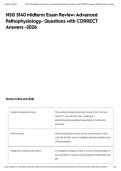
Sodium-Potassium Pump The sodium-potassium pump moves 3 Na⁺ ions out
and 2 K⁺ ions into the cell, creating an
electrochemical gradient essential for membrane
potential.
Mitochondria Mitochondria are known as the 'powerhouse' of the
cell due to their role in oxidative phosphorylation and
ATP generation.
Metabolic Acidosis Lab Values In metabolic acidosis, there is a loss of bicarbonate or
accumulation of acids, lowering both bicarbonate and
pH.
https://quizlet.com/1200125521/nsg-5140-midterm-exam-review-advanced-pathophysiology-questions-with-correct-answers-2026-flash-cards?new 1/22
,8/18/26, 8:56 AM NSG 5140 Midterm Exam Review: Advanced Pathophysiology- Questions with CORRECT Answers -2026 Flashcards | Quizlet
B Lymphocytes B cells differentiate into plasma cells which produce
antibodies, central to humoral immunity.
Hallmark of Reversible Cellular Injury Reversible injury often involves failure of ion pumps
leading to water influx and cell swelling.
Interleukin-1 (IL-1) IL-1 acts on the hypothalamus to raise the body
temperature set point, causing fever.
Type 1 Diabetes Mellitus Type 1 DM is an autoimmune condition where T-cells
destroy insulin-producing beta cells in the pancreas.
Cardinal Sign of Acute Inflammation Redness (rubor) results from vasodilation and
increased blood flow to the inflamed area.
Down Syndrome Trisomy 21 leads to Down syndrome, characterized by
developmental delays and distinct facial features.
Liquefactive Necrosis In the brain, ischemic injury leads to enzymatic
digestion of dead cells resulting in liquefactive
necrosis.
IgM IgM is the first antibody produced and is effective in
agglutination and complement activation.
https://quizlet.com/1200125521/nsg-5140-midterm-exam-review-advanced-pathophysiology-questions-with-correct-answers-2026-flash-cards?new 2/22
, 8/18/26, 8:56 AM NSG 5140 Midterm Exam Review: Advanced Pathophysiology- Questions with CORRECT Answers -2026 Flashcards | Quizlet
Oncogene Oncogenes are mutated proto-oncogenes that drive
unregulated cell proliferation.
Hypokalemia Low potassium levels disturb the cardiac action
potential, increasing the risk of arrhythmias.
Type III Hypersensitivity SLE involves immune complex deposition (Type III),
leading to widespread inflammation and tissue
damage.
Frontal Lobe The primary motor cortex, located in the frontal lobe,
initiates voluntary movement.
Impaired tissue perfusion Shock results in inadequate delivery of oxygen and
nutrients to tissues, causing cellular dysfunction.
Bronchoconstriction and mucus Asthma involves hyperresponsiveness, smooth muscle
production constriction, and increased mucus, narrowing the
airway.
Apoptosis Apoptosis is an orderly process for removing
damaged or unneeded cells without inflammation.
Atherosclerotic plaque rupture Plaque rupture leads to thrombus formation, blocking
coronary arteries and causing infarction.
https://quizlet.com/1200125521/nsg-5140-midterm-exam-review-advanced-pathophysiology-questions-with-correct-answers-2026-flash-cards?new 3/22
NSG 5140 Midterm Exam Review: Advanced
Pathophysiology- Questions with CORRECT
Answers -2026
Add to calendar
Play your way to mastery with fun games
Match Blocks Charms NEW
Terms in this set (236)
Sodium-Potassium Pump The sodium-potassium pump moves 3 Na⁺ ions out
and 2 K⁺ ions into the cell, creating an
electrochemical gradient essential for membrane
potential.
Mitochondria Mitochondria are known as the 'powerhouse' of the
cell due to their role in oxidative phosphorylation and
ATP generation.
Metabolic Acidosis Lab Values In metabolic acidosis, there is a loss of bicarbonate or
accumulation of acids, lowering both bicarbonate and
pH.
https://quizlet.com/1200125521/nsg-5140-midterm-exam-review-advanced-pathophysiology-questions-with-correct-answers-2026-flash-cards?new 1/22
,8/18/26, 8:56 AM NSG 5140 Midterm Exam Review: Advanced Pathophysiology- Questions with CORRECT Answers -2026 Flashcards | Quizlet
B Lymphocytes B cells differentiate into plasma cells which produce
antibodies, central to humoral immunity.
Hallmark of Reversible Cellular Injury Reversible injury often involves failure of ion pumps
leading to water influx and cell swelling.
Interleukin-1 (IL-1) IL-1 acts on the hypothalamus to raise the body
temperature set point, causing fever.
Type 1 Diabetes Mellitus Type 1 DM is an autoimmune condition where T-cells
destroy insulin-producing beta cells in the pancreas.
Cardinal Sign of Acute Inflammation Redness (rubor) results from vasodilation and
increased blood flow to the inflamed area.
Down Syndrome Trisomy 21 leads to Down syndrome, characterized by
developmental delays and distinct facial features.
Liquefactive Necrosis In the brain, ischemic injury leads to enzymatic
digestion of dead cells resulting in liquefactive
necrosis.
IgM IgM is the first antibody produced and is effective in
agglutination and complement activation.
https://quizlet.com/1200125521/nsg-5140-midterm-exam-review-advanced-pathophysiology-questions-with-correct-answers-2026-flash-cards?new 2/22
, 8/18/26, 8:56 AM NSG 5140 Midterm Exam Review: Advanced Pathophysiology- Questions with CORRECT Answers -2026 Flashcards | Quizlet
Oncogene Oncogenes are mutated proto-oncogenes that drive
unregulated cell proliferation.
Hypokalemia Low potassium levels disturb the cardiac action
potential, increasing the risk of arrhythmias.
Type III Hypersensitivity SLE involves immune complex deposition (Type III),
leading to widespread inflammation and tissue
damage.
Frontal Lobe The primary motor cortex, located in the frontal lobe,
initiates voluntary movement.
Impaired tissue perfusion Shock results in inadequate delivery of oxygen and
nutrients to tissues, causing cellular dysfunction.
Bronchoconstriction and mucus Asthma involves hyperresponsiveness, smooth muscle
production constriction, and increased mucus, narrowing the
airway.
Apoptosis Apoptosis is an orderly process for removing
damaged or unneeded cells without inflammation.
Atherosclerotic plaque rupture Plaque rupture leads to thrombus formation, blocking
coronary arteries and causing infarction.
https://quizlet.com/1200125521/nsg-5140-midterm-exam-review-advanced-pathophysiology-questions-with-correct-answers-2026-flash-cards?new 3/22


