

NR 566 Week 6 Exam – Mental Health
Pharmacotherapy: Exam Questions with
Correct Answers (Verifiedanswers) Plus
Rationales 2026 Q&A Instant Download PDF
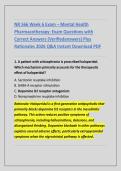
1. A patient with schizophrenia is prescribed haloperidol.
Which mechanism primarily accounts for the therapeutic
effect of haloperidol?
A. Serotonin reuptake inhibition
B. GABA-A receptor stimulation
C. Dopamine D2 receptor antagonism
D. Norepinephrine reuptake inhibition
Rationale: Haloperidol is a first-generation antipsychotic that
primarily blocks dopamine D2 receptors in the mesolimbic
pathway. This action reduces positive symptoms of
schizophrenia, including hallucinations, delusions, and
disorganized thinking. Dopamine blockade in other pathways
explains several adverse effects, particularly extrapyramidal
symptoms when the nigrostriatal pathway is affected.
,2. A patient taking haloperidol develops painful neck spasms
and an involuntary upward deviation of the eyes several hours
after receiving the medication. Which adverse effect is most
likely occurring?
A. Tardive dyskinesia
B. Akathisia
C. Neuroleptic malignant syndrome
D. Acute dystonia
Rationale: Acute dystonia is characterized by sudden,
sustained involuntary muscle contractions that may involve
the neck, jaw, eyes, or other muscle groups. It commonly
occurs early after initiation or dose increases of high-potency
first-generation antipsychotics such as haloperidol. Acute
dystonia is treated promptly with an anticholinergic
medication such as benztropine or diphenhydramine.
3. A patient receiving an antipsychotic repeatedly paces the
hallway and states, “I feel like I cannot keep my body still.”
Which adverse effect should the nurse practitioner suspect?
A. Dystonia
B. Parkinsonism
C. Akathisia
D. Tardive dyskinesia
,Rationale: Akathisia is a medication-induced movement
disorder characterized by intense inner restlessness and an
inability to remain still. Patients may pace, rock, shift position,
or repeatedly move their legs. It can be mistaken for
worsening psychiatric agitation. Management may include
dose reduction, switching antipsychotics, or treatment with
agents such as propranolol when appropriate.
4. A patient has been receiving an antipsychotic for several
years and develops repetitive lip smacking, tongue
movements, and facial grimacing. Which condition is most
consistent with these findings?
A. Acute dystonia
B. Akathisia
C. Drug-induced parkinsonism
D. Tardive dyskinesia
Rationale: Tardive dyskinesia is a potentially persistent
movement disorder associated with prolonged exposure to
dopamine-receptor-blocking agents. Typical manifestations
include repetitive chewing movements, tongue protrusion, lip
smacking, and facial movements. Early recognition is
important because symptoms may persist even after the
offending medication is discontinued. Vesicular monoamine
, transporter 2 inhibitors, such as valbenazine or
deutetrabenazine, may be used for treatment.
5. A patient taking an antipsychotic develops a temperature of
40°C (104°F), severe muscle rigidity, confusion, diaphoresis,
and tachycardia. What is the priority concern?
A. Serotonin syndrome
B. Neuroleptic malignant syndrome
C. Acute dystonia
D. Anticholinergic toxicity
Rationale: Neuroleptic malignant syndrome is a life-
threatening reaction associated with dopamine antagonism.
The classic presentation includes severe muscle rigidity,
hyperthermia, altered mental status, and autonomic
instability such as tachycardia, diaphoresis, and blood-
pressure fluctuations. The antipsychotic should be stopped
immediately, supportive care initiated, and severe cases
treated with medications such as dantrolene or bromocriptine.
6. Which antipsychotic is particularly associated with
agranulocytosis and therefore requires ongoing absolute
neutrophil count monitoring?
Pharmacotherapy: Exam Questions with
Correct Answers (Verifiedanswers) Plus
Rationales 2026 Q&A Instant Download PDF
1. A patient with schizophrenia is prescribed haloperidol.
Which mechanism primarily accounts for the therapeutic
effect of haloperidol?
A. Serotonin reuptake inhibition
B. GABA-A receptor stimulation
C. Dopamine D2 receptor antagonism
D. Norepinephrine reuptake inhibition
Rationale: Haloperidol is a first-generation antipsychotic that
primarily blocks dopamine D2 receptors in the mesolimbic
pathway. This action reduces positive symptoms of
schizophrenia, including hallucinations, delusions, and
disorganized thinking. Dopamine blockade in other pathways
explains several adverse effects, particularly extrapyramidal
symptoms when the nigrostriatal pathway is affected.
,2. A patient taking haloperidol develops painful neck spasms
and an involuntary upward deviation of the eyes several hours
after receiving the medication. Which adverse effect is most
likely occurring?
A. Tardive dyskinesia
B. Akathisia
C. Neuroleptic malignant syndrome
D. Acute dystonia
Rationale: Acute dystonia is characterized by sudden,
sustained involuntary muscle contractions that may involve
the neck, jaw, eyes, or other muscle groups. It commonly
occurs early after initiation or dose increases of high-potency
first-generation antipsychotics such as haloperidol. Acute
dystonia is treated promptly with an anticholinergic
medication such as benztropine or diphenhydramine.
3. A patient receiving an antipsychotic repeatedly paces the
hallway and states, “I feel like I cannot keep my body still.”
Which adverse effect should the nurse practitioner suspect?
A. Dystonia
B. Parkinsonism
C. Akathisia
D. Tardive dyskinesia
,Rationale: Akathisia is a medication-induced movement
disorder characterized by intense inner restlessness and an
inability to remain still. Patients may pace, rock, shift position,
or repeatedly move their legs. It can be mistaken for
worsening psychiatric agitation. Management may include
dose reduction, switching antipsychotics, or treatment with
agents such as propranolol when appropriate.
4. A patient has been receiving an antipsychotic for several
years and develops repetitive lip smacking, tongue
movements, and facial grimacing. Which condition is most
consistent with these findings?
A. Acute dystonia
B. Akathisia
C. Drug-induced parkinsonism
D. Tardive dyskinesia
Rationale: Tardive dyskinesia is a potentially persistent
movement disorder associated with prolonged exposure to
dopamine-receptor-blocking agents. Typical manifestations
include repetitive chewing movements, tongue protrusion, lip
smacking, and facial movements. Early recognition is
important because symptoms may persist even after the
offending medication is discontinued. Vesicular monoamine
, transporter 2 inhibitors, such as valbenazine or
deutetrabenazine, may be used for treatment.
5. A patient taking an antipsychotic develops a temperature of
40°C (104°F), severe muscle rigidity, confusion, diaphoresis,
and tachycardia. What is the priority concern?
A. Serotonin syndrome
B. Neuroleptic malignant syndrome
C. Acute dystonia
D. Anticholinergic toxicity
Rationale: Neuroleptic malignant syndrome is a life-
threatening reaction associated with dopamine antagonism.
The classic presentation includes severe muscle rigidity,
hyperthermia, altered mental status, and autonomic
instability such as tachycardia, diaphoresis, and blood-
pressure fluctuations. The antipsychotic should be stopped
immediately, supportive care initiated, and severe cases
treated with medications such as dantrolene or bromocriptine.
6. Which antipsychotic is particularly associated with
agranulocytosis and therefore requires ongoing absolute
neutrophil count monitoring?


