

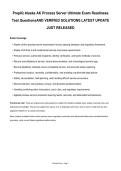
PrepIQ Alaska AK Process Server Ultimate Exam Readiness
Test QuestionsAND VERIFIED SOLUTIONS LATEST UPDATE
JUST RELEASED
Exam Coverage
• Alaska civilian process-server examination format, passing standard, and regulatory framework.
• Alaska Civil Rule 4 and fundamental service-of-process requirements.
• Personal service, authorized recipients, identity verification, and lawful methods of service.
• Returns and affidavits of service, factual documentation, and chronological service logs.
• Service deadlines, attempts versus completed service, and accurate status reporting.
• Professional conduct, neutrality, confidentiality, and avoiding unauthorized legal advice.
• Safety, de-escalation, field planning, and handling difficult service encounters.
• Record retention, fee practices, privacy, and business professionalism.
• Handling conflicting client instructions, court rules, and regulatory requirements.
• Applied process-service scenarios requiring lawful, accurate, and defensible field decisions.
Practice-set note: These are original exam-style questions created from publicly available exam scopes, licensing rules, and
professional knowledge. They are not copied from secure, live, or proprietary test forms, and no claim is made that any item
appeared verbatim on an actual examination.
Basis: publicly available Alaska civilian process-server regulatory summaries and referenced Alaska rules and administrative
provisions; verify current Alaska regulations before testing.
Practice Exam • Page 1
,1. An experienced practitioner is asked to determine whether what is the purpose of a return or
affidavit of service after process has been served?
A. It replaces the original complaint
B. It provides the court with a record describing when, where, and how service occurred
C. It determines damages automatically
D. It grants the server judicial authority
Correct Answer: B
Rationale: The return or affidavit documents the service event for the court record.
2. Considering safety, compliance, and practical application, why should confidential information
encountered during service assignments be handled carefully?
A. All information may be posted publicly
B. Legal papers and addresses may contain sensitive information that should not be disclosed unnecessarily
C. Privacy is only a court clerk issue
D. Confidentiality never matters to process servers
Correct Answer: B
Rationale: Professional handling of sensitive information reduces unnecessary disclosure and supports responsible
practice.
3. During a realistic licensing or certification scenario, why should a process server preserve the exact
wording of an affidavit or return rather than improvising legal conclusions?
A. Facts are irrelevant to service
B. The server must decide the court's jurisdiction
C. The document should accurately report facts of service without introducing unsupported legal assertions
D. Improvised legal conclusions are always preferred
Correct Answer: C
Rationale: The server should report factual service information accurately and avoid making unsupported legal
determinations.
4. When reviewing a proposed project or professional decision, what should a process server do if the
assignment instructions conflict with a court rule or statutory requirement?
A. Follow the client's instruction regardless of law
Practice Exam • Page 2
, B. Change the court rule
C. Ignore the conflict
D. Follow the governing legal requirement and seek clarification rather than knowingly performing an improper
service
Correct Answer: D
Rationale: Legal requirements govern service; conflicting client instructions should not be followed when they
would produce unlawful service.
5. From an examination perspective, why should confidential information encountered during service
assignments be handled carefully? for the project, client, facility, or installation being evaluated?
A. Legal papers and addresses may contain sensitive information that should not be disclosed unnecessarily
B. Confidentiality never matters to process servers
C. All information may be posted publicly
D. Privacy is only a court clerk issue
Correct Answer: A
Rationale: Professional handling of sensitive information reduces unnecessary disclosure and supports responsible
practice.
6. For a detailed exam-style application question, what is the primary purpose of maintaining a
chronological service log for multiple assignments?
A. It determines the defendant's liability
B. It guarantees successful service
C. It replaces court records
D. It helps track attempts, dates, outcomes, documents, and follow-up actions accurately
Correct Answer: D
Rationale: A chronological log supports organization and accurate reporting across multiple assignments.
7. For a detailed exam-style application question, why should a process server preserve served
documents and service records securely after completing an assignment?
A. Records may be needed to establish what was served and to respond accurately to later questions or
disputes
B. Documents should always be discarded immediately
C. Records are unnecessary once the server leaves the location
Practice Exam • Page 3
, D. Secure storage changes jurisdiction
Correct Answer: A
Rationale: Secure records support accountability and can be important if service is later challenged.
8. In a code-compliance or professional-practice situation, what is the purpose of a return or affidavit
of service after process has been served?
A. It replaces the original complaint
B. It grants the server judicial authority
C. It determines damages automatically
D. It provides the court with a record describing when, where, and how service occurred
Correct Answer: D
Rationale: The return or affidavit documents the service event for the court record.
9. From an examination perspective, why should a process server carefully document the date, time,
place, and manner of service?
A. The date is irrelevant to procedure
B. A detailed return or proof of service provides evidence that the service was performed as required
C. Documentation replaces the summons
D. Documentation guarantees judgment for the plaintiff
Correct Answer: B
Rationale: Accurate service records support proof that statutory or rule-based requirements were followed.
10. Which statement best explains why what is the purpose of a return or affidavit of service after
process has been served?
A. It determines damages automatically
B. It grants the server judicial authority
C. It provides the court with a record describing when, where, and how service occurred
D. It replaces the original complaint
Correct Answer: C
Rationale: The return or affidavit documents the service event for the court record.
11. During a realistic licensing or certification scenario, why should a process server distinguish
between attempted service and completed service in records?
Practice Exam • Page 4
Test QuestionsAND VERIFIED SOLUTIONS LATEST UPDATE
JUST RELEASED
Exam Coverage
• Alaska civilian process-server examination format, passing standard, and regulatory framework.
• Alaska Civil Rule 4 and fundamental service-of-process requirements.
• Personal service, authorized recipients, identity verification, and lawful methods of service.
• Returns and affidavits of service, factual documentation, and chronological service logs.
• Service deadlines, attempts versus completed service, and accurate status reporting.
• Professional conduct, neutrality, confidentiality, and avoiding unauthorized legal advice.
• Safety, de-escalation, field planning, and handling difficult service encounters.
• Record retention, fee practices, privacy, and business professionalism.
• Handling conflicting client instructions, court rules, and regulatory requirements.
• Applied process-service scenarios requiring lawful, accurate, and defensible field decisions.
Practice-set note: These are original exam-style questions created from publicly available exam scopes, licensing rules, and
professional knowledge. They are not copied from secure, live, or proprietary test forms, and no claim is made that any item
appeared verbatim on an actual examination.
Basis: publicly available Alaska civilian process-server regulatory summaries and referenced Alaska rules and administrative
provisions; verify current Alaska regulations before testing.
Practice Exam • Page 1
,1. An experienced practitioner is asked to determine whether what is the purpose of a return or
affidavit of service after process has been served?
A. It replaces the original complaint
B. It provides the court with a record describing when, where, and how service occurred
C. It determines damages automatically
D. It grants the server judicial authority
Correct Answer: B
Rationale: The return or affidavit documents the service event for the court record.
2. Considering safety, compliance, and practical application, why should confidential information
encountered during service assignments be handled carefully?
A. All information may be posted publicly
B. Legal papers and addresses may contain sensitive information that should not be disclosed unnecessarily
C. Privacy is only a court clerk issue
D. Confidentiality never matters to process servers
Correct Answer: B
Rationale: Professional handling of sensitive information reduces unnecessary disclosure and supports responsible
practice.
3. During a realistic licensing or certification scenario, why should a process server preserve the exact
wording of an affidavit or return rather than improvising legal conclusions?
A. Facts are irrelevant to service
B. The server must decide the court's jurisdiction
C. The document should accurately report facts of service without introducing unsupported legal assertions
D. Improvised legal conclusions are always preferred
Correct Answer: C
Rationale: The server should report factual service information accurately and avoid making unsupported legal
determinations.
4. When reviewing a proposed project or professional decision, what should a process server do if the
assignment instructions conflict with a court rule or statutory requirement?
A. Follow the client's instruction regardless of law
Practice Exam • Page 2
, B. Change the court rule
C. Ignore the conflict
D. Follow the governing legal requirement and seek clarification rather than knowingly performing an improper
service
Correct Answer: D
Rationale: Legal requirements govern service; conflicting client instructions should not be followed when they
would produce unlawful service.
5. From an examination perspective, why should confidential information encountered during service
assignments be handled carefully? for the project, client, facility, or installation being evaluated?
A. Legal papers and addresses may contain sensitive information that should not be disclosed unnecessarily
B. Confidentiality never matters to process servers
C. All information may be posted publicly
D. Privacy is only a court clerk issue
Correct Answer: A
Rationale: Professional handling of sensitive information reduces unnecessary disclosure and supports responsible
practice.
6. For a detailed exam-style application question, what is the primary purpose of maintaining a
chronological service log for multiple assignments?
A. It determines the defendant's liability
B. It guarantees successful service
C. It replaces court records
D. It helps track attempts, dates, outcomes, documents, and follow-up actions accurately
Correct Answer: D
Rationale: A chronological log supports organization and accurate reporting across multiple assignments.
7. For a detailed exam-style application question, why should a process server preserve served
documents and service records securely after completing an assignment?
A. Records may be needed to establish what was served and to respond accurately to later questions or
disputes
B. Documents should always be discarded immediately
C. Records are unnecessary once the server leaves the location
Practice Exam • Page 3
, D. Secure storage changes jurisdiction
Correct Answer: A
Rationale: Secure records support accountability and can be important if service is later challenged.
8. In a code-compliance or professional-practice situation, what is the purpose of a return or affidavit
of service after process has been served?
A. It replaces the original complaint
B. It grants the server judicial authority
C. It determines damages automatically
D. It provides the court with a record describing when, where, and how service occurred
Correct Answer: D
Rationale: The return or affidavit documents the service event for the court record.
9. From an examination perspective, why should a process server carefully document the date, time,
place, and manner of service?
A. The date is irrelevant to procedure
B. A detailed return or proof of service provides evidence that the service was performed as required
C. Documentation replaces the summons
D. Documentation guarantees judgment for the plaintiff
Correct Answer: B
Rationale: Accurate service records support proof that statutory or rule-based requirements were followed.
10. Which statement best explains why what is the purpose of a return or affidavit of service after
process has been served?
A. It determines damages automatically
B. It grants the server judicial authority
C. It provides the court with a record describing when, where, and how service occurred
D. It replaces the original complaint
Correct Answer: C
Rationale: The return or affidavit documents the service event for the court record.
11. During a realistic licensing or certification scenario, why should a process server distinguish
between attempted service and completed service in records?
Practice Exam • Page 4


