

Psychiatric Mental Health- Module 1- EXAM 1
what is mental illness? -all mental disorders with definable diagnoses and includes developmental,
biological, and psychological disturbances in mental functioning
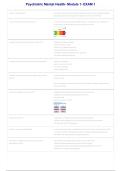
what is the mental illness continuum? -a model showing that mental health exists on a spectrum from wellness to
severe illness, and people can move along it over time.
what are the signs of mental illness? (box 7-4) -appetite or sleep changes
-extreme mood swings
-chronic low grade depression
-hallucinations and/or delusions
-unhealthy coping mechanisms (ex: alcohol)
-unusual emotional outbursts
what are risk factors associated with mental illness? -inborn vulnerability
-poor social environment
-economic hardship
-poor health policy
what are protective factors associated with mental -resiliency: improve a person's ability to respond to stress,
illness? trauma, & loss
*this is essential to recovery without this the mental condition lingers longer
and can intensify
what is the diathesis stress model? -integrates biological predispositions with environment
-diathesis is biological predisposition & stress is
environmental
-nature vs nurture model!
what is the DSM-5? -Diagnostic and Statistical Manual of Mental Disorders
-official medical guidelines of the American Psychiatric Association
-157 disorders and 20 categories
what is a serious mental illness? -a severe and persistent mental illness to the point where it affects their ADL's
-a chronic condition that typically require ongoing treatment and support
-disorders like schizophrenia or bipolar disorder
what type of methods do nurses use to assess -interviewing and gathering data directly from the client
psychiatric clients? -head to toe assessment (any injuries? like self harm)
-collaboration with mental health technicians (different from PCT)
-emphasis on SAFETY management!
, Psychiatric Mental Health- Module 1- EXAM 1
how often do you check on a psychiatric patient? -a psychiatric patient must be SEEN EVERY 15 minutes!
what are the roles of psych nurses? -RN's DO NOT psychoanalyze but the APRN is capable of psychoanalysis!
what is the psychoanalytic therapy model? -developed by Sigmund Freud
-intrapsychic conflict thought to be cause for all mental
illness (3-5x/wk, expensive)
-very costly and lengthly and rarely used!
-purpose: uncover unconscious conflicts
~free association: pt shares whatever thoughts or words come to mind
~dream analysis: symbolic meaning in the pt dreams
~defense mechanism recognition: changing maladaptive mechanisms
-CANNOT BE in extreme mental distress
what is transference in the psychoanalytic theory? -the client unconsciously projects feelings about significant people in their life
onto the therapist
-can be positive or negative
-PATIENT TO HEALTH CARE WORKER
what is countertransference? -refers to the nurse's behavioral and emotional response to the client
-this is the therapist's emotional reaction to the client, which may relate to a
triggering of the therapists own unresolved issues
-can be positive or negative
-HEALTHCARE WORKER TO PATIENT
what is the psychodynamic therapy model? -the improved version of psychoanalytic therapy
-difference is increased involvement of therapist, interacts
with patient more than traditional psychoanalysis
-weekly sessions (may be > 20 sessions)
-focus on here and now, and not origin of conflict
-must be "well-worried" patients! meaning relatively healthy!
what is interpersonal theory/therapy? -an umbrella term for SHORT TERM therapy used to improve interpersonal
relationships and satisfaction with social relationships
-goal to decrease symptoms of anxiety or depression
-3 types of problems treated:
1. grief & loss
2. interpersonal disputes
3. role transition
who is Hildegard Peplau? -the "mother" of psychiatric nursing
-established the nurse patient relationship and developed many theories
surrounding this concept
what is mental illness? -all mental disorders with definable diagnoses and includes developmental,
biological, and psychological disturbances in mental functioning
what is the mental illness continuum? -a model showing that mental health exists on a spectrum from wellness to
severe illness, and people can move along it over time.
what are the signs of mental illness? (box 7-4) -appetite or sleep changes
-extreme mood swings
-chronic low grade depression
-hallucinations and/or delusions
-unhealthy coping mechanisms (ex: alcohol)
-unusual emotional outbursts
what are risk factors associated with mental illness? -inborn vulnerability
-poor social environment
-economic hardship
-poor health policy
what are protective factors associated with mental -resiliency: improve a person's ability to respond to stress,
illness? trauma, & loss
*this is essential to recovery without this the mental condition lingers longer
and can intensify
what is the diathesis stress model? -integrates biological predispositions with environment
-diathesis is biological predisposition & stress is
environmental
-nature vs nurture model!
what is the DSM-5? -Diagnostic and Statistical Manual of Mental Disorders
-official medical guidelines of the American Psychiatric Association
-157 disorders and 20 categories
what is a serious mental illness? -a severe and persistent mental illness to the point where it affects their ADL's
-a chronic condition that typically require ongoing treatment and support
-disorders like schizophrenia or bipolar disorder
what type of methods do nurses use to assess -interviewing and gathering data directly from the client
psychiatric clients? -head to toe assessment (any injuries? like self harm)
-collaboration with mental health technicians (different from PCT)
-emphasis on SAFETY management!
, Psychiatric Mental Health- Module 1- EXAM 1
how often do you check on a psychiatric patient? -a psychiatric patient must be SEEN EVERY 15 minutes!
what are the roles of psych nurses? -RN's DO NOT psychoanalyze but the APRN is capable of psychoanalysis!
what is the psychoanalytic therapy model? -developed by Sigmund Freud
-intrapsychic conflict thought to be cause for all mental
illness (3-5x/wk, expensive)
-very costly and lengthly and rarely used!
-purpose: uncover unconscious conflicts
~free association: pt shares whatever thoughts or words come to mind
~dream analysis: symbolic meaning in the pt dreams
~defense mechanism recognition: changing maladaptive mechanisms
-CANNOT BE in extreme mental distress
what is transference in the psychoanalytic theory? -the client unconsciously projects feelings about significant people in their life
onto the therapist
-can be positive or negative
-PATIENT TO HEALTH CARE WORKER
what is countertransference? -refers to the nurse's behavioral and emotional response to the client
-this is the therapist's emotional reaction to the client, which may relate to a
triggering of the therapists own unresolved issues
-can be positive or negative
-HEALTHCARE WORKER TO PATIENT
what is the psychodynamic therapy model? -the improved version of psychoanalytic therapy
-difference is increased involvement of therapist, interacts
with patient more than traditional psychoanalysis
-weekly sessions (may be > 20 sessions)
-focus on here and now, and not origin of conflict
-must be "well-worried" patients! meaning relatively healthy!
what is interpersonal theory/therapy? -an umbrella term for SHORT TERM therapy used to improve interpersonal
relationships and satisfaction with social relationships
-goal to decrease symptoms of anxiety or depression
-3 types of problems treated:
1. grief & loss
2. interpersonal disputes
3. role transition
who is Hildegard Peplau? -the "mother" of psychiatric nursing
-established the nurse patient relationship and developed many theories
surrounding this concept


