

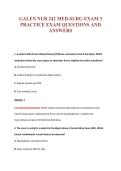
GALEN NUR 242 MED-SURG EXAM 3
PRACTICE EXAM QUESTIONS AND
ANSWERS
1. A patient with Chronic Kidney Disease (CKD) has a potassium level of 6.8 mEq/L. Which
medication should the nurse expect to administer first to stabilize the cardiac membrane?
A. Calcium Gluconate
B. Sodium Polystyrene Sulfonate (Kayexalate)
C. Regular Insulin and D50
D. Furosemide (Lasix)
Answer: A
Conceptual Explanation: While insulin and Kayexalate help lower potassium levels,
Calcium Gluconate is administered first in severe hyperkalemia to stabilize the
myocardium and prevent lethal dysrhythmias.
2. The nurse is caring for a patient in the oliguric phase of Acute Kidney Injury (AKI). Which
clinical manifestation is most likely to be observed?
A. Hypokalemia and hypotension
B. Urine output of 600 mL/day
,C. Increased GFR
D. Metabolic acidosis
Answer: D
Conceptual Explanation: During the oliguric phase, the kidneys cannot excrete hydrogen
ions or acid metabolites, leading to metabolic acidosis. Hyperkalemia and fluid volume
excess are also common.
3. A patient undergoing peritoneal dialysis (PD) reports that the outflow is cloudy. What is
the nurse’s priority action?
A. Reposition the patient to increase drainage
B. Warm the dialysate before the next cycle
C. Notify the provider and obtain a culture
D. Document the finding as normal
Answer: C
Conceptual Explanation: Cloudy dialysate outflow is the earliest sign of peritonitis, a
serious complication of PD. The nurse must notify the provider and expect to culture the
fluid.
4. Which arterial blood gas (ABG) result would the nurse expect to see in a patient with
severe, prolonged vomiting?
A. pH 7.48, PaCO2 42, HCO3 30
, B. pH 7.32, PaCO2 48, HCO3 24
C. pH 7.30, PaCO2 35, HCO3 18
D. pH 7.50, PaCO2 30, HCO3 22
Answer: A
Conceptual Explanation: Vomiting causes a loss of gastric acid, leading to metabolic
alkalosis. This is characterized by an elevated pH (>7.45) and an elevated HCO3 (>26).
5. A patient with cirrhosis and esophageal varices is prescribed Propranolol. What is the
primary purpose of this medication for this patient?
A. To treat systemic hypertension
B. To reduce portal venous pressure
C. To increase cardiac output
D. To promote liver tissue regeneration
Answer: B
Conceptual Explanation: Non-selective beta-blockers like Propranolol are used in
cirrhosis to reduce portal pressure, which decreases the risk of bleeding from esophageal
varices.
6. A nurse is teaching a patient with Crohn’s disease about dietary management during an
exacerbation. Which statement by the patient indicates understanding?
A. I should eat plenty of fresh salads and raw broccoli.
PRACTICE EXAM QUESTIONS AND
ANSWERS
1. A patient with Chronic Kidney Disease (CKD) has a potassium level of 6.8 mEq/L. Which
medication should the nurse expect to administer first to stabilize the cardiac membrane?
A. Calcium Gluconate
B. Sodium Polystyrene Sulfonate (Kayexalate)
C. Regular Insulin and D50
D. Furosemide (Lasix)
Answer: A
Conceptual Explanation: While insulin and Kayexalate help lower potassium levels,
Calcium Gluconate is administered first in severe hyperkalemia to stabilize the
myocardium and prevent lethal dysrhythmias.
2. The nurse is caring for a patient in the oliguric phase of Acute Kidney Injury (AKI). Which
clinical manifestation is most likely to be observed?
A. Hypokalemia and hypotension
B. Urine output of 600 mL/day
,C. Increased GFR
D. Metabolic acidosis
Answer: D
Conceptual Explanation: During the oliguric phase, the kidneys cannot excrete hydrogen
ions or acid metabolites, leading to metabolic acidosis. Hyperkalemia and fluid volume
excess are also common.
3. A patient undergoing peritoneal dialysis (PD) reports that the outflow is cloudy. What is
the nurse’s priority action?
A. Reposition the patient to increase drainage
B. Warm the dialysate before the next cycle
C. Notify the provider and obtain a culture
D. Document the finding as normal
Answer: C
Conceptual Explanation: Cloudy dialysate outflow is the earliest sign of peritonitis, a
serious complication of PD. The nurse must notify the provider and expect to culture the
fluid.
4. Which arterial blood gas (ABG) result would the nurse expect to see in a patient with
severe, prolonged vomiting?
A. pH 7.48, PaCO2 42, HCO3 30
, B. pH 7.32, PaCO2 48, HCO3 24
C. pH 7.30, PaCO2 35, HCO3 18
D. pH 7.50, PaCO2 30, HCO3 22
Answer: A
Conceptual Explanation: Vomiting causes a loss of gastric acid, leading to metabolic
alkalosis. This is characterized by an elevated pH (>7.45) and an elevated HCO3 (>26).
5. A patient with cirrhosis and esophageal varices is prescribed Propranolol. What is the
primary purpose of this medication for this patient?
A. To treat systemic hypertension
B. To reduce portal venous pressure
C. To increase cardiac output
D. To promote liver tissue regeneration
Answer: B
Conceptual Explanation: Non-selective beta-blockers like Propranolol are used in
cirrhosis to reduce portal pressure, which decreases the risk of bleeding from esophageal
varices.
6. A nurse is teaching a patient with Crohn’s disease about dietary management during an
exacerbation. Which statement by the patient indicates understanding?
A. I should eat plenty of fresh salads and raw broccoli.


