

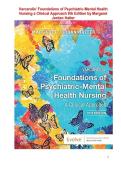
Varcarolis Foundations of Psychiatric Mental Health Nursing: A Clinical Approach, 9th Edition
Nutritional Foundations and Clinical Applications — Product Description Nutritional Foundations and Clinical Applications is a comprehensive educational resource designed to help students and healthcare learners build a strong understanding of nutrition science and connect foundational concepts with practical clinical applications. The material is suitable for learners in nursing, nutrition, dietetics, allied health, health sciences, and related healthcare programs where nutrition plays an important role in patient care, health promotion, disease prevention, and recovery. This resource provides a useful foundation for understanding the relationship between food, nutrients, metabolism, health, and disease. Nutrition is an essential part of comprehensive healthcare because dietary intake can influence growth, development, energy levels, immune function, body composition, chronic disease risk, and overall wellbeing. By studying both nutritional foundations and clinical applications, learners can develop a more integrated understanding of how nutrition knowledge can be applied to real-world healthcare situations. The resource covers important concepts involving macronutrients and micronutrients, including carbohydrates, proteins, fats, vitamins, minerals, and water. Students can strengthen their understanding of nutrient functions, dietary sources, physiological roles, intake considerations, and the potential consequences of inadequate or excessive intake. These foundational concepts are important for understanding how the body obtains and uses nutrients for energy, tissue maintenance, growth, repair, and normal physiological function. A major component of nutrition education is understanding energy balance and metabolism. Learners can review concepts related to energy intake, energy expenditure, basal metabolic processes, physical activity, body composition, and healthy weight management. Understanding these principles can help students connect dietary patterns and lifestyle behaviors with long-term health outcomes and recognize the importance of balanced nutrition and appropriate physical activity. Nutritional assessment is another important clinical application. Healthcare professionals may evaluate nutritional status using dietary information, anthropometric measurements, clinical observations, laboratory findings, and other assessment approaches. This resource helps learners appreciate the importance of identifying nutritional risks and understanding how assessment information can contribute to individualized care planning. Students can use these concepts to strengthen their preparation for clinical coursework and patient-care discussions. The material also supports learning about nutrition across the lifespan. Nutritional needs are not identical for every individual, and requirements can change according to age, growth, physiological status, activity, and health conditions. Learners can explore nutrition considerations associated with infancy, childhood, adolescence, adulthood, pregnancy, lactation, and older adulthood. This lifespan perspective helps students understand why nutrition recommendations should be individualized rather than applied uniformly to every patient. Clinical nutrition connects nutritional science with patient care. Dietary considerations may be important in the prevention and management of many health conditions. Students can review how nutrition concepts relate to areas such as cardiovascular health, diabetes, gastrointestinal disorders, renal health, weight management, and other nutrition-related concerns. The emphasis is on developing an understanding of nutritional principles that can support patient education, assessment, and care planning. Therapeutic nutrition is also an important area of study. Patients may require modified dietary approaches because of medical conditions, treatment plans, allergies, intolerances, nutritional deficiencies, altered digestion or absorption, or other individual circumstances. Learning the principles behind therapeutic diets can help students understand why dietary modifications may be incorporated into broader healthcare plans and why recommendations should be based on patient-specific needs and professional guidance. Nutrition and chronic disease prevention are closely connected. Healthy dietary patterns, appropriate nutrient intake, physical activity, and other lifestyle behaviors can contribute to health promotion and risk reduction. Students can use this material to explore the role of nutrition in supporting healthy lifestyles and communicating practical dietary principles to patients and communities. Nutrition education and communication are essential clinical skills. Healthcare professionals frequently provide patients with information about food choices, hydration, dietary patterns, lifestyle changes, and nutrition-related care. Effective education requires clear communication and an understanding of the patient's needs, preferences, culture, resources, health literacy, and readiness to make changes. This resource can help learners appreciate the importance of patient-centered nutrition education. The material can also support understanding of malnutrition and nutritional risk. Both inadequate and excessive nutritional intake can affect health and clinical outcomes. Recognizing potential nutritional concerns is an important part of comprehensive patient assessment. Students can use foundational nutrition concepts to better understand why nutritional status matters during illness, recovery, and long-term disease management. For nursing students, nutrition is particularly relevant because nurses often participate in nutritional assessment, patient education, monitoring of intake and hydration, care coordination, and communication with other healthcare professionals. A strong nutrition foundation can therefore complement knowledge of anatomy, physiology, pharmacology, pathophysiology, and other clinical subjects. For nutrition and dietetics students, the resource provides a framework for connecting nutrient science with practical applications. For allied-health and health-science learners, it can serve as a supplemental study resource for reviewing terminology, concepts, and clinical relationships. It may also be useful for students preparing for quizzes, assignments, examinations, classroom discussions, and clinical learning activities. The resource is designed to support active studying rather than replace an official course textbook or instructor materials. Students can use it to reinforce lecture content, organize major concepts, identify areas requiring additional review, and develop connections between nutritional theory and healthcare practice. It can be especially helpful when learners want a structured way to review both basic nutrition principles and their practical significance. Key Benefits Comprehensive review of nutritional foundations and clinical applications Coverage of macronutrients, micronutrients, water, and energy metabolism Introduction to nutritional assessment and nutritional status Lifespan nutrition concepts from infancy through older adulthood Clinical applications of nutrition in healthcare Nutrition and chronic disease considerations Energy balance and healthy weight-management concepts Nutrition education and patient communication principles Health promotion and disease-prevention concepts Support for nursing, nutrition, dietetics, and allied-health coursework Useful for revision, quizzes, assignments, and examination preparation Helps connect nutrition theory with patient-centered clinical practice Useful as a supplemental learning and review resource Suggested Product Tags nutritional foundations, clinical applications nutrition, nutrition study guide, nutrition textbook companion, nutrition students, clinical nutrition, nutrition fundamentals, fundamentals of nutrition,fundamentals of nutritionnursing nutrition, nursing student study guide, dietetics study material, nutrition and health, human nutrition,fundamentals of nutritionnutritional assessment, dietary assessment, macronutrients, micronutrients, carbohydrates nutrition, proteins nutrition, fats nutrition, vitamins and minerals,fundamentals of nutrition energy metabolism, energy balance, healthy eating, wellness nutrition, health promotion, disease prevention, lifespan nutrition, infant nutrition, pediatric nutrition, adolescent nutrition, adult nutrition, maternal nutrition, pregnancy nutrition, lactation nutrition, geriatric nutrition, community nutrition, patient nutrition, clinical dietetics, nutrition care, patient education, nutrition counseling, dietary planning, therapeutic diets, chronic disease nutrition, diabetes nutrition, cardiovascular nutrition, gastrointestinal nutrition, renal nutrition, obesity nutrition, weight management, nutrition assessment, healthcare nutrition, allied health study guide,fundamentals of nutrition nutrition exam review, nutrition revision, healthcare students, nursing coursework, dietetics coursework, nutrition coursework, health science students, clinical practice, patient-centered nutrition, evidence-based nutrition, food and nutrients, nutrient functions, dietary requirements, recommended nutrient intake, nutritional status, malnutrition, nutrition screening, nutrition intervention, healthy lifestyle, food choices, nutrition science, applied nutrition, clinical nutrition study guide, nutritional care, nursing nutrition review, nutrition learning resource, academic nutrition resource, nutrition reference material, healthcare education, nutrition concepts, nutrition applications, nutrition assessment tools, diet planning, nutritional support, health and wellness, nutrition research, nutrition principles, nutrition care planning, clinical nutrition education, nutrition practice, nutrition management, nutrition knowledge, nutritional wellbeing, food science, metabolism, dietary patterns, nutritional requirements, nutrition and disease, nutrition therapy, nutrition for healthcare professionals, nutrition assessment guide, clinical nutrition review, nutrition course resource, healthcare nutrition study, dietetics review, nursing nutrition resource, nutrition learning guide, nutrition exam study material, applied clinical nutrition. Important note: This product description is intended for educational and study purposes. It should be used alongside the official textbook, course materials, instructor guidance, and current professional recommendations where applicable. Varcarolis Foundations of Psychiatric Mental Health Nursing: A Clinical Approach, 9th Edition — Product Description Varcarolis Foundations of Psychiatric Mental Health Nursing: A Clinical Approach, 9th Edition by Margaret Jordan Halter is a comprehensive educational resource designed to support students learning psychiatric and mental health nursing. It provides a structured foundation for understanding mental health concepts, psychiatric assessment, therapeutic communication, clinical interventions, patient safety, and recovery-oriented care. This resource is particularly valuable for nursing students, psychiatric mental health nursing learners, healthcare students, and professionals seeking a supplemental review resource. It helps connect psychiatric nursing theory with clinical practice and encourages learners to consider the biological, psychological, social, developmental, cultural, and environmental factors that can influence mental health. Psychiatric nursing requires healthcare professionals to understand the patient as a whole person rather than focusing only on a diagnosis. Mental health can affect relationships, physical health, functioning, coping, decision-making, and quality of life. A strong foundation in psychiatric nursing helps students develop appropriate assessment skills and provide respectful, safe, individualized care. A major area of focus is the therapeutic nurse-patient relationship. Students can review the importance of trust, empathy, professional boundaries, active listening, respect, and therapeutic communication. These principles are essential when caring for patients who may be experiencing anxiety, depression, psychosis, trauma, substance-related problems, behavioral changes, or emotional distress. Therapeutic communication is especially important in psychiatric nursing. Learners can strengthen their understanding of communication techniques and how nurses respond professionally to different patient behaviors and emotional states. Effective communication can help establish rapport, collect meaningful assessment information, promote patient participation, and support a therapeutic environment. Psychiatric assessment is another essential component. Students can review concepts related to mood, affect, thought processes, thought content, perception, cognition, behavior, insight, judgment, coping, relationships, and functioning. Systematic assessment can help nurses recognize changes in mental status and identify appropriate priorities for care. The resource also supports learning about common psychiatric and behavioral health conditions. Learners can study clinical concepts associated with mood disorders, anxiety disorders, psychotic disorders, substance-related conditions, trauma-related conditions, personality disorders, cognitive disorders, and other mental health presentations. Connecting symptoms with assessment and nursing interventions can strengthen clinical reasoning. Psychopharmacology is an important part of psychiatric mental health nursing education. Students can review medication-related concepts and nursing responsibilities, including therapeutic purposes, patient education, monitoring, safety, adherence, and recognition of potential adverse effects. Medication administration and clinical decisions should always follow current professional guidance and the instructions of qualified prescribers. Patient safety is another important area of psychiatric nursing. Nurses may care for individuals experiencing suicidal thoughts, self-harm risk, severe agitation, aggression, altered perception, acute distress, or other situations requiring careful assessment and intervention. Understanding risk assessment, environmental safety, observation, communication, and appropriate escalation of care is essential to safe practice. The resource also provides a useful framework for considering mental health across the lifespan. Children, adolescents, adults, and older adults may have different developmental needs and presentations. Age-appropriate assessment, communication, family involvement, and interventions can help nurses provide more effective and individualized care. Cultural awareness is equally important in psychiatric nursing. Beliefs about mental illness, health, family, treatment, communication, and help-seeking can differ between individuals and communities. Culturally responsive nursing promotes respect and can help reduce misunderstandings while supporting patient-centered assessment and care. Community mental health and recovery-oriented practice are also important elements of modern psychiatric nursing. Students can explore concepts involving prevention, rehabilitation, resilience, patient empowerment, continuity of care, community resources, and recovery. These approaches recognize that people living with mental health conditions can work toward meaningful goals and improved quality of life. The resource can support nursing students preparing for examinations and clinical experiences. Psychiatric mental health nursing questions often require application of therapeutic communication, prioritization, safety principles, clinical judgment, assessment findings, medication knowledge, and patient-centered interventions. Reviewing these concepts can help students organize their knowledge and approach clinical scenarios more confidently. It may also be useful for classroom review, assignments, quizzes, clinical preparation, and independent study. Learners can use the material alongside the official textbook, lecture notes, instructor resources, institutional policies, and current clinical guidelines. Key Benefits Comprehensive psychiatric mental health nursing study resource Covers foundational mental health and psychiatric nursing concepts Supports therapeutic communication and nurse-patient relationship skills Reviews psychiatric assessment and clinical judgment Covers common psychiatric and behavioral health conditions Introduces psychiatric medication and nursing responsibilities Highlights patient safety and risk assessment Includes lifespan and developmental considerations Supports culturally responsive and patient-centered care Introduces recovery-oriented and community mental health concepts Useful for nursing coursework, revision, quizzes, and examinations Helpful for psychiatric mental health nursing clinical preparation
Document information
- Uploaded on
- August 14, 2026
- Number of pages
- 472
- Written in
- 2026/2027
- Type
- Exam (elaborations)
- Contains
- Questions & answers


