

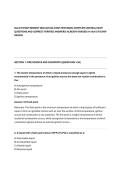
IAAI CFI EXAM NEWEST 2026 ACTUAL EXAM TEST BANK| COMPLETE 400 REAL EXAM
QUESTIONS AND CORRECT VERIFIED ANSWERS/ ALREADY GRADED A+| IAAI CFI EXAM
REVIEW
SECTION 1: FIRE SCIENCE AND CHEMISTRY (QUESTIONS 1-50)
1. The lowest temperature at which a liquid produces enough vapor to ignite
momentarily in the presence of an ignition source but does not sustain combustion is
the:
A) Autoignition temperature
B) Fire point
C) Flash point
D) Ignition temperature
Answer: C) Flash point
Rationale: The flash point is the minimum temperature at which a liquid gives off sufficient
vapor to form an ignitable mixture with air near the surface. At this temperature, ignition
occurs but combustion is not sustained. The fire point is a higher temperature at which
sustained combustion occurs, while autoignition temperature is the temperature at which
a substance ignites without an external ignition source .
2. A liquid with a flash point above 100°F (37.8°C) is classified as a:
A) Flammable liquid
B) Combustible liquid
C) Volatile liquid
D) Reactive liquid
,Answer: B) Combustible liquid
Rationale: The classification of flammable versus combustible liquids is based on flash
point. Flammable liquids have flash points below 100°F, while combustible liquids have
flash points at or above 100°F. This distinction is critical for fire investigators when
determining the behavior of liquid fuels at fire scenes .
3. The four components of the fire tetrahedron are:
A) Fuel, Oxygen, Heat, Chemical Chain Reaction
B) Fuel, Oxygen, Carbon Dioxide, Ignition Source
C) Heat, Light, Smoke, Flame
D) Combustible Material, Air, Spark, Flame
Answer: A) Fuel, Oxygen, Heat, Chemical Chain Reaction
Rationale: The fire tetrahedron represents the four essential elements required for
combustion: fuel, oxygen, heat, and the chemical chain reaction. Removing any one
element extinguishes the fire. The older fire triangle included only three components
(excluding the chemical chain reaction), which is why the tetrahedron is now the accepted
model .
4. At approximately what minimum oxygen concentration can most fires sustain
combustion?
A) 21%
B) 16%
C) 12%
D) 8%
Answer: B) 16%
Rationale: Normal atmospheric air contains approximately 21% oxygen; however, most
fires cannot sustain combustion when oxygen concentration drops below approximately
16%. This principle underlies ventilation-controlled fires and the use of inerting systems for
fire suppression. Understanding oxygen depletion is crucial for determining fire
development and suppression effectiveness .
,5. When a solid fuel decomposes due to heat without the presence of oxygen, this
process is called:
A) Vaporization
B) Pyrolysis
C) Sublimation
D) Oxidation
Answer: B) Pyrolysis
Rationale: Pyrolysis is the thermal decomposition of solid material in the absence of
oxygen (or in an oxygen-deficient environment), producing combustible gases that can
subsequently ignite and burn. Vaporization refers to phase change in liquids, and
sublimation is a solid-to-gas phase change. Pyrolysis is a critical process in the fire
development of solid fuels like wood and plastics .
6. What is the primary difference between complete and incomplete combustion?
A) Complete combustion produces more heat
B) Complete combustion produces carbon dioxide and water; incomplete produces
carbon monoxide and soot
C) Incomplete combustion requires less oxygen
D) Complete combustion is faster
Answer: B) Complete combustion produces carbon dioxide and water; incomplete
produces carbon monoxide and soot
Rationale: Complete combustion occurs with sufficient oxygen, producing carbon dioxide
(CO₂) and water (H₂O) as primary products. Incomplete combustion occurs when oxygen is
limited, producing carbon monoxide (CO), soot, and other toxic byproducts. This
distinction is vital for fire investigators because incomplete combustion products provide
evidence of ventilation conditions at the fire scene .
7. Which of the following is NOT a product of incomplete combustion?
A) Carbon Monoxide
B) Soot
C) Water Vapor
D) Carbon Dioxide
, Answer: C) Water Vapor
Rationale: Water vapor is produced during both complete and incomplete combustion.
Carbon monoxide and soot are specific indicators of incomplete combustion, while carbon
dioxide is the primary product of complete combustion. The presence of significant soot
and CO indicates oxygen-deficient burning conditions .
8. The stoichiometric mixture refers to:
A) The minimum oxygen required for ignition
B) The perfect fuel-to-air ratio for complete combustion
C) The maximum temperature achieved in a fire
D) The ratio of fuel to oxygen that produces maximum smoke
Answer: B) The perfect fuel-to-air ratio for complete combustion
Rationale: The stoichiometric mixture is the ideal ratio of fuel to air where both are
completely consumed in the combustion reaction, producing maximum energy and the
least unburned products. This concept is essential for understanding fire intensity,
explosive potential, and determining whether a fire was fuel-rich or ventilation-controlled .
9. A deflagration resulting from the sudden introduction of air into a confined space
containing oxygen-deficient products of incomplete combustion is called a:
A) Flashover
B) Backdraft
C) BLEVE
D) Detonation
Answer: B) Backdraft
Rationale: A backdraft occurs when oxygen is suddenly introduced into a confined space
containing superheated, oxygen-depleted gases from incomplete combustion. The rapid
mixing causes explosive combustion. Unlike flashover, which is a transition in fire
development, backdraft is an explosive event triggered by ventilation changes .
10. The temperature at which a material will self-ignite without an external ignition
source is the:
QUESTIONS AND CORRECT VERIFIED ANSWERS/ ALREADY GRADED A+| IAAI CFI EXAM
REVIEW
SECTION 1: FIRE SCIENCE AND CHEMISTRY (QUESTIONS 1-50)
1. The lowest temperature at which a liquid produces enough vapor to ignite
momentarily in the presence of an ignition source but does not sustain combustion is
the:
A) Autoignition temperature
B) Fire point
C) Flash point
D) Ignition temperature
Answer: C) Flash point
Rationale: The flash point is the minimum temperature at which a liquid gives off sufficient
vapor to form an ignitable mixture with air near the surface. At this temperature, ignition
occurs but combustion is not sustained. The fire point is a higher temperature at which
sustained combustion occurs, while autoignition temperature is the temperature at which
a substance ignites without an external ignition source .
2. A liquid with a flash point above 100°F (37.8°C) is classified as a:
A) Flammable liquid
B) Combustible liquid
C) Volatile liquid
D) Reactive liquid
,Answer: B) Combustible liquid
Rationale: The classification of flammable versus combustible liquids is based on flash
point. Flammable liquids have flash points below 100°F, while combustible liquids have
flash points at or above 100°F. This distinction is critical for fire investigators when
determining the behavior of liquid fuels at fire scenes .
3. The four components of the fire tetrahedron are:
A) Fuel, Oxygen, Heat, Chemical Chain Reaction
B) Fuel, Oxygen, Carbon Dioxide, Ignition Source
C) Heat, Light, Smoke, Flame
D) Combustible Material, Air, Spark, Flame
Answer: A) Fuel, Oxygen, Heat, Chemical Chain Reaction
Rationale: The fire tetrahedron represents the four essential elements required for
combustion: fuel, oxygen, heat, and the chemical chain reaction. Removing any one
element extinguishes the fire. The older fire triangle included only three components
(excluding the chemical chain reaction), which is why the tetrahedron is now the accepted
model .
4. At approximately what minimum oxygen concentration can most fires sustain
combustion?
A) 21%
B) 16%
C) 12%
D) 8%
Answer: B) 16%
Rationale: Normal atmospheric air contains approximately 21% oxygen; however, most
fires cannot sustain combustion when oxygen concentration drops below approximately
16%. This principle underlies ventilation-controlled fires and the use of inerting systems for
fire suppression. Understanding oxygen depletion is crucial for determining fire
development and suppression effectiveness .
,5. When a solid fuel decomposes due to heat without the presence of oxygen, this
process is called:
A) Vaporization
B) Pyrolysis
C) Sublimation
D) Oxidation
Answer: B) Pyrolysis
Rationale: Pyrolysis is the thermal decomposition of solid material in the absence of
oxygen (or in an oxygen-deficient environment), producing combustible gases that can
subsequently ignite and burn. Vaporization refers to phase change in liquids, and
sublimation is a solid-to-gas phase change. Pyrolysis is a critical process in the fire
development of solid fuels like wood and plastics .
6. What is the primary difference between complete and incomplete combustion?
A) Complete combustion produces more heat
B) Complete combustion produces carbon dioxide and water; incomplete produces
carbon monoxide and soot
C) Incomplete combustion requires less oxygen
D) Complete combustion is faster
Answer: B) Complete combustion produces carbon dioxide and water; incomplete
produces carbon monoxide and soot
Rationale: Complete combustion occurs with sufficient oxygen, producing carbon dioxide
(CO₂) and water (H₂O) as primary products. Incomplete combustion occurs when oxygen is
limited, producing carbon monoxide (CO), soot, and other toxic byproducts. This
distinction is vital for fire investigators because incomplete combustion products provide
evidence of ventilation conditions at the fire scene .
7. Which of the following is NOT a product of incomplete combustion?
A) Carbon Monoxide
B) Soot
C) Water Vapor
D) Carbon Dioxide
, Answer: C) Water Vapor
Rationale: Water vapor is produced during both complete and incomplete combustion.
Carbon monoxide and soot are specific indicators of incomplete combustion, while carbon
dioxide is the primary product of complete combustion. The presence of significant soot
and CO indicates oxygen-deficient burning conditions .
8. The stoichiometric mixture refers to:
A) The minimum oxygen required for ignition
B) The perfect fuel-to-air ratio for complete combustion
C) The maximum temperature achieved in a fire
D) The ratio of fuel to oxygen that produces maximum smoke
Answer: B) The perfect fuel-to-air ratio for complete combustion
Rationale: The stoichiometric mixture is the ideal ratio of fuel to air where both are
completely consumed in the combustion reaction, producing maximum energy and the
least unburned products. This concept is essential for understanding fire intensity,
explosive potential, and determining whether a fire was fuel-rich or ventilation-controlled .
9. A deflagration resulting from the sudden introduction of air into a confined space
containing oxygen-deficient products of incomplete combustion is called a:
A) Flashover
B) Backdraft
C) BLEVE
D) Detonation
Answer: B) Backdraft
Rationale: A backdraft occurs when oxygen is suddenly introduced into a confined space
containing superheated, oxygen-depleted gases from incomplete combustion. The rapid
mixing causes explosive combustion. Unlike flashover, which is a transition in fire
development, backdraft is an explosive event triggered by ventilation changes .
10. The temperature at which a material will self-ignite without an external ignition
source is the:


