

Page 1 of 151
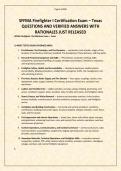
SFFMA Firefighter I Certification Exam – Texas
QUESTIONS AND VERIFIED ANSWERS WITH
RATIONALES JUST RELEASED
SFFMA Firefighter I Certification Exam – Texas
10 MOST TESTED EXAM COVERAGE AREAS
1. Fire Behavior, Fire Chemistry, and Fire Dynamics — combustion, heat transfer, stages of fire,
products of combustion, flashover, backdraft, fire development, flame behavior, and flow paths.
2. Personal Protective Equipment and SCBA — PPE selection, protective clothing, SCBA
components, donning and doffing, air supply, emergency procedures, limitations, inspection,
and respiratory protection.
3. Firefighter Safety, Health, and Accountability — situational awareness, buddy systems,
accountability, Mayday procedures, rehabilitation, emergency traffic, risk management, and
safe operating practices.
4. Fire Hose, Nozzles, Water Supply, and Fire Streams — hose types, couplings, nozzles, hose
deployment, water supply, hydrants, fire streams, pressure, friction loss, and basic hose
operations.
5. Ladders and Forcible Entry — ladder selection, carrying, raising, climbing, positioning, roof
access, ventilation support, doors, windows, locks, forcible-entry tools, and firefighter safety.
6. Search, Rescue, and Victim Removal — primary and secondary searches, victim location,
removal methods, oriented search, thermal conditions, emergency rescue, and firefighter
rescue.
7. Ventilation and Building Construction — horizontal and vertical ventilation, ventilation
coordination, building construction types, structural stability, collapse indicators, roofs, floors,
walls, and fire spread.
8. Fire Suppression and Interior Operations — attack lines, direct and indirect attack concepts,
extinguishment, advancing hose lines, room-and-content fires, exterior operations, overhaul,
and exposure protection.
9. Incident Operations, Communications, and Incident Command — command structure, radio
communications, accountability, assignments, staging, operating zones, size-up, tactical
priorities, and coordination.
10. Hazardous Materials, Technical Operations, and Firefighter Skills — hazardous-material
recognition, isolation, PPE, utility control, vehicle incidents, elevators, sprinklers, standpipes,
salvage, overhaul, and routine firefighter equipment.
1.
, Page 2 of 151
When a firefighter arrives at a structure fire, which action should normally occur before entering the
building for interior operations?
A. Remove the SCBA facepiece
B. Complete an initial size-up
C. Open every window
D. Shut down all nearby hydrants
Answer: B
Rationale: An initial size-up gives the officer and crew important information about conditions, hazards,
occupants, fire location, and needed resources before committing firefighters.
2.
Which type of heat transfer occurs when heat moves through a solid material from one molecule to
another?
A. Radiation
B. Convection
C. Conduction
D. Compression
, Page 3 of 151
Answer: C
Rationale: Conduction transfers heat through direct contact within a material, especially through solid
materials such as metal, walls, and structural members.
3.
Why should firefighters wear their complete protective clothing when operating near an active
structural fire?
A. It improves radio range
B. It reduces exposure to heat and other hazards
C. It increases water pressure
D. It prevents hose kinks
Answer: B
Rationale: Structural firefighting PPE protects firefighters from heat, flame, falling debris, smoke, and
other hazards encountered during fire operations.
4.
What is the main purpose of the SCBA facepiece during interior structural firefighting operations?
, Page 4 of 151
A. To increase oxygen concentration
B. To provide breathing protection from contaminated atmosphere
C. To cool the firefighter
D. To improve hearing
Answer: B
Rationale: The SCBA facepiece provides a sealed breathing interface and delivers air from the SCBA
system while protecting the respiratory system from toxic smoke.
5.
A firefighter notices heavy smoke becoming darker and more turbulent while conditions rapidly worsen
inside a room. What should the firefighter recognize?
A. Conditions may be approaching flashover
B. The fire is definitely extinguished
C. The building is becoming safer
D. The water supply is complete
Answer: A
SFFMA Firefighter I Certification Exam – Texas
QUESTIONS AND VERIFIED ANSWERS WITH
RATIONALES JUST RELEASED
SFFMA Firefighter I Certification Exam – Texas
10 MOST TESTED EXAM COVERAGE AREAS
1. Fire Behavior, Fire Chemistry, and Fire Dynamics — combustion, heat transfer, stages of fire,
products of combustion, flashover, backdraft, fire development, flame behavior, and flow paths.
2. Personal Protective Equipment and SCBA — PPE selection, protective clothing, SCBA
components, donning and doffing, air supply, emergency procedures, limitations, inspection,
and respiratory protection.
3. Firefighter Safety, Health, and Accountability — situational awareness, buddy systems,
accountability, Mayday procedures, rehabilitation, emergency traffic, risk management, and
safe operating practices.
4. Fire Hose, Nozzles, Water Supply, and Fire Streams — hose types, couplings, nozzles, hose
deployment, water supply, hydrants, fire streams, pressure, friction loss, and basic hose
operations.
5. Ladders and Forcible Entry — ladder selection, carrying, raising, climbing, positioning, roof
access, ventilation support, doors, windows, locks, forcible-entry tools, and firefighter safety.
6. Search, Rescue, and Victim Removal — primary and secondary searches, victim location,
removal methods, oriented search, thermal conditions, emergency rescue, and firefighter
rescue.
7. Ventilation and Building Construction — horizontal and vertical ventilation, ventilation
coordination, building construction types, structural stability, collapse indicators, roofs, floors,
walls, and fire spread.
8. Fire Suppression and Interior Operations — attack lines, direct and indirect attack concepts,
extinguishment, advancing hose lines, room-and-content fires, exterior operations, overhaul,
and exposure protection.
9. Incident Operations, Communications, and Incident Command — command structure, radio
communications, accountability, assignments, staging, operating zones, size-up, tactical
priorities, and coordination.
10. Hazardous Materials, Technical Operations, and Firefighter Skills — hazardous-material
recognition, isolation, PPE, utility control, vehicle incidents, elevators, sprinklers, standpipes,
salvage, overhaul, and routine firefighter equipment.
1.
, Page 2 of 151
When a firefighter arrives at a structure fire, which action should normally occur before entering the
building for interior operations?
A. Remove the SCBA facepiece
B. Complete an initial size-up
C. Open every window
D. Shut down all nearby hydrants
Answer: B
Rationale: An initial size-up gives the officer and crew important information about conditions, hazards,
occupants, fire location, and needed resources before committing firefighters.
2.
Which type of heat transfer occurs when heat moves through a solid material from one molecule to
another?
A. Radiation
B. Convection
C. Conduction
D. Compression
, Page 3 of 151
Answer: C
Rationale: Conduction transfers heat through direct contact within a material, especially through solid
materials such as metal, walls, and structural members.
3.
Why should firefighters wear their complete protective clothing when operating near an active
structural fire?
A. It improves radio range
B. It reduces exposure to heat and other hazards
C. It increases water pressure
D. It prevents hose kinks
Answer: B
Rationale: Structural firefighting PPE protects firefighters from heat, flame, falling debris, smoke, and
other hazards encountered during fire operations.
4.
What is the main purpose of the SCBA facepiece during interior structural firefighting operations?
, Page 4 of 151
A. To increase oxygen concentration
B. To provide breathing protection from contaminated atmosphere
C. To cool the firefighter
D. To improve hearing
Answer: B
Rationale: The SCBA facepiece provides a sealed breathing interface and delivers air from the SCBA
system while protecting the respiratory system from toxic smoke.
5.
A firefighter notices heavy smoke becoming darker and more turbulent while conditions rapidly worsen
inside a room. What should the firefighter recognize?
A. Conditions may be approaching flashover
B. The fire is definitely extinguished
C. The building is becoming safer
D. The water supply is complete
Answer: A


