

Page 1 of 114
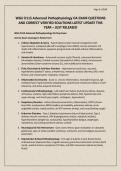
WGU D115 Advanced Pathophysiology OA EXAM QUESTIONS
AND CORRECT VERIFIED SOLUTIONS LATEST UPDATE THIS
YEAR – JUST RELEASED
WGU D115 Advanced Pathophysiology OA Prep Exam
10-Line Exam Coverage in Points Form
1. Cellular Adaptation & Injury - Hypertrophy (cardiac myocyte enlargement with
hypertension), metaplasia (Barrett's esophagus from GERD), necrosis (ischemic cell
death with inflammation), apoptosis (programmed cell death without inflammation),
and atrophy
2. Genetics & Inheritance - Autosomal recessive (cystic fibrosis), autosomal dominant
(Huntington disease), X-linked recessive (hemophilia A affects males), chromosomal
abnormalities (Down syndrome trisomy 21), and multifactorial inheritance
3. Fluid, Electrolyte & Acid-Base Disorders - Hyponatremia (confusion, seizures),
hyperkalemia (peaked T waves, arrhythmias), metabolic acidosis (diarrhea, DKA, renal
failure), and compensatory respiratory responses
4. Inflammation & Immunity - Acute vs. chronic inflammation, neutrophil response, IgE-
mediated Type I hypersensitivity (anaphylaxis), autoimmune mechanisms (failure of self-
tolerance), and active-acquired immunity
5. Cardiovascular Pathophysiology - Left-sided heart failure (pulmonary edema, dyspnea,
orthopnea, crackles), right-sided failure (peripheral edema, JVD), hypertension end-
organ damage, and shock types (septic, cardiogenic, hypovolemic)
6. Respiratory Disorders - Asthma (bronchoconstriction, inflammation), COPD (chronic
bronchitis, emphysema), ARDS (capillary permeability, pulmonary edema), acute
epiglottitis (stridor, tripod position, do NOT examine airway), and croup (barking cough)
7. Endocrine Disorders - Type 1 diabetes (autoimmune beta-cell destruction), Type 2
diabetes (insulin resistance), DKA (hyperglycemia, ketosis, metabolic acidosis),
hyperthyroidism (weight loss, tachycardia), hypothyroidism (fatigue, weight gain,
myxedema), and Cushing syndrome (excess cortisol)
8. Neurological & Pain Mechanisms - Gate control theory (pain modulation in substantia
gelatinosa), signs of stroke (sudden numbness, confusion), and neurological assessment
parameters
9. Reproductive & Renal Pathophysiology - First sign of puberty in girls (breast buds),
endometriosis (dysmenorrhea, irregular menses), gonorrhea transmission to fetus (birth
canal), urethral stricture symptoms (UTI-like), and HBV transmission (blood and body
fluids)
, Page 2 of 114
10. Multisystem & Special Populations - Neonatal inflammatory response (transiently
depressed chemotaxis, complement activity), aging changes (decreased alveolar surface
area, VC decreases), and pediatric respiratory emergencies (airway obstruction occurs
sooner in infants)
250 MCQs with Rationales
UNIT 1: CELLULAR INJURY, ADAPTATION, AND GENETICS (Questions 1-45)
1. Which cellular adaptation is most likely to occur in the left ventricle due to chronic
hypertension?
A) Atrophy
B) Hypertrophy
C) Hyperplasia
D) Metaplasia
Correct Answer: B
Rationale: Hypertrophy is an increase in cell size in response to increased workload. Chronic
hypertension increases the workload on the left ventricle, causing myocardial cells to
hypertrophy to meet the increased demand. Cardiac myocytes cannot significantly divide
(hyperplasia), so they compensate by increasing cell size .
2. A patient with COPD develops squamous metaplasia in the bronchial epithelium. Which of
the following best describes this cellular change?
A) An increase in cell size
B) A reversible replacement of one differentiated cell type with another
, Page 3 of 114
C) An increase in the number of cells
D) A decrease in cell size
Correct Answer: B
Rationale: Metaplasia is a reversible change in which one differentiated cell type is replaced by
another cell type. In COPD, the normal ciliated columnar epithelium of the bronchi is replaced
by stratified squamous epithelium due to chronic irritation from smoking. This change can
potentially progress to dysplasia .
3. A 55-year-old patient with a history of GERD develops Barrett's esophagus. This is an
example of which cellular adaptation?
A) Hypertrophy
B) Hyperplasia
C) Metaplasia
D) Dysplasia
Correct Answer: C
Rationale: Barrett's esophagus is a metaplastic change in which the normal squamous
epithelium of the esophagus is replaced by columnar epithelium similar to that of the stomach
or intestines in response to chronic acid exposure. This adaptation increases the risk of
esophageal adenocarcinoma .
4. A patient experiences prolonged myocardial ischemia resulting in irreversible injury and cell
membrane rupture. Which type of cellular death has most likely occurred?
A) Apoptosis
, Page 4 of 114
B) Necrosis
C) Atrophy
D) Autophagy
Correct Answer: B
Rationale: Necrosis results from irreversible cellular injury and is characterized by cell swelling,
membrane rupture, and inflammation. Unlike apoptosis (programmed cell death without
inflammation), necrosis is a pathologic process that triggers an inflammatory response .
5. Which disorder is inherited in an autosomal recessive pattern?
A) Huntington disease
B) Marfan syndrome
C) Cystic fibrosis
D) Neurofibromatosis
Correct Answer: C
Rationale: Cystic fibrosis requires inheritance of two defective CFTR genes (one from each
parent). Huntington disease and neurofibromatosis are autosomal dominant. Marfan syndrome
is also autosomal dominant with variable expression .
6. A male patient develops hemophilia A. Which inheritance pattern is most likely?
A) Autosomal dominant
B) Autosomal recessive
C) X-linked recessive
D) Mitochondrial
WGU D115 Advanced Pathophysiology OA EXAM QUESTIONS
AND CORRECT VERIFIED SOLUTIONS LATEST UPDATE THIS
YEAR – JUST RELEASED
WGU D115 Advanced Pathophysiology OA Prep Exam
10-Line Exam Coverage in Points Form
1. Cellular Adaptation & Injury - Hypertrophy (cardiac myocyte enlargement with
hypertension), metaplasia (Barrett's esophagus from GERD), necrosis (ischemic cell
death with inflammation), apoptosis (programmed cell death without inflammation),
and atrophy
2. Genetics & Inheritance - Autosomal recessive (cystic fibrosis), autosomal dominant
(Huntington disease), X-linked recessive (hemophilia A affects males), chromosomal
abnormalities (Down syndrome trisomy 21), and multifactorial inheritance
3. Fluid, Electrolyte & Acid-Base Disorders - Hyponatremia (confusion, seizures),
hyperkalemia (peaked T waves, arrhythmias), metabolic acidosis (diarrhea, DKA, renal
failure), and compensatory respiratory responses
4. Inflammation & Immunity - Acute vs. chronic inflammation, neutrophil response, IgE-
mediated Type I hypersensitivity (anaphylaxis), autoimmune mechanisms (failure of self-
tolerance), and active-acquired immunity
5. Cardiovascular Pathophysiology - Left-sided heart failure (pulmonary edema, dyspnea,
orthopnea, crackles), right-sided failure (peripheral edema, JVD), hypertension end-
organ damage, and shock types (septic, cardiogenic, hypovolemic)
6. Respiratory Disorders - Asthma (bronchoconstriction, inflammation), COPD (chronic
bronchitis, emphysema), ARDS (capillary permeability, pulmonary edema), acute
epiglottitis (stridor, tripod position, do NOT examine airway), and croup (barking cough)
7. Endocrine Disorders - Type 1 diabetes (autoimmune beta-cell destruction), Type 2
diabetes (insulin resistance), DKA (hyperglycemia, ketosis, metabolic acidosis),
hyperthyroidism (weight loss, tachycardia), hypothyroidism (fatigue, weight gain,
myxedema), and Cushing syndrome (excess cortisol)
8. Neurological & Pain Mechanisms - Gate control theory (pain modulation in substantia
gelatinosa), signs of stroke (sudden numbness, confusion), and neurological assessment
parameters
9. Reproductive & Renal Pathophysiology - First sign of puberty in girls (breast buds),
endometriosis (dysmenorrhea, irregular menses), gonorrhea transmission to fetus (birth
canal), urethral stricture symptoms (UTI-like), and HBV transmission (blood and body
fluids)
, Page 2 of 114
10. Multisystem & Special Populations - Neonatal inflammatory response (transiently
depressed chemotaxis, complement activity), aging changes (decreased alveolar surface
area, VC decreases), and pediatric respiratory emergencies (airway obstruction occurs
sooner in infants)
250 MCQs with Rationales
UNIT 1: CELLULAR INJURY, ADAPTATION, AND GENETICS (Questions 1-45)
1. Which cellular adaptation is most likely to occur in the left ventricle due to chronic
hypertension?
A) Atrophy
B) Hypertrophy
C) Hyperplasia
D) Metaplasia
Correct Answer: B
Rationale: Hypertrophy is an increase in cell size in response to increased workload. Chronic
hypertension increases the workload on the left ventricle, causing myocardial cells to
hypertrophy to meet the increased demand. Cardiac myocytes cannot significantly divide
(hyperplasia), so they compensate by increasing cell size .
2. A patient with COPD develops squamous metaplasia in the bronchial epithelium. Which of
the following best describes this cellular change?
A) An increase in cell size
B) A reversible replacement of one differentiated cell type with another
, Page 3 of 114
C) An increase in the number of cells
D) A decrease in cell size
Correct Answer: B
Rationale: Metaplasia is a reversible change in which one differentiated cell type is replaced by
another cell type. In COPD, the normal ciliated columnar epithelium of the bronchi is replaced
by stratified squamous epithelium due to chronic irritation from smoking. This change can
potentially progress to dysplasia .
3. A 55-year-old patient with a history of GERD develops Barrett's esophagus. This is an
example of which cellular adaptation?
A) Hypertrophy
B) Hyperplasia
C) Metaplasia
D) Dysplasia
Correct Answer: C
Rationale: Barrett's esophagus is a metaplastic change in which the normal squamous
epithelium of the esophagus is replaced by columnar epithelium similar to that of the stomach
or intestines in response to chronic acid exposure. This adaptation increases the risk of
esophageal adenocarcinoma .
4. A patient experiences prolonged myocardial ischemia resulting in irreversible injury and cell
membrane rupture. Which type of cellular death has most likely occurred?
A) Apoptosis
, Page 4 of 114
B) Necrosis
C) Atrophy
D) Autophagy
Correct Answer: B
Rationale: Necrosis results from irreversible cellular injury and is characterized by cell swelling,
membrane rupture, and inflammation. Unlike apoptosis (programmed cell death without
inflammation), necrosis is a pathologic process that triggers an inflammatory response .
5. Which disorder is inherited in an autosomal recessive pattern?
A) Huntington disease
B) Marfan syndrome
C) Cystic fibrosis
D) Neurofibromatosis
Correct Answer: C
Rationale: Cystic fibrosis requires inheritance of two defective CFTR genes (one from each
parent). Huntington disease and neurofibromatosis are autosomal dominant. Marfan syndrome
is also autosomal dominant with variable expression .
6. A male patient develops hemophilia A. Which inheritance pattern is most likely?
A) Autosomal dominant
B) Autosomal recessive
C) X-linked recessive
D) Mitochondrial


