Page 1 of 78
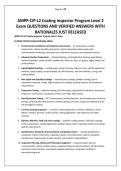
AMPP-CIP-L2 Coating Inspector Program Level 2
Exam QUESTIONS AND VERIFIED ANSWERS WITH
RATIONALES JUST RELEASED
AMPP-CIP-L2 Coating Inspector Program Level 2 Exam
10 MOST-TESTED EXAM COVERAGE AREAS
1. Environmental Conditions and Inspection Instruments — air temperature, surface
temperature, relative humidity, dew point, surface temperature above dew point,
environmental monitoring, instrument use, calibration, accuracy, and inspection records.
2. Advanced Surface Preparation — abrasive blasting, centrifugal blast cleaning, waterjetting,
surface cleanliness, surface profile, soluble salts, flash rust, dust, oil, grease, edges, welds, and
surface defects.
3. Liquid-Applied Coatings — coating types, mixing, thinning, induction time, pot life, application
methods, stripe coating, recoat windows, dry film thickness, wet film thickness, curing, and
coating defects.
4. Non-Liquid and Specialty Coatings — thermal spray coatings, powder coatings, plural-
component materials, linings, high-temperature coatings, specialty systems, and inspection
requirements.
5. Destructive Testing — adhesion testing, pull-off testing, coating failure evaluation, destructive
inspection, test locations, acceptance criteria, and repair after testing.
6. Non-Destructive Testing — DFT measurement, holiday detection, pinhole detection, continuity
testing, surface profile measurement, hardness testing, and other inspection methods that do
not damage the coating.
7. Concrete Coating Inspection — concrete surface preparation, moisture, alkalinity, surface
defects, laitance, porosity, surface profile, coating application, and inspection of coated
concrete.
8. Pipeline, Mainline, Field and Joint Coatings — pipeline coating systems, field-joint coatings,
surface preparation, coating application, holiday testing, repair, inspection points, and coating-
specific requirements.
9. Specifications, Standards, Documentation and Quality Control — reading specifications,
acceptance criteria, hold points, inspection reports, nonconformance reports, standards,
manufacturer requirements, project records, and inspector responsibilities.
10. Inspection Planning, Safety and Professional Judgment — inspection plans, job-site
communication, safety, confined spaces, equipment hazards, documentation, ethical conduct,
contractor communication, case-based inspection decisions, and proper handling of
nonconforming work.
, Page 2 of 78
250 PRACTICE QUESTIONS WITH ANSWERS AND RATIONALES
Question 1
During coating inspection, why should the inspector measure surface temperature before approving a
coating application for the steel?
A. To determine the steel grade
B. To compare surface temperature with dew point
C. To determine the coating color
D. To calculate the pipe diameter
Answer: B
Rationale: Surface temperature must be compared with dew point to reduce the risk of moisture
forming on the surface.
Question 2
A steel surface is only slightly warmer than the calculated dew point during coating work. What should
the inspector do first?
A. Approve the coating immediately
B. Add thinner to the coating
C. Follow the project specification for the required temperature margin
D. Increase the coating thickness
Answer: C
Rationale: The specification normally establishes the required minimum difference between surface
temperature and dew point.
Question 3
Which environmental measurement is most directly related to the amount of moisture present in the
surrounding air during coating work?
A. Relative humidity
B. Steel thickness
C. Coating color
D. Surface profile depth
Answer: A
Rationale: Relative humidity indicates how much water vapor is present in the air compared with the
maximum amount possible.
, Page 3 of 78
Question 4
Before using an electronic coating thickness gauge, what should the inspector verify about the
instrument?
A. Its paint color
B. Its calibration and condition
C. The manufacturer's office location
D. The operator's shoe size
Answer: B
Rationale: Inspection instruments must be suitable, properly calibrated, and in good working condition
before measurements are taken.
Question 5
Why is surface profile important when preparing steel before applying many protective coating systems
to the surface?
A. It changes the steel grade
B. It provides a surface texture that can improve coating adhesion
C. It removes all coating defects automatically
D. It determines the coating color
Answer: B
Rationale: Proper surface profile provides texture that can help the coating mechanically bond to the
prepared surface.
Question 6
An inspector finds visible oil on steel after abrasive blasting has been completed. What is the most
appropriate inspection decision?
A. Accept the surface because blasting is complete
B. Apply another coating over the oil
C. Require the contamination to be properly removed before coating
D. Increase the coating thickness
Answer: C
Rationale: Oil can prevent proper coating adhesion and must be removed before coating application.
, Page 4 of 78
Question 7
Why should an inspector pay special attention to welds, edges, corners, and other difficult areas before
coating application begins?
A. These areas always require a different color
B. These areas can receive less coating and develop early failures
C. These areas determine humidity
D. These areas cannot be inspected
Answer: B
Rationale: Edges and welds can be difficult to coat uniformly and may have increased risk of premature
coating failure.
Question 8
What is the main purpose of stripe coating edges, welds, and other difficult areas before applying the
main coating coats?
A. To change the surface color
B. To improve coating coverage in areas that are difficult to protect
C. To reduce surface preparation
D. To eliminate environmental monitoring
Answer: B
Rationale: Stripe coating provides additional coating material to vulnerable areas that are often difficult
to cover with normal spraying.
Question 9
During abrasive blasting, why should the inspector check the abrasive material and blasting equipment
before production work starts?
A. To select the final coating color
B. To confirm suitable preparation conditions and equipment operation
C. To determine the project budget
D. To measure the steel hardness
Answer: B
Rationale: Proper abrasive and equipment condition are important for achieving the required surface
preparation.
Question 10
AMPP-CIP-L2 Coating Inspector Program Level 2
Exam QUESTIONS AND VERIFIED ANSWERS WITH
RATIONALES JUST RELEASED
AMPP-CIP-L2 Coating Inspector Program Level 2 Exam
10 MOST-TESTED EXAM COVERAGE AREAS
1. Environmental Conditions and Inspection Instruments — air temperature, surface
temperature, relative humidity, dew point, surface temperature above dew point,
environmental monitoring, instrument use, calibration, accuracy, and inspection records.
2. Advanced Surface Preparation — abrasive blasting, centrifugal blast cleaning, waterjetting,
surface cleanliness, surface profile, soluble salts, flash rust, dust, oil, grease, edges, welds, and
surface defects.
3. Liquid-Applied Coatings — coating types, mixing, thinning, induction time, pot life, application
methods, stripe coating, recoat windows, dry film thickness, wet film thickness, curing, and
coating defects.
4. Non-Liquid and Specialty Coatings — thermal spray coatings, powder coatings, plural-
component materials, linings, high-temperature coatings, specialty systems, and inspection
requirements.
5. Destructive Testing — adhesion testing, pull-off testing, coating failure evaluation, destructive
inspection, test locations, acceptance criteria, and repair after testing.
6. Non-Destructive Testing — DFT measurement, holiday detection, pinhole detection, continuity
testing, surface profile measurement, hardness testing, and other inspection methods that do
not damage the coating.
7. Concrete Coating Inspection — concrete surface preparation, moisture, alkalinity, surface
defects, laitance, porosity, surface profile, coating application, and inspection of coated
concrete.
8. Pipeline, Mainline, Field and Joint Coatings — pipeline coating systems, field-joint coatings,
surface preparation, coating application, holiday testing, repair, inspection points, and coating-
specific requirements.
9. Specifications, Standards, Documentation and Quality Control — reading specifications,
acceptance criteria, hold points, inspection reports, nonconformance reports, standards,
manufacturer requirements, project records, and inspector responsibilities.
10. Inspection Planning, Safety and Professional Judgment — inspection plans, job-site
communication, safety, confined spaces, equipment hazards, documentation, ethical conduct,
contractor communication, case-based inspection decisions, and proper handling of
nonconforming work.
, Page 2 of 78
250 PRACTICE QUESTIONS WITH ANSWERS AND RATIONALES
Question 1
During coating inspection, why should the inspector measure surface temperature before approving a
coating application for the steel?
A. To determine the steel grade
B. To compare surface temperature with dew point
C. To determine the coating color
D. To calculate the pipe diameter
Answer: B
Rationale: Surface temperature must be compared with dew point to reduce the risk of moisture
forming on the surface.
Question 2
A steel surface is only slightly warmer than the calculated dew point during coating work. What should
the inspector do first?
A. Approve the coating immediately
B. Add thinner to the coating
C. Follow the project specification for the required temperature margin
D. Increase the coating thickness
Answer: C
Rationale: The specification normally establishes the required minimum difference between surface
temperature and dew point.
Question 3
Which environmental measurement is most directly related to the amount of moisture present in the
surrounding air during coating work?
A. Relative humidity
B. Steel thickness
C. Coating color
D. Surface profile depth
Answer: A
Rationale: Relative humidity indicates how much water vapor is present in the air compared with the
maximum amount possible.
, Page 3 of 78
Question 4
Before using an electronic coating thickness gauge, what should the inspector verify about the
instrument?
A. Its paint color
B. Its calibration and condition
C. The manufacturer's office location
D. The operator's shoe size
Answer: B
Rationale: Inspection instruments must be suitable, properly calibrated, and in good working condition
before measurements are taken.
Question 5
Why is surface profile important when preparing steel before applying many protective coating systems
to the surface?
A. It changes the steel grade
B. It provides a surface texture that can improve coating adhesion
C. It removes all coating defects automatically
D. It determines the coating color
Answer: B
Rationale: Proper surface profile provides texture that can help the coating mechanically bond to the
prepared surface.
Question 6
An inspector finds visible oil on steel after abrasive blasting has been completed. What is the most
appropriate inspection decision?
A. Accept the surface because blasting is complete
B. Apply another coating over the oil
C. Require the contamination to be properly removed before coating
D. Increase the coating thickness
Answer: C
Rationale: Oil can prevent proper coating adhesion and must be removed before coating application.
, Page 4 of 78
Question 7
Why should an inspector pay special attention to welds, edges, corners, and other difficult areas before
coating application begins?
A. These areas always require a different color
B. These areas can receive less coating and develop early failures
C. These areas determine humidity
D. These areas cannot be inspected
Answer: B
Rationale: Edges and welds can be difficult to coat uniformly and may have increased risk of premature
coating failure.
Question 8
What is the main purpose of stripe coating edges, welds, and other difficult areas before applying the
main coating coats?
A. To change the surface color
B. To improve coating coverage in areas that are difficult to protect
C. To reduce surface preparation
D. To eliminate environmental monitoring
Answer: B
Rationale: Stripe coating provides additional coating material to vulnerable areas that are often difficult
to cover with normal spraying.
Question 9
During abrasive blasting, why should the inspector check the abrasive material and blasting equipment
before production work starts?
A. To select the final coating color
B. To confirm suitable preparation conditions and equipment operation
C. To determine the project budget
D. To measure the steel hardness
Answer: B
Rationale: Proper abrasive and equipment condition are important for achieving the required surface
preparation.
Question 10