Page 1 of 80
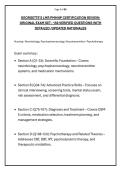
GEORGETTE'S LMR PMHNP CERTIFICATION REVIEW:
ORIGINAL EXAM SET : 150 VERIFIED QUESTIONS WITH
DETAILED /UPDATED RATIONALES
Nursing / Neurobiology, Psychopharmacology, Neurotransmitter / Psychotherapy
Exam summary :
• Section A (Q1-33): Scientific Foundation – Covers
neurobiology, psychopharmacology, neurotransmitter
systems, and medication mechanisms.
• Section B (Q34-74): Advanced Practice Skills – Focuses on
clinical interviewing, screening tools, mental status exam,
risk assessment, and differential diagnosis.
• Section C (Q75-107): Diagnosis and Treatment – Covers DSM-
5 criteria, medication selection, treatment planning, and
management strategies.
• Section D (Q108-124): Psychotherapy and Related Theories –
Addresses CBT, DBT, IPT, psychodynamic therapy, and
therapeutic modalities.
, Page 2 of 80
• Section E (Q125-150): Ethics, Legal Principles, and Cultural
Care – Covers informed consent, confidentiality, duty to warn,
involuntary commitment, scope of practice, and cultural
competence.
SECTION A: SCIENTIFIC FOUNDATION (Questions 1-33)
1. A patient with schizophrenia has been non-adherent with
antipsychotic medication due to extrapyramidal symptoms.
Which neurotransmitter pathway is primarily responsible for
these side effects?
A. Mesolimbic pathway
B. Nigrostriatal pathway ✓
C. Mesocortical pathway
D. Tuberoinfundibular pathway
CORRECT: B
RATIONALE: The nigrostriatal dopamine pathway is responsible
for motor control; blockade here causes EPS. The mesolimbic
pathway is associated with positive symptoms, and the
tuberoinfundibular pathway is associated with prolactin
elevation.
, Page 3 of 80
2. A PMHNP is reviewing the mechanism of action of SSRIs.
Which of the following best describes the primary effect of
these medications?
A. Inhibition of norepinephrine reuptake
B. Selective inhibition of serotonin reuptake at the presynaptic
neuron ✓
C. Inhibition of monoamine oxidase
D. Antagonism of dopamine D2 receptors
CORRECT: B
RATIONALE: SSRIs selectively block serotonin reuptake,
increasing serotonin availability in the synaptic cleft. SNRIs
affect both serotonin and norepinephrine.
3. A patient with bipolar disorder is prescribed lithium. Which of
the following is the most serious potential side effect that
requires monitoring?
A. Weight gain
B. Nephrogenic diabetes insipidus and thyroid dysfunction ✓
C. Sexual dysfunction
D. Insomnia
, Page 4 of 80
CORRECT: B
RATIONALE: Lithium can cause nephrogenic diabetes insipidus
and hypothyroidism; monitoring renal and thyroid function is
essential. Weight gain and sexual dysfunction are also side
effects but not as serious.
4. A patient presents with symptoms of major depressive
disorder. The PMHNP understands that which neurotransmitter
is most directly involved in the pathophysiology of depression?
A. Acetylcholine
B. Serotonin ✓
C. GABA
D. Histamine
CORRECT: B
RATIONALE: Serotonin is the primary neurotransmitter
implicated in depression. GABA is associated with anxiety
disorders. Acetylcholine and histamine are less directly
involved.
5. Which of the following best describes the mechanism of
action of benzodiazepines?
GEORGETTE'S LMR PMHNP CERTIFICATION REVIEW:
ORIGINAL EXAM SET : 150 VERIFIED QUESTIONS WITH
DETAILED /UPDATED RATIONALES
Nursing / Neurobiology, Psychopharmacology, Neurotransmitter / Psychotherapy
Exam summary :
• Section A (Q1-33): Scientific Foundation – Covers
neurobiology, psychopharmacology, neurotransmitter
systems, and medication mechanisms.
• Section B (Q34-74): Advanced Practice Skills – Focuses on
clinical interviewing, screening tools, mental status exam,
risk assessment, and differential diagnosis.
• Section C (Q75-107): Diagnosis and Treatment – Covers DSM-
5 criteria, medication selection, treatment planning, and
management strategies.
• Section D (Q108-124): Psychotherapy and Related Theories –
Addresses CBT, DBT, IPT, psychodynamic therapy, and
therapeutic modalities.
, Page 2 of 80
• Section E (Q125-150): Ethics, Legal Principles, and Cultural
Care – Covers informed consent, confidentiality, duty to warn,
involuntary commitment, scope of practice, and cultural
competence.
SECTION A: SCIENTIFIC FOUNDATION (Questions 1-33)
1. A patient with schizophrenia has been non-adherent with
antipsychotic medication due to extrapyramidal symptoms.
Which neurotransmitter pathway is primarily responsible for
these side effects?
A. Mesolimbic pathway
B. Nigrostriatal pathway ✓
C. Mesocortical pathway
D. Tuberoinfundibular pathway
CORRECT: B
RATIONALE: The nigrostriatal dopamine pathway is responsible
for motor control; blockade here causes EPS. The mesolimbic
pathway is associated with positive symptoms, and the
tuberoinfundibular pathway is associated with prolactin
elevation.
, Page 3 of 80
2. A PMHNP is reviewing the mechanism of action of SSRIs.
Which of the following best describes the primary effect of
these medications?
A. Inhibition of norepinephrine reuptake
B. Selective inhibition of serotonin reuptake at the presynaptic
neuron ✓
C. Inhibition of monoamine oxidase
D. Antagonism of dopamine D2 receptors
CORRECT: B
RATIONALE: SSRIs selectively block serotonin reuptake,
increasing serotonin availability in the synaptic cleft. SNRIs
affect both serotonin and norepinephrine.
3. A patient with bipolar disorder is prescribed lithium. Which of
the following is the most serious potential side effect that
requires monitoring?
A. Weight gain
B. Nephrogenic diabetes insipidus and thyroid dysfunction ✓
C. Sexual dysfunction
D. Insomnia
, Page 4 of 80
CORRECT: B
RATIONALE: Lithium can cause nephrogenic diabetes insipidus
and hypothyroidism; monitoring renal and thyroid function is
essential. Weight gain and sexual dysfunction are also side
effects but not as serious.
4. A patient presents with symptoms of major depressive
disorder. The PMHNP understands that which neurotransmitter
is most directly involved in the pathophysiology of depression?
A. Acetylcholine
B. Serotonin ✓
C. GABA
D. Histamine
CORRECT: B
RATIONALE: Serotonin is the primary neurotransmitter
implicated in depression. GABA is associated with anxiety
disorders. Acetylcholine and histamine are less directly
involved.
5. Which of the following best describes the mechanism of
action of benzodiazepines?