

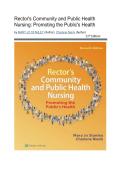
Rector's Community and Public Health
Nursing: Promoting the Public's Health
by MARY JO STANLEY (Author), Charlene Niemi (Author)
11th Edition
,TABLE OF CONTENTS
Unit 1 Foundations of Community/Public Health Nursing
Chapter 1 Introduction to Community Health Nursing
Chapter 2 Public Health Nursing in the Community
Chapter 3 History and Evolution of Public Health Nursing
Chapter 4 Research, Evidence-Based Practice, Quality Improvement, and Ethics
Chapter 5 Transcultural Nursing
Unit 2 Community/Public Health Essentials
Chapter 6 Structure and Economics of Community/Public Health Services
Chapter 7 Epidemiology in the Community
Chapter 8 Communicable Disease
Chapter 9 Environmental Health and Safety
Unit 3 Community/Public Health Nursing Toolbox
Chapter 10 Communication, Collaboration, and Technology
Chapter 11 Health Promotion Through Education
Chapter 12 Planning, Implementing, and Evaluating Community/Public Health Programs
Chapter 13 Policymaking and Advocacy
Unit 4 The Health of Our Population
Chapter 14 Family as Client
Chapter 15 Community as Client
Chapter 16 Global Health Nursing
Chapter 17 Disasters and Their Impact
Chapter 18 Violence and Abuse
Unit 5 Aggregate Populations
Chapter 19 Maternal–Child Health
,Chapter 20 School-Age Children and Adolescents
Chapter 21 Adult Health
Chapter 22 Older Adults
Unit 6 Vulnerable Populations
Chapter 23 Working with Vulnerable People
Chapter 24 Clients with Disabilities
Chapter 25 Behavioral Health in the Community
Chapter 26 Unsheltered Populations
Chapter 27 Rural, Migrant, and Urban Communities
Chapter 28 Veterans Health
, Test Bank: Rector's Community and Public Health Nursing, 11th Edition
(Stanley, 2025)
Comprehensive Questions and Answers — Chapters 1–28
CHAPTER 1: Introduction to Community and Public Health Nursing
1. Which statement best defines public health nursing?
A) Providing individualized care to clients in hospital settings
B) Focusing on the health of populations through organized community efforts
C) Delivering primary care to underserved individuals in clinics
D) Administering medications to home-bound patients
Answer: B
Rationale: Public health nursing focuses on improving the health of populations through organized
community efforts, disease prevention, and health promotion, distinguishing it from individual-focused
clinical care.
2. The primary goal of community health nursing is to:
A) Treat acute illnesses in community settings
B) Preserve and protect the health of the community as a whole
C) Replace hospital-based nursing with home care
D) Provide psychiatric care for community members
Answer: B
Rationale: Community health nursing aims to preserve and protect the health of the entire community,
emphasizing prevention, health promotion, and population-focused care.
3. Which historical figure is credited with founding modern public health nursing in the United States?
Nursing: Promoting the Public's Health
by MARY JO STANLEY (Author), Charlene Niemi (Author)
11th Edition
,TABLE OF CONTENTS
Unit 1 Foundations of Community/Public Health Nursing
Chapter 1 Introduction to Community Health Nursing
Chapter 2 Public Health Nursing in the Community
Chapter 3 History and Evolution of Public Health Nursing
Chapter 4 Research, Evidence-Based Practice, Quality Improvement, and Ethics
Chapter 5 Transcultural Nursing
Unit 2 Community/Public Health Essentials
Chapter 6 Structure and Economics of Community/Public Health Services
Chapter 7 Epidemiology in the Community
Chapter 8 Communicable Disease
Chapter 9 Environmental Health and Safety
Unit 3 Community/Public Health Nursing Toolbox
Chapter 10 Communication, Collaboration, and Technology
Chapter 11 Health Promotion Through Education
Chapter 12 Planning, Implementing, and Evaluating Community/Public Health Programs
Chapter 13 Policymaking and Advocacy
Unit 4 The Health of Our Population
Chapter 14 Family as Client
Chapter 15 Community as Client
Chapter 16 Global Health Nursing
Chapter 17 Disasters and Their Impact
Chapter 18 Violence and Abuse
Unit 5 Aggregate Populations
Chapter 19 Maternal–Child Health
,Chapter 20 School-Age Children and Adolescents
Chapter 21 Adult Health
Chapter 22 Older Adults
Unit 6 Vulnerable Populations
Chapter 23 Working with Vulnerable People
Chapter 24 Clients with Disabilities
Chapter 25 Behavioral Health in the Community
Chapter 26 Unsheltered Populations
Chapter 27 Rural, Migrant, and Urban Communities
Chapter 28 Veterans Health
, Test Bank: Rector's Community and Public Health Nursing, 11th Edition
(Stanley, 2025)
Comprehensive Questions and Answers — Chapters 1–28
CHAPTER 1: Introduction to Community and Public Health Nursing
1. Which statement best defines public health nursing?
A) Providing individualized care to clients in hospital settings
B) Focusing on the health of populations through organized community efforts
C) Delivering primary care to underserved individuals in clinics
D) Administering medications to home-bound patients
Answer: B
Rationale: Public health nursing focuses on improving the health of populations through organized
community efforts, disease prevention, and health promotion, distinguishing it from individual-focused
clinical care.
2. The primary goal of community health nursing is to:
A) Treat acute illnesses in community settings
B) Preserve and protect the health of the community as a whole
C) Replace hospital-based nursing with home care
D) Provide psychiatric care for community members
Answer: B
Rationale: Community health nursing aims to preserve and protect the health of the entire community,
emphasizing prevention, health promotion, and population-focused care.
3. Which historical figure is credited with founding modern public health nursing in the United States?


