

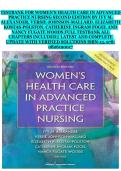
TESTBANK FOR WOMEN'S HEALTH CARE IN ADVANCED
PRACTICE NURSING SECOND EDITION BY IVY M.
ALEXANDER, VERSIE JOHNSON-MALLARD, ELIZABETH
KOSTAS-POLSTON, CATHERINE INGRAM FOGEL AND
NANCY FUGATE WOODS FULL TESTBANK ALL
CHAPTERS INCLUDED|| LATEST AND COMPLETE
UPDATE WITH VERIFIED SOLUTIONS ISBN-13, 978-
0826190017
,Chapter 01: Women and Their Health
MULTIPLE CHOICE
1. The United States ranks 50 in the world for maternal mortality and 41 among
industrialized nations for infant mortality rate. When developing programs to assist in
decreasing these rates, which factor would most likely need to be addressed as having the
greatest impact?
A. Resolving all language and cultural differences
B. Assuring early and adequate prenatal care
C. Providing more extensive women's shelters
D. Encouraging all women to eat a balanced diet
Answer: B
Rationale: Early and adequate prenatal care is the single most important factor in reducing
maternal and infant mortality rates. Prenatal care allows for early detection and management of
complications, nutritional counseling, education about danger signs, and interventions that can
prevent adverse outcomes. While language/cultural differences (A), women's shelters (C), and
balanced nutrition (D) are important, they are components of comprehensive care rather than
the primary factor with the greatest impact on mortality rates.
2. When integrating the principles of family-centered care, the nurse would include which
of the following?
A. Childbirth is viewed as a procedural event
B. Families are unable to make informed choices
C. Childbirth results in changes in relationships
D. Families require little information to make appropriate decisions
Answer: C
Rationale: Family-centered care recognizes that childbirth is a significant life event that affects
the entire family system and results in changes in relationships. It views childbirth as a normal
life event (not a procedural event, A), respects families' ability to make informed choices (not
inability, B), and provides comprehensive information to facilitate decision-making (not little
information, D).
,3. When preparing a teaching plan for a group of first-time pregnant women, the nurse
expects to review how maternity care has changed over the years. Which of the following
would the nurse include when discussing events of the 20th century?
A. Epidemics of puerperal fever
B. Performance of the first cesarean birth
C. Development of the x-ray to assess pelvic size
D. Creation of free-standing birth centers
Answer: D
Rationale: Free-standing birth centers were created in the 20th century as part of the
movement toward more natural, family-centered childbirth experiences. Epidemics of puerperal
fever (A) occurred primarily in the 19th century. The first cesarean birth (B) occurred in ancient
times. Development of x-ray to assess pelvic size (C) occurred in the late 19th to early 20th
century but is not a hallmark event of 20th-century maternity care changes.
4. After teaching a group of students about pregnancy-related mortality, the instructor
determines that additional teaching is needed when the students identify which condition
as a leading cause?
A. Hemorrhage
B. Embolism
C. Obstructed labor
D. Infection
Answer: B
Rationale: Embolism is NOT a leading cause of pregnancy-related mortality globally. The
leading causes include hemorrhage (A), obstructed labor (C), and infection (D). Embolism, while
a serious complication, is not among the top causes of maternal mortality worldwide. Students
who identify embolism as a leading cause need additional teaching about the actual leading
causes.
5. The nurse is working with a group of community health members to develop a plan to
address the special health needs of women. Which of the following conditions would the
group address as the major problem?
A. Smoking
B. Heart disease
, C. Diabetes
D. Cancer
Answer: B
Rationale: Heart disease is the leading cause of death among women in the United States and
should be addressed as the major health problem. While smoking (A), diabetes (C), and cancer
(D) are significant health concerns for women, heart disease surpasses them in mortality and
morbidity.
6. When assessing a family for possible barriers to health care, the nurse would consider
which factor to be most important?
A. Language
B. Health care workers attitudes
C. Transportation
D. Finances
Answer: D
Rationale: Finances represent the most significant barrier to health care access. While language
(A), health care worker attitudes (B), and transportation (C) are important barriers, financial
constraints affect the ability to afford insurance, medications, visits, and other health care
services, making it the most fundamental barrier.
7. After teaching a group of nursing students about the issue of informed consent. Which
of the following, if identified by the student, would indicate an understanding of a
violation of informed consent?
A. Performing a procedure on a 15-year-old without consent
B. Serving as a witness to the signature process
C. Asking whether the client understands what she is signing
D. Getting verbal consent over the phone for emergency procedures
Answer: A
Rationale: Performing a procedure on a minor (15-year-old) without proper consent is a
violation of informed consent. Minors generally cannot give legal consent; parental or guardian
consent is required except in specific circumstances (emancipated minors, mature minor
doctrine, or emergencies). Serving as a witness (B), asking about understanding (C), and
PRACTICE NURSING SECOND EDITION BY IVY M.
ALEXANDER, VERSIE JOHNSON-MALLARD, ELIZABETH
KOSTAS-POLSTON, CATHERINE INGRAM FOGEL AND
NANCY FUGATE WOODS FULL TESTBANK ALL
CHAPTERS INCLUDED|| LATEST AND COMPLETE
UPDATE WITH VERIFIED SOLUTIONS ISBN-13, 978-
0826190017
,Chapter 01: Women and Their Health
MULTIPLE CHOICE
1. The United States ranks 50 in the world for maternal mortality and 41 among
industrialized nations for infant mortality rate. When developing programs to assist in
decreasing these rates, which factor would most likely need to be addressed as having the
greatest impact?
A. Resolving all language and cultural differences
B. Assuring early and adequate prenatal care
C. Providing more extensive women's shelters
D. Encouraging all women to eat a balanced diet
Answer: B
Rationale: Early and adequate prenatal care is the single most important factor in reducing
maternal and infant mortality rates. Prenatal care allows for early detection and management of
complications, nutritional counseling, education about danger signs, and interventions that can
prevent adverse outcomes. While language/cultural differences (A), women's shelters (C), and
balanced nutrition (D) are important, they are components of comprehensive care rather than
the primary factor with the greatest impact on mortality rates.
2. When integrating the principles of family-centered care, the nurse would include which
of the following?
A. Childbirth is viewed as a procedural event
B. Families are unable to make informed choices
C. Childbirth results in changes in relationships
D. Families require little information to make appropriate decisions
Answer: C
Rationale: Family-centered care recognizes that childbirth is a significant life event that affects
the entire family system and results in changes in relationships. It views childbirth as a normal
life event (not a procedural event, A), respects families' ability to make informed choices (not
inability, B), and provides comprehensive information to facilitate decision-making (not little
information, D).
,3. When preparing a teaching plan for a group of first-time pregnant women, the nurse
expects to review how maternity care has changed over the years. Which of the following
would the nurse include when discussing events of the 20th century?
A. Epidemics of puerperal fever
B. Performance of the first cesarean birth
C. Development of the x-ray to assess pelvic size
D. Creation of free-standing birth centers
Answer: D
Rationale: Free-standing birth centers were created in the 20th century as part of the
movement toward more natural, family-centered childbirth experiences. Epidemics of puerperal
fever (A) occurred primarily in the 19th century. The first cesarean birth (B) occurred in ancient
times. Development of x-ray to assess pelvic size (C) occurred in the late 19th to early 20th
century but is not a hallmark event of 20th-century maternity care changes.
4. After teaching a group of students about pregnancy-related mortality, the instructor
determines that additional teaching is needed when the students identify which condition
as a leading cause?
A. Hemorrhage
B. Embolism
C. Obstructed labor
D. Infection
Answer: B
Rationale: Embolism is NOT a leading cause of pregnancy-related mortality globally. The
leading causes include hemorrhage (A), obstructed labor (C), and infection (D). Embolism, while
a serious complication, is not among the top causes of maternal mortality worldwide. Students
who identify embolism as a leading cause need additional teaching about the actual leading
causes.
5. The nurse is working with a group of community health members to develop a plan to
address the special health needs of women. Which of the following conditions would the
group address as the major problem?
A. Smoking
B. Heart disease
, C. Diabetes
D. Cancer
Answer: B
Rationale: Heart disease is the leading cause of death among women in the United States and
should be addressed as the major health problem. While smoking (A), diabetes (C), and cancer
(D) are significant health concerns for women, heart disease surpasses them in mortality and
morbidity.
6. When assessing a family for possible barriers to health care, the nurse would consider
which factor to be most important?
A. Language
B. Health care workers attitudes
C. Transportation
D. Finances
Answer: D
Rationale: Finances represent the most significant barrier to health care access. While language
(A), health care worker attitudes (B), and transportation (C) are important barriers, financial
constraints affect the ability to afford insurance, medications, visits, and other health care
services, making it the most fundamental barrier.
7. After teaching a group of nursing students about the issue of informed consent. Which
of the following, if identified by the student, would indicate an understanding of a
violation of informed consent?
A. Performing a procedure on a 15-year-old without consent
B. Serving as a witness to the signature process
C. Asking whether the client understands what she is signing
D. Getting verbal consent over the phone for emergency procedures
Answer: A
Rationale: Performing a procedure on a minor (15-year-old) without proper consent is a
violation of informed consent. Minors generally cannot give legal consent; parental or guardian
consent is required except in specific circumstances (emancipated minors, mature minor
doctrine, or emergencies). Serving as a witness (B), asking about understanding (C), and


