

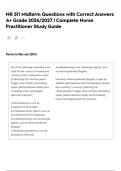
NR 511 Midterm Questions with Correct Answers
A+ Grade 2026/2027 | Complete Nurse
Practitioner Study Guide
Terms in this set (204)
All of the following medications are Antidopaminergic and cholinergic agents, such
used for the control of nausea and as metoclopramide (Reglan)
vomiting. Which medication works
by affecting the chemoreceptor rationale: Metoclopramide (Reglan) is used for
trigger zone, thereby stimulating diabetic gastroparesis and postoperative nausea
upper gastrointestinal motility and and vomiting. It works by affecting the
increasing lower esophageal chemoreceptor trigger zone, thereby stimulating
sphincter pressure? upper gastrointestinal motility and increasing
lower esophageal sphincter pressure
1.Anticholinergics, such as
scopolamine (Donnatal).
2.Antidopaminergic agents, such as
prochlorperazine (Compazine).
3.Antidopaminergic and cholinergic
agents, such as metoclopramide
(Reglan).
4.Tetrahydrocannabinols, such as
dronabinol (Marinol)
,You auscultate Julie's abdomen and IBS
hear a peritoneal friction rub. Which
condition do you rule out? rationale: IBS does not produce a friction rub
1.Peritonitis.
2.A liver or spleen abscess.
3.A liver or spleen metastatic tumor.
4.Irritable bowel syndrome.
You are counseling Lillian, who is Foods containing whey
lactose intolerant, about foods to
avoid. You know she rationale: Advise clients who are lactose
misunderstands the teaching when intolerant to avoid foods containing whey. Whey
she tells you she can have: is a lactose-rich ingredient found in some foods,
1. Yogurt. so clients who are lactose intolerant need to read
2.Foods containing whey. labels on all foods. To control symptoms, dietary
3.Prehydrolyzed milk. lactose should be reduced or restricted by using
4.Oranges. lactose-reduced and lactose-free dairy products
or by eating lactose-rich foods in small amounts
or in combination with low-lactose or lactose-
free foods.
,Simon, age 72, states that he is There is no such thing as a normal pattern of
worried because he has a bowel defecation
movement only every third day. You
respond: rationale: There is no such thing as a "normal"
1."You should have two to three pattern of defecation. Patterns of defecation vary
stools per day." widely and may in part be affected by dietary
2."You should defecate once a day." habits, fluid intake, bacteria in the stool,
3."You should have at least three psychological stress, or voluntary postponement
stools per week." of defecation. Defecating every third day could
4."There is no such thing as a be the routine pattern for Simon. He should be
'normal' pattern of defecation." questioned if this is routine for him.
Timothy, age 68, complains of an Colorectal cancer
abrupt change in his defecation
pattern. You evaluate him for: rationale: A middle-aged or older client with an
1.Constipation. abrupt change in defecation pattern must be
2.Colorectal cancer. evaluated for colorectal cancer
3.Irritable bowel syndrome.
4.Acute appendicitis.
Ruby has a colostomy and Cheese
complains that her stools are too
loose. What food(s) do you suggest rationale: Cheese, bread, pasta, rice, pretzels,
to help thicken the stools? and yogurt all help to thicken stools.
1.Cheese.
2.Leafy green vegetables.
3.Raw fruits and vegetables.
4.Dried beans.
, Tina has a chronic hepatitis C Abstain from sex during your period
infection. She asks you how to
prevent its transmission. You rationale: Because the hepatitis C virus is
respond: transmitted in blood, including menstrual blood,
1."Do not donate blood until one clients should abstain from sex during
year after diagnosis." menstruation. You might also test Tina to see
2."Abstain from sex altogether." which genotype her hepatitis C is to see if she is a
3."There is no possibility of candidate for Harvoni or Epclusa.
transmission through razors or
toothbrushes."
4."Abstain from sex during your
period."
Your client's 2-month-old daughter "The infectious agent invaded the stomach lining
is admitted with gastroenteritis and and is affecting the balance of water and
dehydration after 2 days of vomiting nutrients."
and diarrhea. When the father asks
you what is causing the child's rationale: In 80% of cases, gastroenteritis is viral
diarrhea, how do you respond? in nature. This viral infection causes diarrhea by
1."She must be lactose intolerant stimulating the secretion of electrolytes into the
from the formula, and this is altering intestine. This is rapidly followed by water along
the fluid balance." the osmotic gradient, resulting in watery stools.
2."Her body's telling you that it's
time to introduce some solids into
her system."
3."The virus is causing irritation of
the gastrointestinal lining, which
causes diarrhea."
4."The infectious agent invaded the
stomach lining and is affecting the
balance of water and nutrients."
A+ Grade 2026/2027 | Complete Nurse
Practitioner Study Guide
Terms in this set (204)
All of the following medications are Antidopaminergic and cholinergic agents, such
used for the control of nausea and as metoclopramide (Reglan)
vomiting. Which medication works
by affecting the chemoreceptor rationale: Metoclopramide (Reglan) is used for
trigger zone, thereby stimulating diabetic gastroparesis and postoperative nausea
upper gastrointestinal motility and and vomiting. It works by affecting the
increasing lower esophageal chemoreceptor trigger zone, thereby stimulating
sphincter pressure? upper gastrointestinal motility and increasing
lower esophageal sphincter pressure
1.Anticholinergics, such as
scopolamine (Donnatal).
2.Antidopaminergic agents, such as
prochlorperazine (Compazine).
3.Antidopaminergic and cholinergic
agents, such as metoclopramide
(Reglan).
4.Tetrahydrocannabinols, such as
dronabinol (Marinol)
,You auscultate Julie's abdomen and IBS
hear a peritoneal friction rub. Which
condition do you rule out? rationale: IBS does not produce a friction rub
1.Peritonitis.
2.A liver or spleen abscess.
3.A liver or spleen metastatic tumor.
4.Irritable bowel syndrome.
You are counseling Lillian, who is Foods containing whey
lactose intolerant, about foods to
avoid. You know she rationale: Advise clients who are lactose
misunderstands the teaching when intolerant to avoid foods containing whey. Whey
she tells you she can have: is a lactose-rich ingredient found in some foods,
1. Yogurt. so clients who are lactose intolerant need to read
2.Foods containing whey. labels on all foods. To control symptoms, dietary
3.Prehydrolyzed milk. lactose should be reduced or restricted by using
4.Oranges. lactose-reduced and lactose-free dairy products
or by eating lactose-rich foods in small amounts
or in combination with low-lactose or lactose-
free foods.
,Simon, age 72, states that he is There is no such thing as a normal pattern of
worried because he has a bowel defecation
movement only every third day. You
respond: rationale: There is no such thing as a "normal"
1."You should have two to three pattern of defecation. Patterns of defecation vary
stools per day." widely and may in part be affected by dietary
2."You should defecate once a day." habits, fluid intake, bacteria in the stool,
3."You should have at least three psychological stress, or voluntary postponement
stools per week." of defecation. Defecating every third day could
4."There is no such thing as a be the routine pattern for Simon. He should be
'normal' pattern of defecation." questioned if this is routine for him.
Timothy, age 68, complains of an Colorectal cancer
abrupt change in his defecation
pattern. You evaluate him for: rationale: A middle-aged or older client with an
1.Constipation. abrupt change in defecation pattern must be
2.Colorectal cancer. evaluated for colorectal cancer
3.Irritable bowel syndrome.
4.Acute appendicitis.
Ruby has a colostomy and Cheese
complains that her stools are too
loose. What food(s) do you suggest rationale: Cheese, bread, pasta, rice, pretzels,
to help thicken the stools? and yogurt all help to thicken stools.
1.Cheese.
2.Leafy green vegetables.
3.Raw fruits and vegetables.
4.Dried beans.
, Tina has a chronic hepatitis C Abstain from sex during your period
infection. She asks you how to
prevent its transmission. You rationale: Because the hepatitis C virus is
respond: transmitted in blood, including menstrual blood,
1."Do not donate blood until one clients should abstain from sex during
year after diagnosis." menstruation. You might also test Tina to see
2."Abstain from sex altogether." which genotype her hepatitis C is to see if she is a
3."There is no possibility of candidate for Harvoni or Epclusa.
transmission through razors or
toothbrushes."
4."Abstain from sex during your
period."
Your client's 2-month-old daughter "The infectious agent invaded the stomach lining
is admitted with gastroenteritis and and is affecting the balance of water and
dehydration after 2 days of vomiting nutrients."
and diarrhea. When the father asks
you what is causing the child's rationale: In 80% of cases, gastroenteritis is viral
diarrhea, how do you respond? in nature. This viral infection causes diarrhea by
1."She must be lactose intolerant stimulating the secretion of electrolytes into the
from the formula, and this is altering intestine. This is rapidly followed by water along
the fluid balance." the osmotic gradient, resulting in watery stools.
2."Her body's telling you that it's
time to introduce some solids into
her system."
3."The virus is causing irritation of
the gastrointestinal lining, which
causes diarrhea."
4."The infectious agent invaded the
stomach lining and is affecting the
balance of water and nutrients."


