

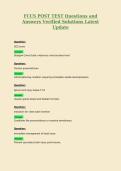
FCCS POST TEST Questions and
Answers Verified Solutions Latest
Update
Question:
GCS score
Answer:
Glasgow Coma Scale; measures consciousness level.
Question:
Tension pneumothorax
Answer:
Life-threatening condition requiring immediate needle decompression.
Question:
Spinal cord injury below T-10
Answer:
Usually spares bowel and bladder function.
Question:
Indication for chest tube insertion
Answer:
Conditions like pneumothorax or massive hemothorax.
Question:
Immediate management of head injury
Answer:
Prevent secondary brain injury post-trauma.
,Question:
Celiotomy
Answer:
Surgical procedure for abdominal exploration.
Question:
Diagnostic peritoneal lavage
Answer:
Procedure to assess intra-abdominal bleeding.
Question:
Central venous pressure line
Answer:
Used for monitoring venous blood pressure.
Question:
Frostbite treatment
Answer:
Initial treatment involves warm (40°C) water immersion.
Question:
Shock diagnosis criteria
Answer:
Systolic blood pressure below 90 mm Hg.
Question:
Hyperflexion fractures
Answer:
Inherently unstable injuries in upper thoracic spine.
, Question:
Spinal immobilization
Answer:
Use scoop stretcher or long spine board.
Question:
Signs of hemothorax
Answer:
Absence of breath sounds and dullness to percussion.
Question:
Volume replacement guide
Answer:
Blood pressure is most reliable indicator.
Question:
Magnetic resonance imaging
Answer:
Used to diagnose spinal cord injuries.
Question:
Respiratory rate in shock
Answer:
May be elevated due to compensatory mechanisms.
Question:
Pneumatic antishock garment
Answer:
Used to stabilize patients in shock.
Answers Verified Solutions Latest
Update
Question:
GCS score
Answer:
Glasgow Coma Scale; measures consciousness level.
Question:
Tension pneumothorax
Answer:
Life-threatening condition requiring immediate needle decompression.
Question:
Spinal cord injury below T-10
Answer:
Usually spares bowel and bladder function.
Question:
Indication for chest tube insertion
Answer:
Conditions like pneumothorax or massive hemothorax.
Question:
Immediate management of head injury
Answer:
Prevent secondary brain injury post-trauma.
,Question:
Celiotomy
Answer:
Surgical procedure for abdominal exploration.
Question:
Diagnostic peritoneal lavage
Answer:
Procedure to assess intra-abdominal bleeding.
Question:
Central venous pressure line
Answer:
Used for monitoring venous blood pressure.
Question:
Frostbite treatment
Answer:
Initial treatment involves warm (40°C) water immersion.
Question:
Shock diagnosis criteria
Answer:
Systolic blood pressure below 90 mm Hg.
Question:
Hyperflexion fractures
Answer:
Inherently unstable injuries in upper thoracic spine.
, Question:
Spinal immobilization
Answer:
Use scoop stretcher or long spine board.
Question:
Signs of hemothorax
Answer:
Absence of breath sounds and dullness to percussion.
Question:
Volume replacement guide
Answer:
Blood pressure is most reliable indicator.
Question:
Magnetic resonance imaging
Answer:
Used to diagnose spinal cord injuries.
Question:
Respiratory rate in shock
Answer:
May be elevated due to compensatory mechanisms.
Question:
Pneumatic antishock garment
Answer:
Used to stabilize patients in shock.


