

Page 1 of 115
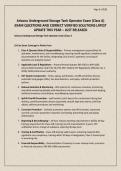
Arizona Underground Storage Tank Operator Exam (Class A)
EXAM QUESTIONS AND CORRECT VERIFIED SOLUTIONS LATEST
UPDATE THIS YEAR – JUST RELEASED
Arizona Underground Storage Tank Operator Exam (Class A
10-Line Exam Coverage in Points Form
1. Class A Operator Roles & Responsibilities – Primary management responsibility for
operation, maintenance, and recordkeeping; ensuring overall regulatory compliance and
documentation for the facility; designating Class B and C operators; ensuring all
operators are properly trained
2. Applicable Laws & Regulations – Arizona Revised Statutes §49-1001 to §49-1083;
Arizona Administrative Code Title 18; EPA 2015 Federal UST Regulations (effective Jan 1,
2020); ADEQ enforcement authority
3. UST System Components – Tanks, piping, spill buckets, overfill prevention devices,
automatic tank gauges (ATGs), line leak detectors, vent pipes, cathodic protection
systems
4. Release Detection & Monitoring – ATG systems for continuous inventory monitoring;
interstitial monitoring (double-wall detection); line leak detectors; manual tank dipping;
statistical inventory reconciliation; recordkeeping requirements
5. Spill & Overfill Prevention – Spill buckets (catch basins) for containment during fuel
delivery; overfill prevention devices (automatic shutoff, high-level alarms, ball float
valves); delivery procedures and monitoring
6. Corrosion Protection – Cathodic protection systems (sacrificial anodes, impressed
current); corrosion protection inspection and testing; preventing tank and piping
deterioration
7. Reporting & Recordkeeping – 24-hour release reporting requirement to ADEQ; 30-day
training requirement for Class A/B; training records maintained for 3 years; UST
notification forms; change of substance reporting 30 days prior
8. Training & Certification – Class A/B training valid 3 years; retraining required after
significant non-compliance; training within 30 days of designation; Class C trained prior
to assuming role
9. Financial Responsibility – Demonstration of capacity to cover cleanup costs; insurance
or financial assurance; ARS §49-1008 requirements
, Page 2 of 115
10. Inspections & Enforcement – ADEQ compliance inspections; 30-day walkthrough
inspections; fuel delivery prohibition for non-compliance; enforcement actions
COMPREHENSIVE PRACTICE QUESTIONS
Section 1: Roles & Responsibilities
1. Which of the following best describes the primary responsibility of a Class A Underground
Storage Tank (UST) operator in Arizona?
A. Responding to emergency alarms only
B. Conducting daily inspections of tank gauges
C. Ensuring overall regulatory compliance and documentation for the facility
D. Performing equipment repairs and maintenance tasks
Answer: C
Rationale: Class A operators have primary management responsibility for the operation,
maintenance, and recordkeeping of the facility. They ensure the facility complies with all
regulatory requirements, including documentation and oversight of UST systems . This is distinct
from the Class B operator's day-to-day operational duties and the Class C operator's emergency
response focus.
2. According to Arizona Revised Statutes §49-1083, who must designate the Class A, B, and C
operators for a UST facility?
A. The Class B operator
B. The Class C operator
, Page 3 of 115
C. The owner or operator of the UST system
D. The ADEQ inspector
Answer: C
Rationale: Pursuant to ARS §49-1083, an owner or operator of an underground storage tank
system must designate a Class A, B, and one or more Class C individuals who must complete
required operator training . This is a fundamental owner/operator responsibility.
3. How long does a Class A or B operator have to complete required training after being
designated by the owner or operator?
A. 7 days
B. 14 days
C. 30 days
D. 60 days
Answer: C
Rationale: Class A and B individuals must be trained within thirty (30) days of being designated
by the owner or operator. Class C individuals must be trained prior to assuming that role . This
timeline is clearly specified in ARS §49-1083.
4. A store manager responsible for overall compliance, recordkeeping, and oversight of a
facility's UST systems would most likely be designated as which class of operator?
A. Class A Operator
B. Class B Operator
, Page 4 of 115
C. Class C Operator
D. Certified UST Service Provider
Answer: A
Rationale: Class A operators are usually owners or managers responsible for overall compliance
and system oversight . They have primary management responsibility for the operation,
maintenance, and recordkeeping of the facility.
5. Which individual is responsible for ensuring all operators at a UST facility are properly
trained?
A. The Class A operator
B. The Class B operator
C. The Class C operator
D. The fuel delivery driver
Answer: A
Rationale: The Class A operator is responsible for ensuring proper training of all facility
personnel . This is a key aspect of the Class A operator's overall management and compliance
responsibility.
6. What is the difference between a Class A and a Class B UST operator's responsibilities?
A. Class A handles emergency response; Class B handles financial audits
B. Class A focuses on strategic compliance and documentation; Class B focuses on daily
operation, maintenance, and recordkeeping
Arizona Underground Storage Tank Operator Exam (Class A)
EXAM QUESTIONS AND CORRECT VERIFIED SOLUTIONS LATEST
UPDATE THIS YEAR – JUST RELEASED
Arizona Underground Storage Tank Operator Exam (Class A
10-Line Exam Coverage in Points Form
1. Class A Operator Roles & Responsibilities – Primary management responsibility for
operation, maintenance, and recordkeeping; ensuring overall regulatory compliance and
documentation for the facility; designating Class B and C operators; ensuring all
operators are properly trained
2. Applicable Laws & Regulations – Arizona Revised Statutes §49-1001 to §49-1083;
Arizona Administrative Code Title 18; EPA 2015 Federal UST Regulations (effective Jan 1,
2020); ADEQ enforcement authority
3. UST System Components – Tanks, piping, spill buckets, overfill prevention devices,
automatic tank gauges (ATGs), line leak detectors, vent pipes, cathodic protection
systems
4. Release Detection & Monitoring – ATG systems for continuous inventory monitoring;
interstitial monitoring (double-wall detection); line leak detectors; manual tank dipping;
statistical inventory reconciliation; recordkeeping requirements
5. Spill & Overfill Prevention – Spill buckets (catch basins) for containment during fuel
delivery; overfill prevention devices (automatic shutoff, high-level alarms, ball float
valves); delivery procedures and monitoring
6. Corrosion Protection – Cathodic protection systems (sacrificial anodes, impressed
current); corrosion protection inspection and testing; preventing tank and piping
deterioration
7. Reporting & Recordkeeping – 24-hour release reporting requirement to ADEQ; 30-day
training requirement for Class A/B; training records maintained for 3 years; UST
notification forms; change of substance reporting 30 days prior
8. Training & Certification – Class A/B training valid 3 years; retraining required after
significant non-compliance; training within 30 days of designation; Class C trained prior
to assuming role
9. Financial Responsibility – Demonstration of capacity to cover cleanup costs; insurance
or financial assurance; ARS §49-1008 requirements
, Page 2 of 115
10. Inspections & Enforcement – ADEQ compliance inspections; 30-day walkthrough
inspections; fuel delivery prohibition for non-compliance; enforcement actions
COMPREHENSIVE PRACTICE QUESTIONS
Section 1: Roles & Responsibilities
1. Which of the following best describes the primary responsibility of a Class A Underground
Storage Tank (UST) operator in Arizona?
A. Responding to emergency alarms only
B. Conducting daily inspections of tank gauges
C. Ensuring overall regulatory compliance and documentation for the facility
D. Performing equipment repairs and maintenance tasks
Answer: C
Rationale: Class A operators have primary management responsibility for the operation,
maintenance, and recordkeeping of the facility. They ensure the facility complies with all
regulatory requirements, including documentation and oversight of UST systems . This is distinct
from the Class B operator's day-to-day operational duties and the Class C operator's emergency
response focus.
2. According to Arizona Revised Statutes §49-1083, who must designate the Class A, B, and C
operators for a UST facility?
A. The Class B operator
B. The Class C operator
, Page 3 of 115
C. The owner or operator of the UST system
D. The ADEQ inspector
Answer: C
Rationale: Pursuant to ARS §49-1083, an owner or operator of an underground storage tank
system must designate a Class A, B, and one or more Class C individuals who must complete
required operator training . This is a fundamental owner/operator responsibility.
3. How long does a Class A or B operator have to complete required training after being
designated by the owner or operator?
A. 7 days
B. 14 days
C. 30 days
D. 60 days
Answer: C
Rationale: Class A and B individuals must be trained within thirty (30) days of being designated
by the owner or operator. Class C individuals must be trained prior to assuming that role . This
timeline is clearly specified in ARS §49-1083.
4. A store manager responsible for overall compliance, recordkeeping, and oversight of a
facility's UST systems would most likely be designated as which class of operator?
A. Class A Operator
B. Class B Operator
, Page 4 of 115
C. Class C Operator
D. Certified UST Service Provider
Answer: A
Rationale: Class A operators are usually owners or managers responsible for overall compliance
and system oversight . They have primary management responsibility for the operation,
maintenance, and recordkeeping of the facility.
5. Which individual is responsible for ensuring all operators at a UST facility are properly
trained?
A. The Class A operator
B. The Class B operator
C. The Class C operator
D. The fuel delivery driver
Answer: A
Rationale: The Class A operator is responsible for ensuring proper training of all facility
personnel . This is a key aspect of the Class A operator's overall management and compliance
responsibility.
6. What is the difference between a Class A and a Class B UST operator's responsibilities?
A. Class A handles emergency response; Class B handles financial audits
B. Class A focuses on strategic compliance and documentation; Class B focuses on daily
operation, maintenance, and recordkeeping


