

Page 1 of 130
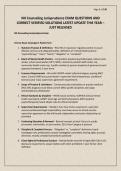
NH Counseling Jurisprudence EXAM QUESTIONS AND
CORRECT VERIFIED SOLUTIONS LATEST UPDATE THIS YEAR –
JUST RELEASED
NH Counseling Jurisprudence Exam
10-Line Exam Coverage in Points Form
1. Statutory Purpose & Definitions – RSA 330-A:1 (purpose: regulate practice to assure
effective services and safeguard public); definitions of "mental health practice,"
"psychotherapy," "client," "board," "allegation" vs. "complaint"
2. Board of Mental Health Practice – Composition (pastoral psychotherapist, clinical social
worker, school social worker, MFT, CMHC, community mental health center rep,
community health center rep, 3 public members); quorum (majority of governor/council
approved members); 3-year terms
3. Licensure Requirements – 60-credit CACREP master's/doctoral degree; passing NBCC
exam; 2 years/3,000 hours post-master's supervised clinical experience; conditional
license (2-year max); supervision agreement requirements
4. Scope of Practice & Limitations – Cannot prescribe medications or practice medicine
(RSA 329); diagnosis must follow current DSM; specific disciplines and scope;
interdisciplinary collaboration
5. Ethical Standards by Discipline – NASW (social workers); ACMHCA (clinical mental
health counselors); AAMFT (marriage and family therapists); AAPC (pastoral
psychotherapists); board adopts rules for ethical standards
6. Supervision Requirements – Weekly 1-hour face-to-face supervision; supervisor
assumes professional/legal responsibility; must have access to clinical records;
supervision agreement on file with board; independent contractor relationship not
permitted
7. Continuing Education & Renewal – Biennial renewal; at least 3 hours in suicide
prevention, intervention, or post-vention; CEUs from Category A sponsors
8. Discipline & Complaint Process – "Allegation" vs. "complaint" distinction; board
investigator role; professional conduct investigation committee; hearing rights (counsel,
witnesses, record); complaint procedures publicized
9. Client Rights & Professional Conduct – Mental health client bill of rights (RSA 330-A:15);
disclosure requirements; sexual relations with client prohibited; 7-year former client
definition
, Page 2 of 130
10. Compact & Recent Changes – Mental Health Counseling Compact (RSA 330-D); HB 1408
(board merger/reorganization); expedited licensure for out-of-state applicants; 30-day
provisional practice pending approval
COMPREHENSIVE PRACTICE QUESTIONS
Section 1: Statutory Purpose & Definitions
1. Which of the following best describes the primary purpose of RSA 330-A, the New
Hampshire Mental Health Practice Act?
A. To establish a mandatory state-run mental health clinic system
B. To regulate mental health practice, assure effective services, and safeguard the public from
unlicensed practitioners
C. To mandate insurance coverage for all mental health services
D. To create a statewide database of all mental health diagnoses
Answer: B
Rationale: RSA 330-A:1 explicitly states the purpose is to regulate mental health practice "to
assure that the services provided are effective and of a quality consistent with the standard of
care within each profession, and to safeguard the public against harm which may be caused by
untrained, unskilled, or unlicensed practitioners." Options A, C, and D are not the statutory
purpose .
2. Under RSA 330-A:2, which of the following definitions is correct?
, Page 3 of 130
A. "Client" means a person who has received psychotherapy within the past 10 years
B. "Mental health practice" includes the observation, description, evaluation, interpretation,
diagnosis, and modification of human behavior
C. "Psychotherapy" is defined as the administration of psychotropic medications
D. "Board" means the New Hampshire Department of Health and Human Services
Answer: B
Rationale: RSA 330-A:2(VI) defines mental health practice as "the observation, description,
evaluation, interpretation, diagnosis, and modification of human behavior by the application of
psychological and systems principles." "Client" (A) is a person who seeks or obtains
psychotherapy. "Psychotherapy" (C) is professional treatment, assessment, or counseling of
mental/emotional illness—not medication administration. The "Board" (D) is the Board of
Mental Health Practice .
3. According to RSA 330-A:2, "psychotherapy" includes which of the following?
A. Prescribing medications for mental health conditions
B. Professional treatment, assessment, or counseling of a mental or emotional illness, symptom,
or condition
C. Conducting physical examinations
D. Dispensing pharmaceutical products
Answer: B
, Page 4 of 130
Rationale: RSA 330-A:2(IX) defines psychotherapy as "the professional treatment, assessment,
or counseling of a mental or emotional illness, symptom, or condition." Licensed mental health
practitioners cannot prescribe medications or practice medicine .
4. Under RSA 330-A:2, a "former client or patient" is defined as a person who was given
psychotherapy within the previous:
A. 1 year
B. 3 years
C. 5 years
D. 7 years
Answer: D
Rationale: RSA 330-A:2(IV) defines "former client or patient" as "a person who was given
psychotherapy within the previous 7 years." This is an important distinction for boundary and
ethics considerations, particularly regarding sexual relations with clients .
5. Which of the following is NOT included in the definition of "mental health practice" under
RSA 330-A:2?
A. Diagnosis of mental and emotional disorders
B. Modification of human behavior
C. Prescribing medications
D. Evaluation and interpretation of human behavior
Answer: C
NH Counseling Jurisprudence EXAM QUESTIONS AND
CORRECT VERIFIED SOLUTIONS LATEST UPDATE THIS YEAR –
JUST RELEASED
NH Counseling Jurisprudence Exam
10-Line Exam Coverage in Points Form
1. Statutory Purpose & Definitions – RSA 330-A:1 (purpose: regulate practice to assure
effective services and safeguard public); definitions of "mental health practice,"
"psychotherapy," "client," "board," "allegation" vs. "complaint"
2. Board of Mental Health Practice – Composition (pastoral psychotherapist, clinical social
worker, school social worker, MFT, CMHC, community mental health center rep,
community health center rep, 3 public members); quorum (majority of governor/council
approved members); 3-year terms
3. Licensure Requirements – 60-credit CACREP master's/doctoral degree; passing NBCC
exam; 2 years/3,000 hours post-master's supervised clinical experience; conditional
license (2-year max); supervision agreement requirements
4. Scope of Practice & Limitations – Cannot prescribe medications or practice medicine
(RSA 329); diagnosis must follow current DSM; specific disciplines and scope;
interdisciplinary collaboration
5. Ethical Standards by Discipline – NASW (social workers); ACMHCA (clinical mental
health counselors); AAMFT (marriage and family therapists); AAPC (pastoral
psychotherapists); board adopts rules for ethical standards
6. Supervision Requirements – Weekly 1-hour face-to-face supervision; supervisor
assumes professional/legal responsibility; must have access to clinical records;
supervision agreement on file with board; independent contractor relationship not
permitted
7. Continuing Education & Renewal – Biennial renewal; at least 3 hours in suicide
prevention, intervention, or post-vention; CEUs from Category A sponsors
8. Discipline & Complaint Process – "Allegation" vs. "complaint" distinction; board
investigator role; professional conduct investigation committee; hearing rights (counsel,
witnesses, record); complaint procedures publicized
9. Client Rights & Professional Conduct – Mental health client bill of rights (RSA 330-A:15);
disclosure requirements; sexual relations with client prohibited; 7-year former client
definition
, Page 2 of 130
10. Compact & Recent Changes – Mental Health Counseling Compact (RSA 330-D); HB 1408
(board merger/reorganization); expedited licensure for out-of-state applicants; 30-day
provisional practice pending approval
COMPREHENSIVE PRACTICE QUESTIONS
Section 1: Statutory Purpose & Definitions
1. Which of the following best describes the primary purpose of RSA 330-A, the New
Hampshire Mental Health Practice Act?
A. To establish a mandatory state-run mental health clinic system
B. To regulate mental health practice, assure effective services, and safeguard the public from
unlicensed practitioners
C. To mandate insurance coverage for all mental health services
D. To create a statewide database of all mental health diagnoses
Answer: B
Rationale: RSA 330-A:1 explicitly states the purpose is to regulate mental health practice "to
assure that the services provided are effective and of a quality consistent with the standard of
care within each profession, and to safeguard the public against harm which may be caused by
untrained, unskilled, or unlicensed practitioners." Options A, C, and D are not the statutory
purpose .
2. Under RSA 330-A:2, which of the following definitions is correct?
, Page 3 of 130
A. "Client" means a person who has received psychotherapy within the past 10 years
B. "Mental health practice" includes the observation, description, evaluation, interpretation,
diagnosis, and modification of human behavior
C. "Psychotherapy" is defined as the administration of psychotropic medications
D. "Board" means the New Hampshire Department of Health and Human Services
Answer: B
Rationale: RSA 330-A:2(VI) defines mental health practice as "the observation, description,
evaluation, interpretation, diagnosis, and modification of human behavior by the application of
psychological and systems principles." "Client" (A) is a person who seeks or obtains
psychotherapy. "Psychotherapy" (C) is professional treatment, assessment, or counseling of
mental/emotional illness—not medication administration. The "Board" (D) is the Board of
Mental Health Practice .
3. According to RSA 330-A:2, "psychotherapy" includes which of the following?
A. Prescribing medications for mental health conditions
B. Professional treatment, assessment, or counseling of a mental or emotional illness, symptom,
or condition
C. Conducting physical examinations
D. Dispensing pharmaceutical products
Answer: B
, Page 4 of 130
Rationale: RSA 330-A:2(IX) defines psychotherapy as "the professional treatment, assessment,
or counseling of a mental or emotional illness, symptom, or condition." Licensed mental health
practitioners cannot prescribe medications or practice medicine .
4. Under RSA 330-A:2, a "former client or patient" is defined as a person who was given
psychotherapy within the previous:
A. 1 year
B. 3 years
C. 5 years
D. 7 years
Answer: D
Rationale: RSA 330-A:2(IV) defines "former client or patient" as "a person who was given
psychotherapy within the previous 7 years." This is an important distinction for boundary and
ethics considerations, particularly regarding sexual relations with clients .
5. Which of the following is NOT included in the definition of "mental health practice" under
RSA 330-A:2?
A. Diagnosis of mental and emotional disorders
B. Modification of human behavior
C. Prescribing medications
D. Evaluation and interpretation of human behavior
Answer: C


