

Written by students who passed Immediately available after payment Read online or as PDF Wrong document? Swap it for free 4.6 TrustPilot
logo-home
Document preview thumbnail
Preview 3 out of 21 pages
Exam (elaborations)

N677 Advanced Pharmacology Midterm Oral Exam 2026/2027 – 40+ Q&A | Antibiotics, Respiratory Drugs, Dermatology & Corticosteroids

Document preview thumbnail
Preview 3 out of 21 pages

This comprehensive N677 Advanced Pharmacology Midterm Oral Exam 2026/2027 study guide contains 40+ question-and-answer study points across 21 pages, providing focused preparation in antimicrobial pharmacology, respiratory pharmacotherapy, dermatologic medications, corticosteroids, drug toxicities, contraindications, black box warnings, drug interactions and patient monitoring. The document emphasizes clinically important medication classes and uses memorable pharmacology mnemonics alongside direct oral-exam questions and answers. It is particularly useful for reviewing medication selection, adverse effects, contraindications and monitoring considerations expected in advanced nursing pharmacology. A major portion of the document covers antibiotics and antimicrobial pharmacology. Students review aminoglycosides such as gentamicin and tobramycin, lincosamides such as clindamycin, fluoroquinolones such as ciprofloxacin and levofloxacin, tetracyclines including doxycycline and minocycline, penicillins, sulfonamides, macrolides and cephalosporins. High-yield concepts include ototoxicity, nephrotoxicity, hepatotoxicity, photosensitivity, pseudomembranous colitis, QT prolongation, tendon injury, hypersensitivity, pregnancy considerations and antibiotic cross-sensitivity. The document also associates these drug classes with common primary-care conditions such as urinary tract infections, respiratory infections, otitis externa, pneumonia and conjunctivitis. The material places strong emphasis on boxed warnings and medication safety. Fluoroquinolones are reviewed in relation to serious adverse effects including tendon injury and worsening myasthenia gravis, while montelukast is associated with important neuropsychiatric warnings. Tacrolimus and lindane are also discussed in relation to their major safety concerns. Other high-yield questions cover antibiotics associated with QT prolongation, penicillin-cephalosporin cross-reactivity, pregnancy-related medication considerations and clinically relevant interactions involving drugs such as warfarin, methotrexate, colchicine, statins, sildenafil, theophylline and digoxin. Another substantial section concentrates on dermatologic pharmacology and common primary-care skin conditions. The guide reviews pharmacologic approaches to atopic dermatitis, acne, bacterial and viral skin infections, fungal infections and scabies. Medications discussed include topical corticosteroids, benzoyl peroxide, spironolactone, doxycycline, cephalexin, acyclovir, clotrimazole, ketoconazole, fluconazole, permethrin and lindane. The material integrates medication classes with adverse-effect recognition and patient-education concepts, making this section especially relevant to advanced-practice nursing students preparing to discuss treatment choices orally. Respiratory and ENT pharmacology are also prominently represented. Students review treatment concepts for allergic rhinitis, otitis media, otitis externa, asthma, COPD and pneumonia. Pharmacologic classes include antihistamines, decongestants, glucocorticoids, beta agonists, inhaled corticosteroids, long-acting beta-2 agonists, leukotriene modifiers and antibiotics. The theophylline section specifically emphasizes monitoring of heart rate, respiratory rate, CNS effects, arterial blood gases and serum drug concentrations, reinforcing the relationship between pharmacotherapy and safe clinical monitoring. The later pages revisit high-yield antimicrobial patterns through memory aids involving tetracyclines, sulfonamides, fluoroquinolones and drugs associated with renal, hepatic or auditory toxicity. Metronidazole and azole antifungals receive additional attention, including candidiasis, drug toxicity, pregnancy considerations and adverse-effect monitoring. These sections are structured for rapid recall of clinically significant pharmacologic distinctions rather than lengthy theoretical discussion. The final section provides concentrated review of systemic and topical corticosteroid pharmacology. Students compare relative steroid potency across cortisone, hydrocortisone, prednisone, prednisolone, methylprednisolone, triamcinolone, dexamethasone and betamethasone. The guide also distinguishes topical vehicles—including ointments, creams, lotions, solutions, gels and sprays—and relates preferred formulations to smooth skin, hairy areas, palms and soles, infected areas and skin folds. Systemic versus topical adverse effects are reviewed, including HPA-axis and adrenal suppression, skin thinning, striae, discoloration, bruising, telangiectasia, Cushing syndrome and hirsutism with excessive topical corticosteroid exposure. For academic reference, the subject coverage corresponds well with Katzung & Vanderah, Basic & Clinical Pharmacology and Brunton & Knollmann, Goodman & Gilman's The Pharmacological Basis of Therapeutics, which provide established academic coverage of antimicrobial agents, respiratory pharmacology, corticosteroids, drug interactions and adverse drug reactions. For advanced nursing pharmacology, Lehne's Pharmacology for Nursing Care is also a relevant reference because it integrates pharmacodynamics, adverse effects, interactions, monitoring and nursing implications. Because medication warnings and clinical treatment recommendations can change, students should verify specific prescribing recommendations and boxed warnings against current authoritative drug labeling and clinical guidelines rather than relying exclusively on exam notes. Relevant students: This document is primarily relevant to N677 Advanced Pharmacology students preparing for the 2026/2027 Midterm Oral Exam. It is particularly suitable for advanced practice registered nursing students, nurse practitioner students, MSN students, DNP students, FNP students, AGNP students and other graduate nursing students studying antimicrobial, respiratory and dermatologic pharmacotherapy. The uploaded document clearly identifies N677 Advanced Pharmacology and the Mid Term Oral Exam 2026/2027, but it does not identify a university or college; therefore, no unsupported institution has been added to the title. Keywords: N677 Advanced Pharmacology, N677 Midterm Oral Exam, N677 exam , N677 questions and answers, N677 study guide, advanced pharmacology exam, advanced pharmacology oral exam, nursing pharmacology questions, nurse practitioner pharmacology, antimicrobial pharmacology, antibiotic pharmacology, aminoglycosides, gentamicin, fluoroquinolones, ciprofloxacin, levofloxacin, tetracyclines, doxycycline, penicillins, cephalosporins, macrolides, azithromycin, clarithromycin, sulfonamides, clindamycin, antibiotic adverse effects, ototoxicity, nephrotoxicity, QT prolongation, pharmacology black box warnings, drug interactions, respiratory pharmacology, asthma pharmacology, COPD pharmacology, theophylline monitoring, dermatology pharmacology, atopic dermatitis treatment, acne pharmacology, antifungal medications, fluconazole, metronidazole, corticosteroid pharmacology, steroid potency, topical corticosteroids, systemic corticosteroids, HPA axis suppression, advanced nursing pharmacology, FNP pharmacology exam, MSN pharmacology, DNP pharmacology, pharmacology midterm preparation

Content preview

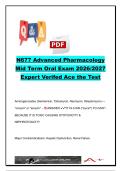
N677 Advanced Pharmacology
Mid Term Oral Exam 2026/2027
Expert Verifed Ace the Test


Aminoglycosides (Gentamicin, Tobramycin, Neomycin, Streptomycin) ---

"omycin" or "amycin" - ANSWER ✔✔"IT IS A SIN ("mycin") TO GIVE"-

BECAUSE IT IS TOXIC CAUSING OTOTOXICITY &

NEPHROTOXICITY


Major Contraindications: Hepatic Dysfunction, Renal Failure

,Major Side Effects: ototoxicity and nephrotoxicity, balance issues,

possible permanent deafness in older adults w/ hearing impairment,

neuromuscular blockade, hypersensitivity (rash, urticaria).


DD Interactions:


DF Interactions: Caffeine

AMINOGLYCOSIDES SIDE EFFECT ("omycin" or "amycin") -

ANSWER ✔✔"SIN TO GIVE" TOXIC SIDE EFFECTS


*OTOTOXICITY

*NEPHROTOXICITY

AMINOGLYCOSIDE TREATS WHAT IN PRIMARY CARE? -

ANSWER ✔✔* OTITIS EXTERNA


*UTI

*PNA/RESPIRATORY TRACT INFECTION

*CONJUNCTIVITIS

, Lincosamides (Clindamycin, Licomycin)- CAN CAUSE

PSEUDOMEMBRANEOUS COLITIS - ANSWER ✔✔Used for

*serious infections such as sepsis (blood infection) and bone infection.


Actions: Inhibits protein synthesis in susceptible bacteria, causing cell

death.


Contraindications and Cautions

Use with caution in patients with liver or kidney problems which could

interfere with the metabolism and excretion.


Adverse Effects

*Severe GI reactions, including fatal *pseudomembranous colitis, bone

marrow suppression have occurred, limiting the usefulness.


metabolized in the liver, excreted in the urine and feces.

Fluoroquinolones- Ciprofloxacin, Levofloxacin- Community Acquired

Pneumonia w/ comorbidities - ANSWER ✔✔"IT IS A SIN ("acin") TO


COPYRIGHT©NINJANERD 2025/2026. YEAR PUBLISHED 2026. COMPANY REGISTRATION NUMBER: 619652435. TERMS OF USE. PRIVACY
STATEMENT. ALL RIGHTS RESERVED
3


Document information

Uploaded on
August 8, 2026
Number of pages
21
Written in
2026/2027
Type
Exam (elaborations)
Contains
Questions & answers
$18.99

Wrong document? Swap it for free Within 14 days of purchase and before downloading, you can choose a different document. You can simply spend the amount again.
Written by students who passed
Immediately available after payment
Read online or as PDF

Seller avatar
Reputation scores are based on the amount of documents a seller has sold for a fee and the reviews they have received for those documents. There are three levels: Bronze, Silver and Gold. The better the reputation, the more your can rely on the quality of the sellers work.
NinjaNerd
3.4
(76)
Sold
395
Followers
6
Items
15309
Last sold
13 hours ago


Why students choose Stuvia

Created by fellow students, verified by reviews

Quality you can trust: written by students who passed their tests and reviewed by others who've used these notes.

Didn't get what you expected? Choose another document

No worries! You can instantly pick a different document that better fits what you're looking for.

Pay as you like, start learning right away

No subscription, no commitments. Pay the way you're used to via credit card and download your PDF document instantly.

Student with book image

“Bought, downloaded, and aced it. It really can be that simple.”

Alisha Student

Working on your references?

Create accurate citations in APA, MLA and Harvard with our free citation generator.

Working on your references?

Frequently asked questions
