

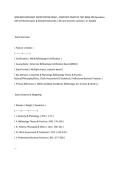
ARCB REFLEXOLOGIST CERTIFICATION EXAM – COMPLETE PRACTICE TEST BANK 300 Questions
with Verified Answers & Detailed Rationales | All Core Domains Covered | A+ Graded
Exam Overview
| Feature | Details |
|---------|---------|
| Certification | ARCB Reflexologist Certification |
| Issuing Body | American Reflexology Certification Board (ARCB) |
| Exam Format | Multiple-choice, scenario-based |
| Key Domains | Anatomy & Physiology, Reflexology Theory & Practice,
History/Philosophy/Ethics, Client Assessment & Treatment, Professional Business Practices |
| Primary References | ARCB Candidate Handbook, Reflexology: Art, Science & History |
Exam Domains & Weighting
| Domain | Weight | Questions |
|--------|--------|-----------|
| I. Anatomy & Physiology | 25% | 1–75 |
| II. Reflexology Theory & Practice | 40% | 76–195 |
| III. History, Philosophy & Ethics | 12% | 196–231 |
| IV. Client Assessment & Treatment | 15% | 232–276 |
| V. Professional Business Practices | 8% | 277–300 |
---
,SECTION I: ANATOMY & PHYSIOLOGY (Questions 1–75)
Question 1
The study of the structure of the body and the physical relationships between body parts is
called:
A) Physiology
B) Anatomy
C) Pathology
D) Kinesiology
Answer: B
Rationale: Anatomy is the study of the structure of the body and the relationships between its
parts. Physiology is the study of function. Pathology is the study of disease. Kinesiology is the
study of movement.
---
Question 2
Which organ system is responsible for transporting oxygen, nutrients, and hormones to cells
throughout the body?
A) Respiratory system
B) Nervous system
C) Cardiovascular system
D) Lymphatic system
,Answer: C
Rationale: The cardiovascular system, composed of the heart, blood vessels, and blood,
transports oxygen, nutrients, hormones, and waste products throughout the body.
---
Question 3
What is the primary function of the skeletal system?
A) To produce hormones
B) To provide structure, protect organs, and enable movement
C) To transport nutrients
D) To regulate body temperature
Answer: B
Rationale: The skeletal system provides structural support, protects internal organs, and serves
as attachment points for muscles to enable movement.
---
Question 4
The three types of muscle tissue are:
A) Skeletal, cardiac, and smooth
, B) Voluntary, involuntary, and striated
C) Red, white, and mixed
D) Slow-twitch, fast-twitch, and intermediate
Answer: A
Rationale: The three types of muscle tissue are skeletal (voluntary, striated), cardiac
(involuntary, striated), and smooth (involuntary, non-striated).
---
Question 5
What is the anatomical term for the movement of lifting the foot so its superior surface
approaches the lower leg?
A) Plantar flexion
B) Dorsiflexion
C) Inversion
D) Eversion
Answer: B
Rationale: Dorsiflexion is the movement of lifting the foot so that its superior surface
approaches the lower leg. Plantar flexion is pointing the toes downward.
---
with Verified Answers & Detailed Rationales | All Core Domains Covered | A+ Graded
Exam Overview
| Feature | Details |
|---------|---------|
| Certification | ARCB Reflexologist Certification |
| Issuing Body | American Reflexology Certification Board (ARCB) |
| Exam Format | Multiple-choice, scenario-based |
| Key Domains | Anatomy & Physiology, Reflexology Theory & Practice,
History/Philosophy/Ethics, Client Assessment & Treatment, Professional Business Practices |
| Primary References | ARCB Candidate Handbook, Reflexology: Art, Science & History |
Exam Domains & Weighting
| Domain | Weight | Questions |
|--------|--------|-----------|
| I. Anatomy & Physiology | 25% | 1–75 |
| II. Reflexology Theory & Practice | 40% | 76–195 |
| III. History, Philosophy & Ethics | 12% | 196–231 |
| IV. Client Assessment & Treatment | 15% | 232–276 |
| V. Professional Business Practices | 8% | 277–300 |
---
,SECTION I: ANATOMY & PHYSIOLOGY (Questions 1–75)
Question 1
The study of the structure of the body and the physical relationships between body parts is
called:
A) Physiology
B) Anatomy
C) Pathology
D) Kinesiology
Answer: B
Rationale: Anatomy is the study of the structure of the body and the relationships between its
parts. Physiology is the study of function. Pathology is the study of disease. Kinesiology is the
study of movement.
---
Question 2
Which organ system is responsible for transporting oxygen, nutrients, and hormones to cells
throughout the body?
A) Respiratory system
B) Nervous system
C) Cardiovascular system
D) Lymphatic system
,Answer: C
Rationale: The cardiovascular system, composed of the heart, blood vessels, and blood,
transports oxygen, nutrients, hormones, and waste products throughout the body.
---
Question 3
What is the primary function of the skeletal system?
A) To produce hormones
B) To provide structure, protect organs, and enable movement
C) To transport nutrients
D) To regulate body temperature
Answer: B
Rationale: The skeletal system provides structural support, protects internal organs, and serves
as attachment points for muscles to enable movement.
---
Question 4
The three types of muscle tissue are:
A) Skeletal, cardiac, and smooth
, B) Voluntary, involuntary, and striated
C) Red, white, and mixed
D) Slow-twitch, fast-twitch, and intermediate
Answer: A
Rationale: The three types of muscle tissue are skeletal (voluntary, striated), cardiac
(involuntary, striated), and smooth (involuntary, non-striated).
---
Question 5
What is the anatomical term for the movement of lifting the foot so its superior surface
approaches the lower leg?
A) Plantar flexion
B) Dorsiflexion
C) Inversion
D) Eversion
Answer: B
Rationale: Dorsiflexion is the movement of lifting the foot so that its superior surface
approaches the lower leg. Plantar flexion is pointing the toes downward.
---


