

Hide definitions
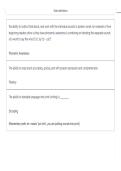
the ability to notice, think about, and work with the individual sounds in spoken words. An example of how
beginning readers show us they have phonemic awareness is combining or blending the separate sounds
of a word to say the word ("/c/ /a/ /t/ - cat.")
Phonemic Awareness
The ability to read a text accurately, quickly, and with proper expression and comprehension.
Fluency
The ability to translate language into print (writing) is ____________.
Encoding
(Remember prefix en- means "put into", you are putting sounds into print).
,The ability to use a learned skill in novel situations.
Generalization
Able to identify a word , and identify a letter are what concept?
Concept of Print
According to Nancy Young's Reading Ladder, what percentage of students are advantaged by the
Structured Literacy Approach?
40%
,According to Nancy Young's Reading Ladder, what percentage of students is it essential to be taught by
the Structured Literacy Approach?
60%
According to Scarborough's Reading Rope, what are 3 the components to Word Recognition?
Word Recognition- Phonological Awareness, Decoding, Sight Recognition
(Here is a mnemonic sentence, If you take the first Letter of each component, Word Recognition Pains All
Dyslexic Students Regularly)
According to Scarborough's Reading Rope, what are 5 the components to Language Comprehension?
Language Comprehension-Background Knowledge, Vocabulary, Language Structure, Verbal Reasoning,
Literacy Knowledge
(Here is a mnemonic sentence, If you take the first Letter of each component, Language Comprehension
Brings Kids Valuable Lessons Since Vulnerable Readers Lack Knowledge)
, The act of breaking words into syllables.
Syllabication
The act of deliberately investigating words (e.g., vocabulary-building exercises, word-identification
practice, and spelling).
Word Study
Adding, deleting, and substituting sounds in words (e.g., add /b/ to oat to make boat; delete /p/ in pat to
make at; substitute /o/ for /a/ in pat to make pot).
Phoneme Manipulation
the ability to notice, think about, and work with the individual sounds in spoken words. An example of how
beginning readers show us they have phonemic awareness is combining or blending the separate sounds
of a word to say the word ("/c/ /a/ /t/ - cat.")
Phonemic Awareness
The ability to read a text accurately, quickly, and with proper expression and comprehension.
Fluency
The ability to translate language into print (writing) is ____________.
Encoding
(Remember prefix en- means "put into", you are putting sounds into print).
,The ability to use a learned skill in novel situations.
Generalization
Able to identify a word , and identify a letter are what concept?
Concept of Print
According to Nancy Young's Reading Ladder, what percentage of students are advantaged by the
Structured Literacy Approach?
40%
,According to Nancy Young's Reading Ladder, what percentage of students is it essential to be taught by
the Structured Literacy Approach?
60%
According to Scarborough's Reading Rope, what are 3 the components to Word Recognition?
Word Recognition- Phonological Awareness, Decoding, Sight Recognition
(Here is a mnemonic sentence, If you take the first Letter of each component, Word Recognition Pains All
Dyslexic Students Regularly)
According to Scarborough's Reading Rope, what are 5 the components to Language Comprehension?
Language Comprehension-Background Knowledge, Vocabulary, Language Structure, Verbal Reasoning,
Literacy Knowledge
(Here is a mnemonic sentence, If you take the first Letter of each component, Language Comprehension
Brings Kids Valuable Lessons Since Vulnerable Readers Lack Knowledge)
, The act of breaking words into syllables.
Syllabication
The act of deliberately investigating words (e.g., vocabulary-building exercises, word-identification
practice, and spelling).
Word Study
Adding, deleting, and substituting sounds in words (e.g., add /b/ to oat to make boat; delete /p/ in pat to
make at; substitute /o/ for /a/ in pat to make pot).
Phoneme Manipulation


