

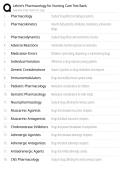
Lehne's Pharmacology for Nursing Care Test Bank
Study online at https://quizlet.com/_jr2ggs
1. Pharmacology Study of drug effects on biological systems.
2. Pharmacokinetics How the body absorbs, distributes, metabolizes, and excretes
drugs.
3. Pharmacodynamics Study of drug effects and mechanisms of action.
4. Adverse Reactions Unintended, harmful responses to medication.
5. Medication Errors Mistakes in prescribing, dispensing, or administering drugs.
6. Individual Variation Differences in drug responses among patients.
7. Genetic Considerations Impact of genetics on drug metabolism and response.
8. Immunomodulators Drugs that modify immune system activity.
9. Pediatric Pharmacology Medication considerations for children.
10. Geriatric Pharmacology Medication considerations for older adults.
11. Neuropharmacology Study of drugs affecting the nervous system.
12. Muscarinic Agonists Drugs that stimulate muscarinic receptors.
13. Muscarinic Antagonists Drugs that block muscarinic receptors.
14. Cholinesterase Inhibitors Drugs that prevent breakdown of acetylcholine.
15. Adrenergic Agonists Drugs that stimulate adrenergic receptors.
16. Adrenergic Antagonists Drugs that block adrenergic receptors.
17. Antiadrenergic Agents Drugs that inhibit adrenergic activity.
18. CNS Pharmacology Study of drugs affecting the central nervous system.
, Lehne's Pharmacology for Nursing Care Test Bank
Study online at https://quizlet.com/_jr2ggs
19. Parkinson's Disease Med- Drugs used to manage Parkinson's symptoms.
ications
20. Alzheimer's Disease Med- Drugs that treat cognitive decline in Alzheimer's.
ications
21. Seizure Disorder Medica- Drugs used to control seizure activity.
tions
22. Local Anesthetics Drugs that block sensation in a specific area.
23. General Anesthetics Drugs that induce unconsciousness for surgery.
24. Opioid Analgesics Drugs that relieve pain by acting on opioid receptors.
25. Antidepressants Drugs used to treat depressive disorders.
26. Antipsychotic Agents Drugs used to manage schizophrenia symptoms.
27. Bipolar Disorder Medica- Drugs that stabilize mood in bipolar patients.
tions
28. Sedative-Hypnotic Medi- Drugs that induce sleep or relaxation.
cines
29. Anxiety Disorder Manage- Strategies and medications for treating anxiety.
ment
30. CNS Stimulants Drugs that increase brain activity, often for ADHD.
31. Substance Use Disorders Conditions related to the misuse of drugs.
32. Diuretics Drugs that promote urine production.
33. Volume Agents Medications affecting body fluid volume and ions.
, Lehne's Pharmacology for Nursing Care Test Bank
Study online at https://quizlet.com/_jr2ggs
34. Hemodynamics Study of blood flow and its properties.
35. Renin-Angiotensin-Aldos- Hormonal system regulating blood pressure and fluid balance.
terone System
36. Calcium Channel Blockers Drugs that inhibit calcium entry into cells.
37. Vasodilators Medications that relax blood vessel walls.
38. Hypertension Medicines Drugs used to lower high blood pressure.
39. Heart Failure Medicines Drugs that improve heart function and symptoms.
40. Antidysrhythmic Medi- Medications that correct abnormal heart rhythms.
cines
41. Cholesterol Medicines Drugs that normalize cholesterol and triglyceride levels.
42. Angina Pectoris Medicines Drugs used to relieve chest pain from ischemia.
43. Anticoagulants Medications that prevent blood clot formation.
44. Antiplatelet Medicines Drugs that inhibit platelet aggregation.
45. Thrombolytic Medicines Drugs that dissolve blood clots.
46. ST-Elevation Myocardial In- Severe heart attack requiring immediate treatment.
farction
47. Hemophilia Medicines Drugs to manage bleeding disorders.
48. Deficiency Anemias Medi- Drugs treating anemias caused by nutrient deficiencies.
cines
49. Hematopoietic Agents Medications that stimulate blood cell production.
Study online at https://quizlet.com/_jr2ggs
1. Pharmacology Study of drug effects on biological systems.
2. Pharmacokinetics How the body absorbs, distributes, metabolizes, and excretes
drugs.
3. Pharmacodynamics Study of drug effects and mechanisms of action.
4. Adverse Reactions Unintended, harmful responses to medication.
5. Medication Errors Mistakes in prescribing, dispensing, or administering drugs.
6. Individual Variation Differences in drug responses among patients.
7. Genetic Considerations Impact of genetics on drug metabolism and response.
8. Immunomodulators Drugs that modify immune system activity.
9. Pediatric Pharmacology Medication considerations for children.
10. Geriatric Pharmacology Medication considerations for older adults.
11. Neuropharmacology Study of drugs affecting the nervous system.
12. Muscarinic Agonists Drugs that stimulate muscarinic receptors.
13. Muscarinic Antagonists Drugs that block muscarinic receptors.
14. Cholinesterase Inhibitors Drugs that prevent breakdown of acetylcholine.
15. Adrenergic Agonists Drugs that stimulate adrenergic receptors.
16. Adrenergic Antagonists Drugs that block adrenergic receptors.
17. Antiadrenergic Agents Drugs that inhibit adrenergic activity.
18. CNS Pharmacology Study of drugs affecting the central nervous system.
, Lehne's Pharmacology for Nursing Care Test Bank
Study online at https://quizlet.com/_jr2ggs
19. Parkinson's Disease Med- Drugs used to manage Parkinson's symptoms.
ications
20. Alzheimer's Disease Med- Drugs that treat cognitive decline in Alzheimer's.
ications
21. Seizure Disorder Medica- Drugs used to control seizure activity.
tions
22. Local Anesthetics Drugs that block sensation in a specific area.
23. General Anesthetics Drugs that induce unconsciousness for surgery.
24. Opioid Analgesics Drugs that relieve pain by acting on opioid receptors.
25. Antidepressants Drugs used to treat depressive disorders.
26. Antipsychotic Agents Drugs used to manage schizophrenia symptoms.
27. Bipolar Disorder Medica- Drugs that stabilize mood in bipolar patients.
tions
28. Sedative-Hypnotic Medi- Drugs that induce sleep or relaxation.
cines
29. Anxiety Disorder Manage- Strategies and medications for treating anxiety.
ment
30. CNS Stimulants Drugs that increase brain activity, often for ADHD.
31. Substance Use Disorders Conditions related to the misuse of drugs.
32. Diuretics Drugs that promote urine production.
33. Volume Agents Medications affecting body fluid volume and ions.
, Lehne's Pharmacology for Nursing Care Test Bank
Study online at https://quizlet.com/_jr2ggs
34. Hemodynamics Study of blood flow and its properties.
35. Renin-Angiotensin-Aldos- Hormonal system regulating blood pressure and fluid balance.
terone System
36. Calcium Channel Blockers Drugs that inhibit calcium entry into cells.
37. Vasodilators Medications that relax blood vessel walls.
38. Hypertension Medicines Drugs used to lower high blood pressure.
39. Heart Failure Medicines Drugs that improve heart function and symptoms.
40. Antidysrhythmic Medi- Medications that correct abnormal heart rhythms.
cines
41. Cholesterol Medicines Drugs that normalize cholesterol and triglyceride levels.
42. Angina Pectoris Medicines Drugs used to relieve chest pain from ischemia.
43. Anticoagulants Medications that prevent blood clot formation.
44. Antiplatelet Medicines Drugs that inhibit platelet aggregation.
45. Thrombolytic Medicines Drugs that dissolve blood clots.
46. ST-Elevation Myocardial In- Severe heart attack requiring immediate treatment.
farction
47. Hemophilia Medicines Drugs to manage bleeding disorders.
48. Deficiency Anemias Medi- Drugs treating anemias caused by nutrient deficiencies.
cines
49. Hematopoietic Agents Medications that stimulate blood cell production.


